

Pakistan equities have largely priced in geopolitical risk, says brokerage
Compressed valuations and idle liquidity seen cushioning further downside

Business Desk
The Business Desk tracks economic trends, market movements, and business developments, offering analysis of both local and global financial news.
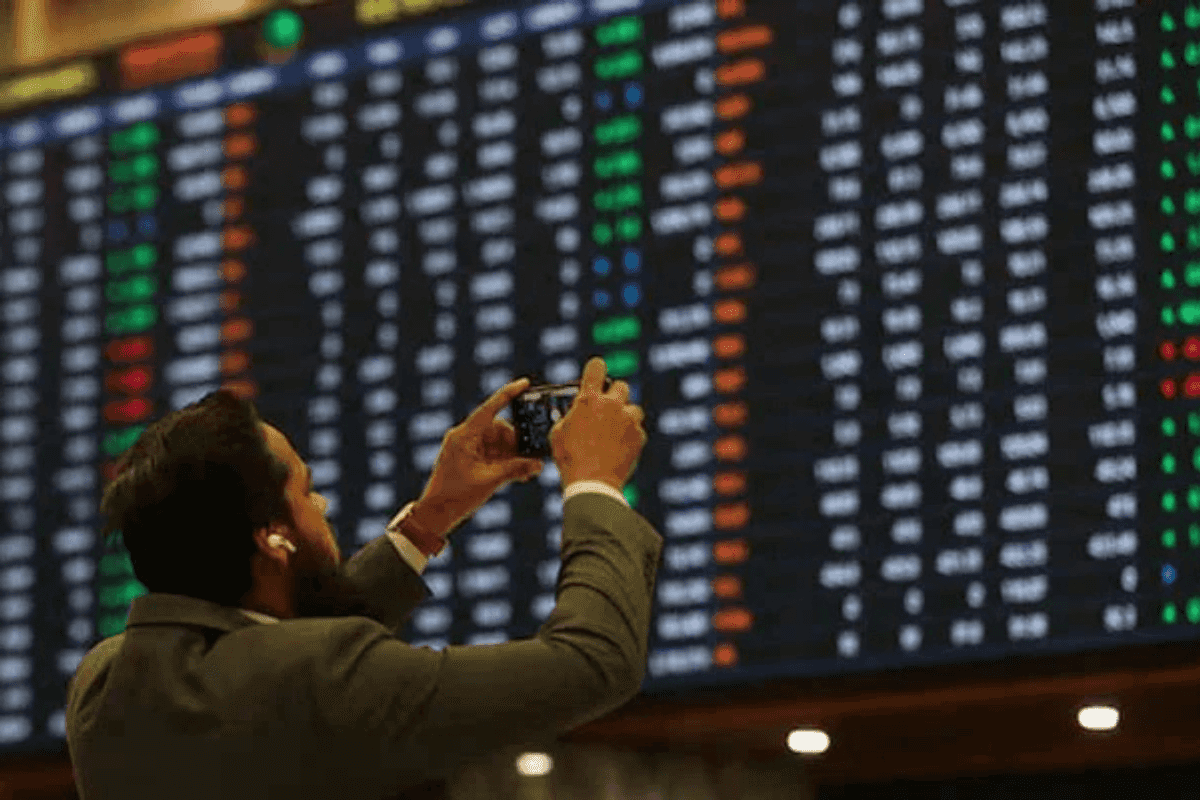
Heightened geopolitical tensions over the weekend have rattled investor sentiment, but a new report from Chase Securities says the sharp selloff in Pakistani equities already reflects much of the downside risk.
The benchmark KSE-100 index has fallen 12% from its Jan. 21 peak of 191,032 to close at 168,032 on Feb. 27, a correction of roughly 23,000 points. Chase Securities described the pullback as “sharp and front-loaded”, driven by foreign selling, stop-loss triggers and fear-based retail redemptions.
The brokerage noted that macroeconomic fundamentals remain intact and institutional liquidity of about PKR 93 billion is sitting on the sidelines.
Correction already in place
The KSE-100 Index entered 2026 with strong momentum, supported by declining inflation, easing interest rates, compliance with the International Monetary Fund program and record remittances. The index reached an all-time high of 191,032 on Jan. 21 before Middle East tensions began weighing on sentiment.
Chase Securities argues that the market appears to be pricing in a prolonged conflict scenario, which history suggests is unlikely to have a lasting impact on Pakistani equities.
Valuations have compressed to about 7.9 times trailing earnings at current levels, down from roughly 9.0 times at the January peak. The brokerage said a further drop toward 155,000 would imply a multiple near 7.3 times — a level it characterizes as “deep value by any measure”.
The Strait of Hormuz in focus
At the centre of investor anxiety is the Strait of Hormuz, the world’s most critical oil chokepoint. Roughly 17-21 million barrels per day — about one-fifth of globally traded petroleum — transit the narrow waterway between Iran and Oman.
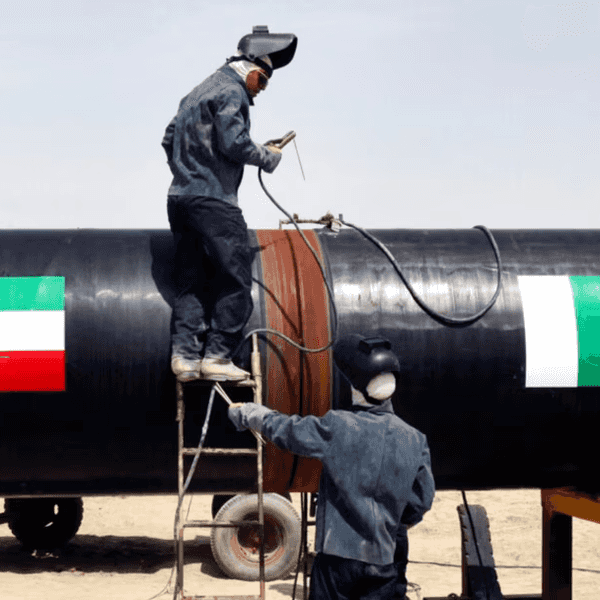
Chase Securities identified a prolonged full closure of the Strait as the “tail risk of greatest concern”, but assigned it a low probability of 5% to 10%. Alternate pipeline routes, including Saudi Arabia’s East-West pipeline and the UAE’s Habshan-Fujairah link, combined with OPEC+ spare capacity and coordinated strategic petroleum reserve releases, provide “meaningful insulation”, the report said.
An oil price spike above $100 per barrel on a sustained basis carries a low-to-medium probability of 10% to 20%, according to the brokerage. OPEC+ holds an estimated 5-6 million barrels per day of spare capacity, and U.S. shale producers can respond within six to eight weeks to higher prices.
For Pakistan, a $10-per-barrel increase in oil prices would widen the trade deficit by an estimated $1.5 billion to $2 billion annually and add about 0.3 to 0.4 percentage points to the current account deficit — impacts the firm views as manageable given foreign exchange reserves of $13 billion to $15 billion and the IMF backstop.
Low probability of worst-case outcomes
Chase Securities outlined several risks and assigned probabilities along with mitigating factors,
- Prolonged full closure of the Strait of Hormuz (5%-10%): Low probability, mitigated by alternate routes, OPEC+ spare capacity and coordinated SPR releases.
- Sustained oil above $100 per barrel (10-–20%): OPEC+ is incentivized to fill supply gaps; U.S. shale can respond quickly.
- Pakistan drawn diplomatically into a U.S.-Iran confrontation (under 5%): Pakistan has maintained strategic neutrality and has strong economic incentives to remain on the sidelines.
- IMF program derailment (under 5%): Compliance remains on track with no identified trigger events.
- PKR exchange rate pressure (20%-30%): The State Bank of Pakistan has adequate reserves to manage volatility, reinforced by IMF support.
- Foreign institutional selling (25%-35%): Foreign ownership in the Pakistan Stock Exchange is relatively modest, with domestic flows dominating price discovery.
- Broader emerging-market risk-off sentiment (25%-35%): Partially priced in, with Pakistan’s improving macro story offering a buffer against pure contagion.
“In both historical instances, investors who bought at or near the point of maximum fear generated returns of 11% to 54% within one to six months,” the report said. “We have no reason to believe this time is different.”
With valuations below 8 times earnings and substantial institutional liquidity yet to be redeployed, Chase Securities said the current volatility should be viewed as an opportunity rather than a reason to exit.
“Even a violent geopolitical shock of direct relevance proved to be nothing more than a temporary detour,” the firm said. “The core pillars of the investment thesis remain firmly intact.”



Comments
See what people are discussing