

Confusion in Pakistan parliament over control of web monitoring, firewall systems
IT minister denies PTA role in monitoring system, parliamentary secretary says authority blocks content

Ali Hamza
Correspondent
Ali; a journalist with 3 years of experience, working in Newspaper. Worked in Field, covered Big Legal Constitutional and Political Events in Pakistan since 2022. Graduate of DePaul University, Chicago.
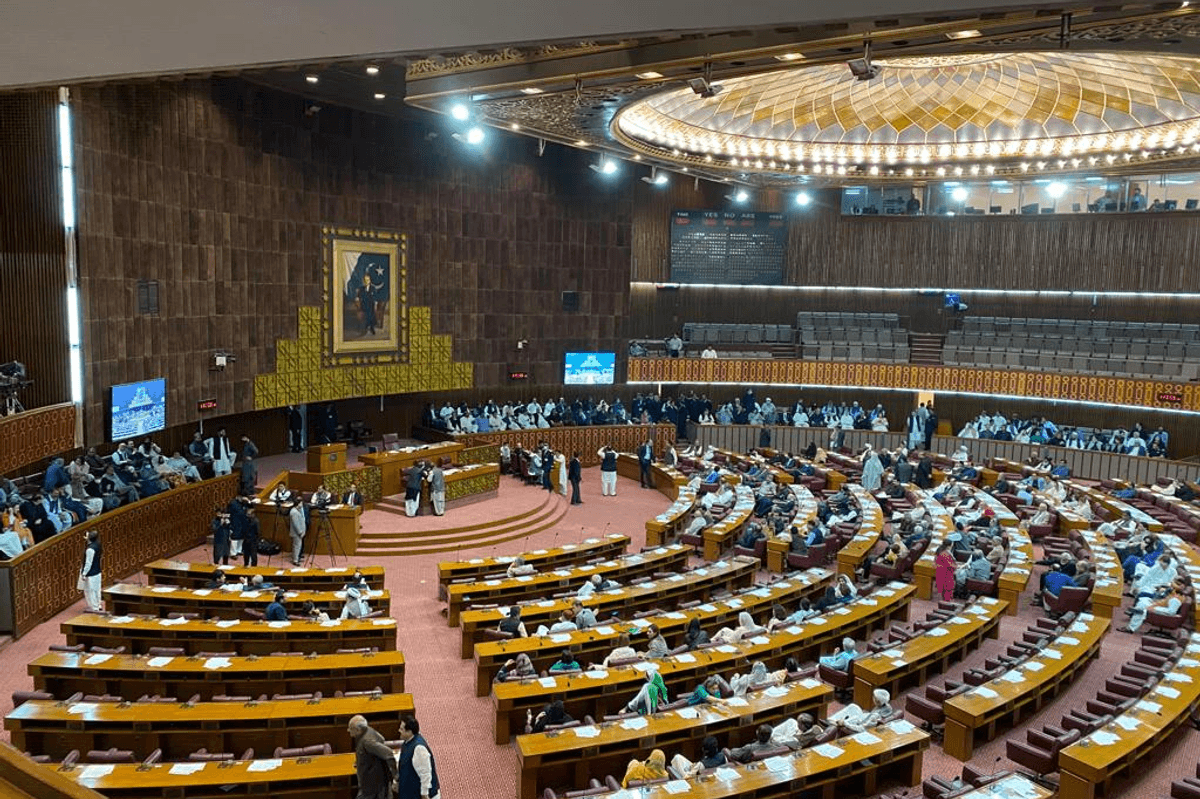
Confusion emerged in Pakistan’s National Assembly on April 2 after senior government officials gave contradictory statements about who controls a national web monitoring system and internet firewall, raising fresh questions about oversight and surveillance powers.
In a written reply tabled in parliament, Minister for Information Technology and Telecommunication Shaza Fatima Khawaja told Pakistan Peoples Party lawmaker Dr. Sharmila Farooqi that the national Web Monitoring System (WMS) is funded entirely by private telecom operators and involves no public money.
She said the system filters internet content and blocks “grey traffic,” or illegal international calls, and explicitly stated that the Pakistan Telecommunication Authority (PTA) “is not involved in the procurement.”
Minutes later during the same session, Parliamentary Secretary for IT Engineer Sabheen Ghori, a lawmaker from the Muttahida Qaumi Movement (MQM), presented a different account while speaking on the assembly floor.
Ghori said the PTA actively monitors the system, continuously checks for blasphemous or unlawful content and has the authority to block national and local websites. For international platforms such as TikTok and Meta, she said, the PTA follows due procedures through signed memorandums of understanding.
The exchange followed questions raised by Farooqi, who challenged how private telecom companies could operate a national-level monitoring system without direct government involvement.
“If the government has no money involved in it... and the PTA is also not involved in the procurement process, then that means we are all under surveillance by private telecom operators,” she said. “So how much authority does the government have in this?”
According to sources, a separate but related firewall system is also financed by telecom operators and functions as part of the broader monitoring infrastructure. The firewall is authorized and operated under the supervision of law enforcement agencies working under the Ministry of Defense and the Ministry of Interior, and is activated when deemed necessary by those agencies.
The WMS has been operational since March 2020 and evolved from earlier monitoring systems dating back to 2007. In her written reply, Khawaja said the system can block content considered pornographic, blasphemous or anti-state under the Prevention of Electronic Crimes Act (PECA).
The government says the system has increased legitimate international call traffic, reporting an average rise of 100 million legal call minutes per month in 2025 compared with 2024.
No details were provided about the total cost of the system since 2018, and the names of vendors or contractors were not disclosed. The minister also did not provide a specific assessment of reported internet slowdowns or their impact on freelancers, IT firms and digital businesses.
Instead, she highlighted growth in Pakistan’s digital economy, saying ICT export remittances rose 18.5% to $3.8 billion in the 2024–25 fiscal year.
Addressing civil liberties concerns, Khawaja said freedom of expression and privacy are fundamental rights but “not absolute,” adding that the Constitution allows “reasonable limitations.” She said the system is used strictly to control grey traffic and block prohibited content under PECA and that “no censorship is done to compromise these rights.”
The conflicting statements in parliament have added to longstanding international scrutiny of internet controls in Pakistan, where critics have accused authorities of using monitoring tools to restrict dissent and limit access to information.
The minister’s full written reply was tabled in the National Assembly on April 2, 2026, but no contracts or supporting documents were placed in the parliamentary library.




Comments
See what people are discussing