

Pakistan, EU pledge deeper strategic partnership as bilateral trade hits $12 billion
Pakistan and the EU reaffirm a growing strategic partnership covering trade, counterterrorism, climate and regional security during Kaja Kallas' first Islamabad visit in seven years.
Aamir Abbasi
Editor, Islamabad
Aamir; a journalist with 15 years of experience, working in Newspaper, TV and Digital Media. Worked in Field, covered Big Legal Constitutional and Political Events in Pakistan since 2009 with Pakistan’s Top Media Organizations. Graduate of Quaid I Azam University Islamabad.
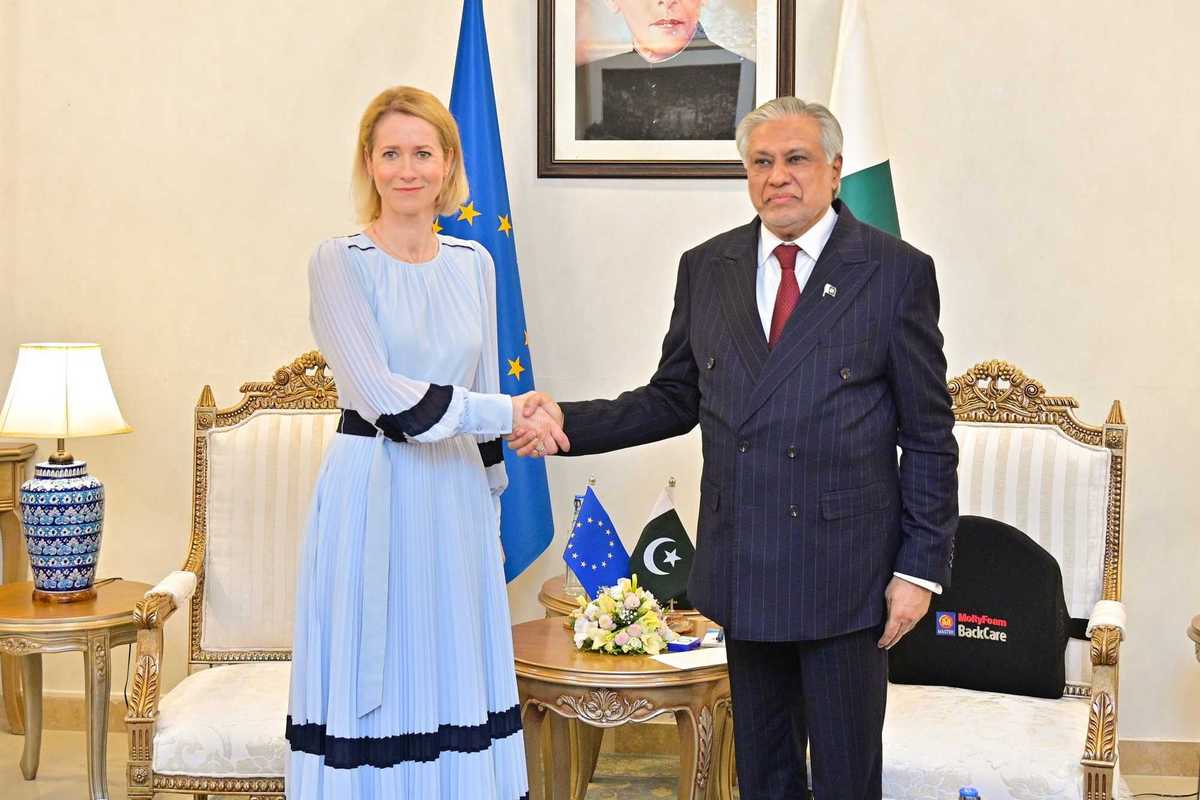
EU is Pakistan's second-largest trading partner, and Pakistan is the largest beneficiary of the EU's GSP+ trade scheme.
Pakistan's Ministry of Foreign Affairs
Pakistan and the European Union pledged to deepen their strategic partnership on Sunday, as Deputy Prime Minister and Foreign Minister Ishaq Dar met EU foreign policy chief Kaja Kallas in Islamabad.
The talks covered trade, counterterrorism, climate cooperation and South Asia's regional security, with bilateral trade now reaching approximately $12 billion.
What does the Pakistan-EU strategic partnership cover?
The Pakistan-EU partnership spans trade, security, climate action and digital infrastructure. The EU is Pakistan's second-largest trading partner, and Pakistan is the largest beneficiary of the EU's GSP+ trade scheme.
Deputy Prime Minister/Foreign Minister Senator Mohammad Ishaq Dar @MIshaqDar50 met with the EU HR/VP Ms. Kaja Kallas @kajakallas, today in Islamabad.
During the meeting, both sides acknowledged the positive trajectory of Pakistan-EU ties and agreed to further strengthen the… pic.twitter.com/xJAVuE3MG0
— Ministry of Foreign Affairs - Pakistan (@ForeignOfficePk) June 1, 2026
Both sides coordinate on regional stability, counterterrorism and sustainable development through a broadening set of bilateral engagements.
What did Dar and Kallas agree on during Islamabad talks?
Addressing a joint press conference, Dar described the EU as one of Pakistan's key economic partners and said both sides would take further steps to strengthen the trade relationship.
He welcomed Kallas on her first official visit to Pakistan, noting it was the first by a senior EU foreign policy chief in seven years and a sign of the partnership's growing strength.
Dar said the two sides exchanged views on regional and global developments, including recent tensions in South Asia.
Pakistan and the EU remained in close contact during the recent India-Pakistan conflict and continue to coordinate on issues affecting regional peace and stability.
He also conveyed Pakistan's position on the Indus Waters Treaty during the talks.
How is the EU engaging Pakistan on security and counterterrorism?
Discussions covered security challenges and counterterrorism cooperation, including concerns about terrorist groups operating from Afghanistan.
Kallas described Pakistan as a major regional power and an important EU partner. She said the two sides would continue coordinating on threats that affect both regional and global stability.
What role does GSP+ play in Pakistan-EU trade relations?
Kallas highlighted Pakistan's status as a significant beneficiary of the EU's GSP+ scheme, which provides tariff preferences tied to commitments on human rights, sustainable development and good governance.
She also pointed to climate action, digital infrastructure and clean energy as key pillars of the evolving partnership, signaling that cooperation now extends well beyond textiles and traditional trade flows.
The visit underscores growing momentum between Islamabad and Brussels across economic, security and climate agendas, with both sides signaling intent to expand ties through structured, high-level engagement.

Comments
See what people are discussing