

Pakistan exceeds IMF primary surplus target with PKR 4.1 trillion surplus in 9MFY26
Lower borrowing costs, strong SBP profits and higher non-tax revenues help government narrow fiscal gap to 0.7% of GDP

Business Desk
The Business Desk tracks economic trends, market movements, and business developments, offering analysis of both local and global financial news.
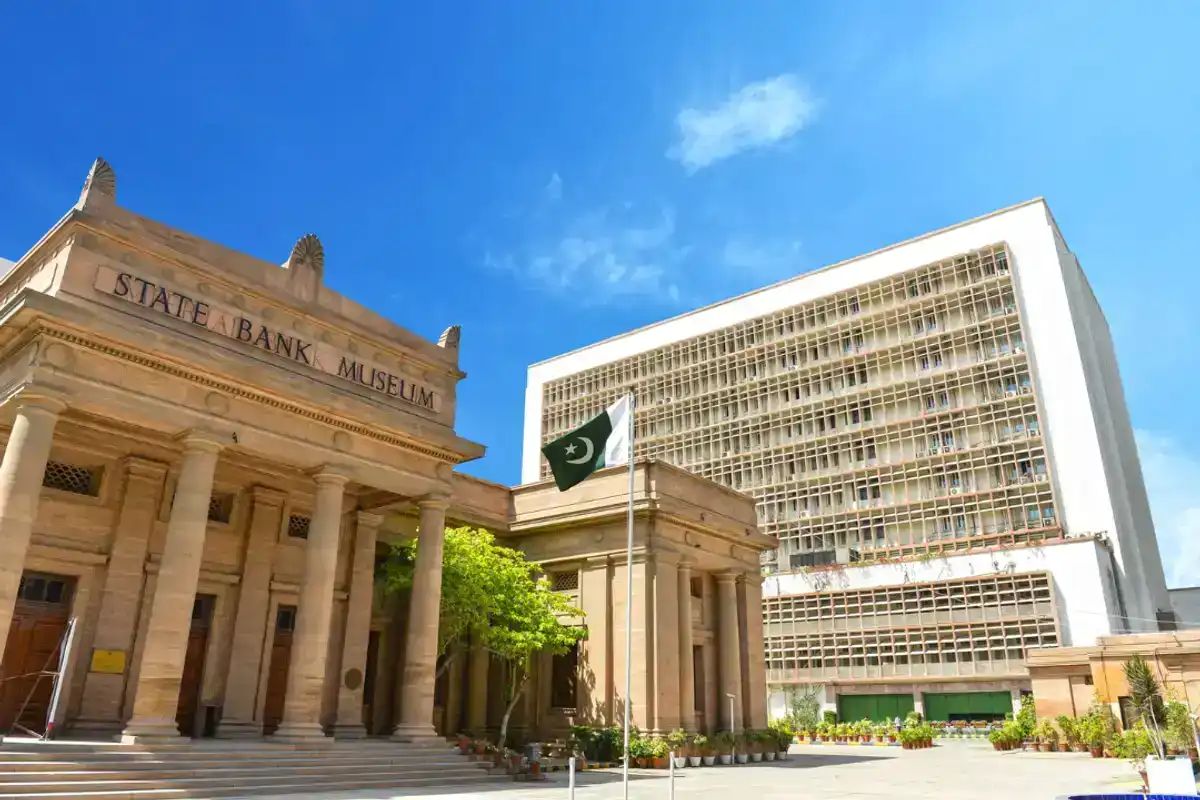
A view of the State Bank of Pakistan museum in Karachi
SBP Facebook
Pakistan recorded a fiscal deficit of just 0.7% of GDP, or PKR 856 billion, during the first nine months of FY2025-26 (9MFY26), compared with 2.6% of GDP, or PKR 3 trillion, in the same period last year, according to data released by the Ministry of Finance and analysis by Topline Securities.
The sharp improvement in fiscal performance was driven primarily by lower debt servicing costs, stronger revenue growth, and controlled government expenditures, allowing the country to comfortably surpass the International Monetary Fund’s (IMF) primary surplus target for the fiscal year.
According to the Ministry of Finance, Pakistan posted a primary surplus of PKR 4.091 trillion during July–March FY26, equivalent to 3.2% of GDP, significantly above the IMF target of 2.4%–2.5% of GDP for FY26.
Topline Securities noted that the improvement in fiscal indicators came despite an approximately 11% year-on-year increase in domestic debt as of February 2026. However, lower interest rates and improved debt management by the Finance Ministry’s debt division reduced interest expenses by 23% during the period.
The average yield on Treasury Bills (T-bills) declined to 10.8% in 9MFY26 from 14.3% in the same period last year, easing the government’s borrowing costs.
Revenue Performance
Official data showed the federal government’s total revenues stood at PKR 14.799 trillion during July–March FY26, while total expenditures were recorded at PKR 15.665 trillion.
Tax revenues collected by the Federal Board of Revenue (FBR) reached PKR 10.166 trillion during the nine-month period, equivalent to 7.8% of GDP.
Provincial governments collectively collected PKR 860 billion in taxes during the same period.
Non-tax revenues surged to PKR 4.632 trillion, supported by strong inflows from the State Bank of Pakistan (SBP), petroleum levy collections, and other government receipts.
The SBP contributed profits worth PKR 2.428 trillion to the federal government during July–March FY26, while Petroleum Development Levy (PDL) collections reached PKR 1.205 trillion.
Additional revenues included:
* PKR 100 billion from dividends of state-owned enterprises
* PKR 37 billion collected through carbon levy
* PKR 1.77 billion generated from additional taxes on petrol vehicle engines
According to the Finance Ministry, the government’s total revenues equaled 11.4% of GDP, while expenditures stood at 12.1% of GDP during the nine-month period.
Expenditure Trends
The Ministry of Finance reported that debt servicing and interest payments remained the single largest expenditure head, with the government spending approximately PKR 4.974 trillion on loan repayments and interest payments during July–March FY26.
Out of this amount, PKR 660 billion was spent on repayment of foreign loans.
Defense expenditures during the period stood at PKR 1.689 trillion, while pension payments totaled PKR 753 billion.
The federal government also spent:
* PKR 629 billion on administrative affairs
* PKR 631 billion on subsidies
* PKR 332 billion on development expenditures
Topline Securities stated that overall expenditures declined by 4% during 9MFY26, mainly due to lower interest expenses. Excluding interest payments, however, expenditures increased by 8%, while total revenues rose by 11%.
Subsidies and grants declined by 14% year-on-year and 32% quarter-on-quarter to PKR 574 billion. Analysts attributed the quarterly decline partly to higher flood and rescue-related spending in the previous quarter.
Third Quarter Fiscal Position
During the third quarter of FY26 (3QFY26), Pakistan recorded a fiscal deficit of 1.1% of GDP, slightly improved from 1.2% in the same quarter last year.
The primary balance during the quarter remained at break-even level, compared with a negative 0.1% of GDP in 3QFY25.
Interest expenses during 3QFY26 stood at PKR 1.4 trillion, up 7% year-on-year due to higher domestic debt levels. However, on a quarter-on-quarter basis, interest costs declined 37% due to lower rates and seasonal debt maturities.
Provincial Fiscal Performance
Provincial governments collectively posted budget surpluses during the first nine months of FY26.
Punjab recorded revenues of PKR 3.320 trillion and expenditures of PKR 2.495 trillion, resulting in a budget surplus of PKR 824 billion.
Sindh posted revenues of PKR 2.128 trillion against expenditures of PKR 1.687 trillion, generating a surplus of PKR 240 billion.
Khyber Pakhtunkhwa reported revenues of PKR 1.138 trillion and expenditures of PKR 885 billion, resulting in a surplus of PKR 252 billion.
Balochistan recorded revenues of PKR 628 billion and expenditures of PKR 510 billion, posting a surplus of PKR 18 billion.
NFC Transfers
Under the National Finance Commission (NFC) Award, the federal government transferred more than PKR 5.630 trillion to provinces during July–March FY26.
The provincial distribution included:
* Punjab: PKR 2.782 trillion
* Sindh: PKR 1.400 trillion
* Khyber Pakhtunkhwa: PKR 911 billion
* Balochistan: PKR 535 billion
Financing of Fiscal Deficit
According to Topline Securities, the PKR 856 billion fiscal deficit during 9MFY26 was financed primarily through domestic sources.
The government raised:
* PKR 752 billion through domestic bank financing
* PKR 210 billion through non-bank financing
Meanwhile, external financing recorded a net retirement of PKR 106 billion, indicating reduced dependence on foreign borrowing.
Analysts said the latest fiscal data reflects improving macroeconomic stability, supported by lower borrowing costs, fiscal consolidation measures, and stronger non-tax revenue generation.




Comments
See what people are discussing