

Pakistan faces energy risk as Strait of Hormuz disruption threatens oil flows
Analysts warn crude could hit $100-$150 as tanker delays and LNG risks raise import concerns

Business Desk
The Business Desk tracks economic trends, market movements, and business developments, offering analysis of both local and global financial news.
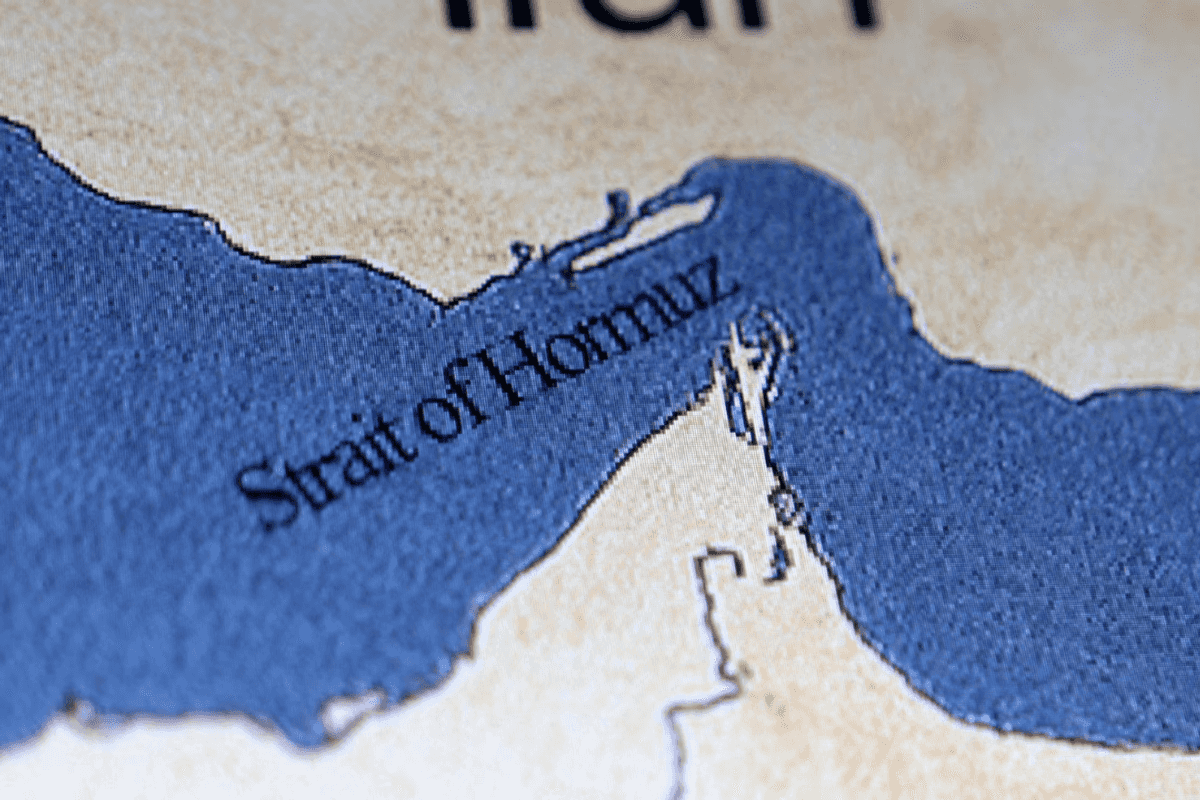
A map showing the Strait of Hormuz and Iran is seen in this illustration taken June 22, 2025
Reuters
The Strait of Hormuz, one of the world’s most critical energy corridors, is facing renewed disruption, raising fears of a spike in global oil prices and fuel shortages for energy-importing nations including Pakistan.
Roughly 20 to 21 million barrels per day of crude oil, condensate and petroleum products — nearly 20% of global petroleum liquids consumption — transited the narrow waterway in 2023-24. About one-fifth of the world’s liquefied natural gas trade, primarily from Qatar and the United Arab Emirates, also passes through the strait on its way to Asian markets.
Energy analysts warn that a prolonged blockage could send crude prices soaring.
“If the Strait of Hormuz remains closed for an extended period, we could see oil prices surge to between $100 and $150 per barrel, depending on the duration and severity of the disruption,” said an energy analyst. “Such a shock would ripple through global markets and hit import-dependent economies particularly hard.”
Pakistan relies heavily on Gulf energy supplies shipped through the strait. It imports liquefied natural gas from Qatar, diesel from Kuwait and crude oil largely from the Abu Dhabi National Oil Company.
Tankers stranded
Officials said two crude oil tankers, including the Pakistan National Shipping Corporation’s MT Karachi, are currently stranded in the strait. Another cargo that was at the loading stage is unlikely to sail under current conditions. Liquefied petroleum gas imports via sea and land routes have also been sharply curtailed, raising concerns of steep domestic price increases.
Two LNG cargoes that crossed Hormuz before the latest escalation are expected to reach Pakistan within days, offering temporary relief.
Pakistan produces about 70,000 barrels per day of crude oil domestically but imports roughly 300,000 barrels per day to meet refinery demand. The country imports around 70% of its petrol consumption, though it produces about 70% of its diesel locally.
A prolonged closure of the strait would likely push up fuel and LPG prices, trigger gas shortages, widen Pakistan’s current account deficit, intensify inflationary pressures and further strain its foreign exchange reserves.
In anticipation of a potential extended disruption, officials are expected to approach Saudi Arabia to secure crude supplies routed through the Red Sea. Saudi Arabia can bypass Hormuz via its East-West Crude Oil Pipeline, also known as Petroline, which transports oil from eastern fields to Red Sea export terminals.
From there, shipments are dispatched to major buyers including China, Japan, South Korea and India. Securing a place among those buyers could help Pakistan keep its refineries operating despite disruptions in Gulf shipping.
However, experts caution that LNG imports would remain vulnerable, as Saudi Arabia is not a major LNG exporter, leaving Pakistan exposed to continued supply risks if instability in the Gulf persists.




Comments
See what people are discussing