

Pakistan faces fresh economic shock as Hormuz closure drives oil surge
Kamran Khan says rising energy costs test Pakistan’s IMF targets and inflation outlook

News Desk
The News Desk provides timely and factual coverage of national and international events, with an emphasis on accuracy and clarity.
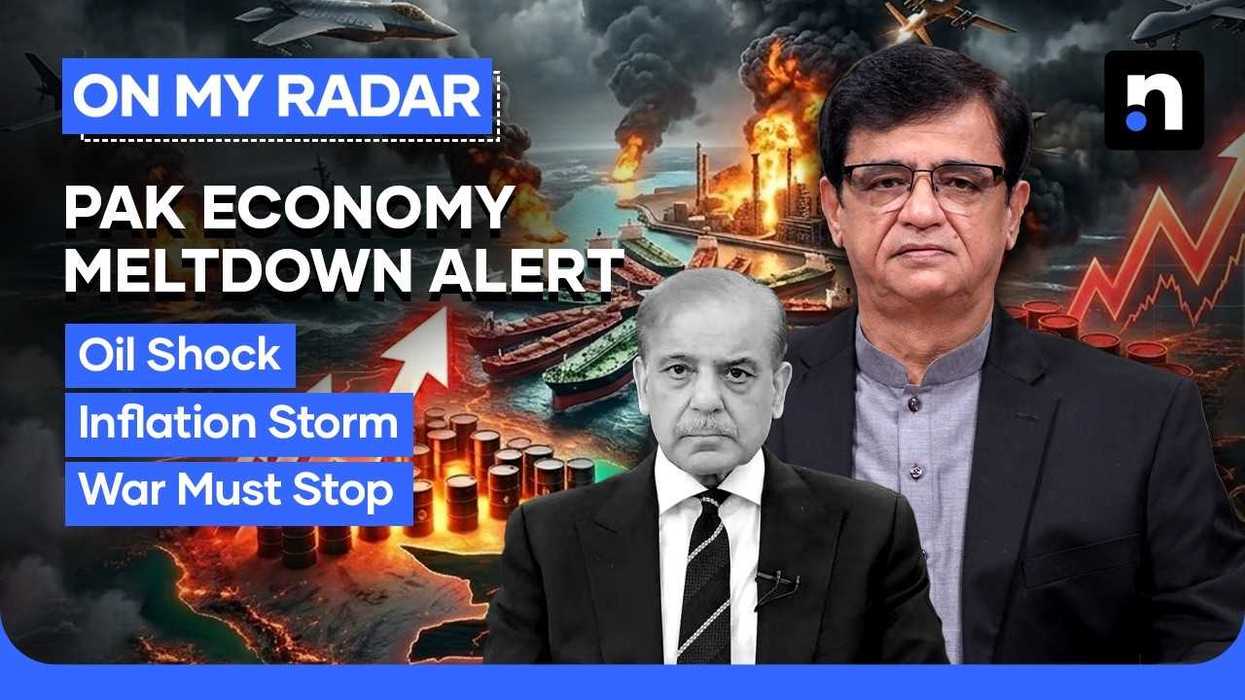
Pakistan is once again standing at the edge of an economic storm, this time triggered not from within but from a narrow maritime chokepoint thousands of miles away, Kamran Khan said.
Speaking on his program “On My Radar,” Khan said the closure of the Strait of Hormuz — the vital waterway between Iran and Gulf states — has disrupted nearly 20% of global oil supplies, sending shockwaves through international energy markets.
For Pakistan, which imports a large share of its energy needs, the effects are already spreading rapidly across the economy, he said.
Brent crude prices have climbed from around $70 per barrel to above $100 within days of the conflict, marking an increase of roughly 43%. At the same time, spot prices for liquefied natural gas in Asia have surged from about $15 per MMBtu to more than $25 — an increase of nearly 70%, according to figures cited by Khan.
The speed and intensity of these changes, he said, make the situation especially dangerous.
Shipping costs have also risen sharply. Marine insurance premiums for vessels passing through the Gulf have increased 11-fold amid fears of attacks on commercial ships. Some energy shipments have been delayed, while others have been rerouted.
Though the crisis may appear geographically distant, its consequences are being felt inside Pakistan, Khan said.
On March 6, the government raised petrol and diesel prices by PKR 55 per liter in response to rising global energy costs. Higher fuel prices typically feed into transport costs, food prices and broader inflation.
The government now faces a difficult choice: pass on global price increases to consumers or provide subsidies to cushion the blow. Both options carry risks.
Raising domestic fuel prices fuels inflation across the economic system. But subsidizing energy strains the national treasury and could jeopardize targets agreed under the International Monetary Fund program, Khan said.
Pakistan had begun 2026 with cautious optimism. Inflation had slowed compared with previous years, the rupee had remained relatively stable around 279 against the U.S. dollar, and foreign exchange reserves had improved from the lows of 2023.
However, Khan warned that if the conflict continues for another 15 days, Pakistan’s economy may struggle to absorb the full impact.
The State Bank of Pakistan currently holds about $16 billion in foreign exchange reserves, roughly enough to cover three months of imports. That buffer, while critical, could come under renewed pressure if energy import costs continue to climb.
Energy imports represent a structural vulnerability. Oil and LNG account for about 23% of Pakistan’s total import bill. In the first eight months of the current fiscal year, total imports stood at $45 billion, including roughly $10 billion spent on oil and LNG.
Any sustained increase in global prices directly affects Pakistan’s balance of payments, Khan said.
The country also lacks large strategic petroleum reserves. Estimates suggest Pakistan holds oil stocks sufficient for around 28 days under normal conditions. Prolonged shipping disruptions could raise the risk of fuel shortages.
Khan noted that even a $10 per barrel increase in oil prices could add between $2 billion and $2.5 billion to Pakistan’s annual energy costs.
Such an increase would likely weaken the rupee further and intensify inflationary pressures. Higher fuel costs typically push up transport fares, electricity tariffs and prices of essential goods including wheat, edible oil and vegetables. Many power plants rely on imported fuel, amplifying the effect.
Pakistan’s fiscal position adds another layer of risk.
The government is under pressure to meet strict fiscal targets agreed with the IMF. Providing large-scale subsidies could damage economic stability and complicate future borrowing from international lenders. Passing the full burden on to consumers, however, risks public backlash at a time when many households are already struggling.
Khan said about 45% of Pakistan’s population lives below the poverty line, making even modest price increases painful for millions.
Another concern involves remittances. Millions of Pakistanis work in Gulf states whose economies depend heavily on oil and regional stability. If the conflict spreads or Gulf economies slow, remittance inflows — a key pillar of Pakistan’s external account — could be affected.
Financial markets have already reacted. In the first 13 days of March, the benchmark KSE-100 index fell by 14,196 points, or 8.03%. Market capitalization declined by PKR 1,600 billion during the same period, according to figures cited in the program.
The coming week will be critical, Khan said. If the conflict de-escalates and shipping through the Strait of Hormuz resumes, global energy markets could stabilize and Pakistan may avoid the worst-case scenario.
If the crisis drags on, however, the country risks being pulled into another prolonged period of economic distress.




Comments
See what people are discussing