

Pakistan mulling weekly fuel price revision to ensure supply stability
Officials rule out immediate petrol, diesel shortage in the country as “adequate stocks” are available for key products

Business Desk
The Business Desk tracks economic trends, market movements, and business developments, offering analysis of both local and global financial news.
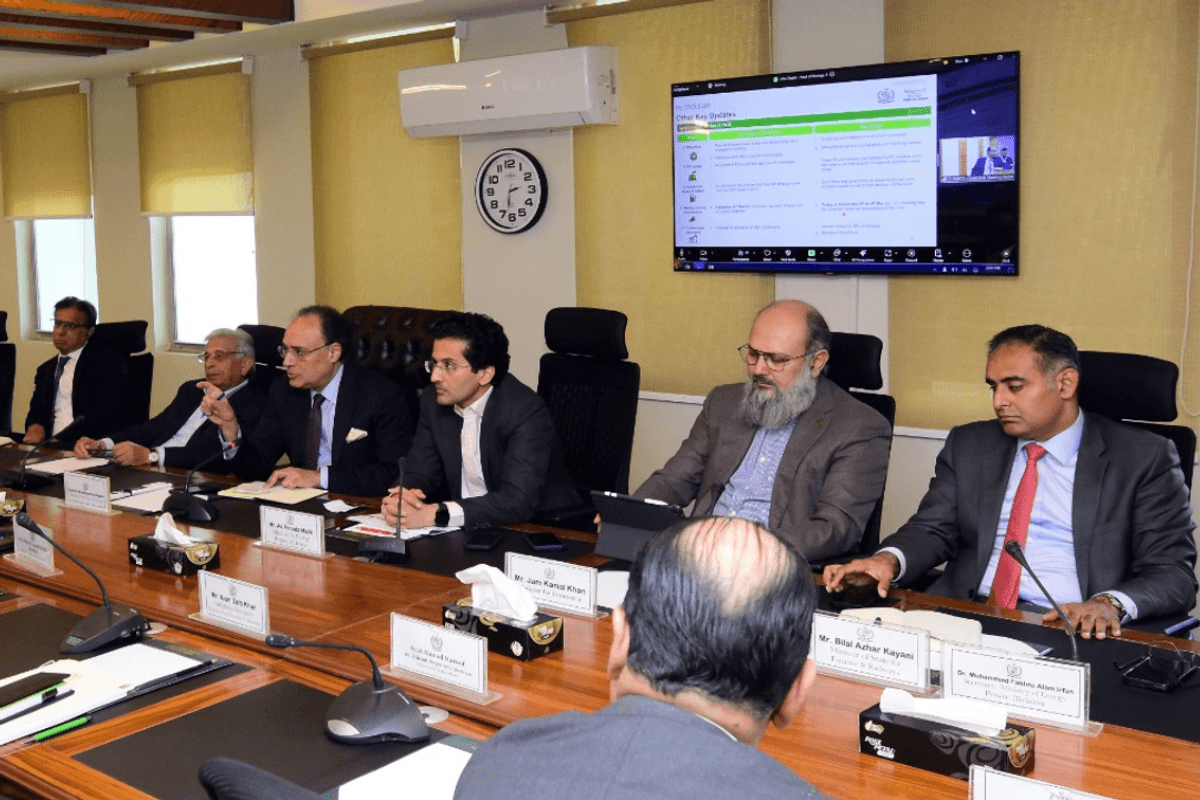
Pakistan's finance minister, Muhammad Aurangzeb, chairs a meeting on Thursday to review the availability of fuel in Pakistan
Ministry of Finance
Pakistan is considering a weekly revision of the prices of petroleum products to address supply disruptions resulting from the conflict in the Middle East.
A committee of ministers formed to ensure adequate availability of fuel stocks met on Thursday to discuss various steps to mitigate supply distortion, which has been caused due to the closure of the Strait of Hormuz, a key waterway for the bulk of global energy supplies.
According to officials familiar with the development, one of the proposals under consideration is to set the prices of petroleum products on a weekly basis – rather than the current fortnightly revisions – to account for changes in international oil prices.
The committee will finalize its proposals before submitting them to the prime minister for formal approval.
The meeting on Thursday, chaired by Finance Minister Muhammad Aurangzeb, reviewed developments in the global and regional energy sector and assessed Pakistan’s preparedness to manage potential disruptions.
Officials briefed the committee that national petroleum reserves remain at comfortable levels, with adequate stocks available for key products, and there is currently no immediate concern regarding fuel availability in the country.
However, members noted that the international situation remains fluid and uncertain, requiring sustained vigilance as global supply chains and shipping routes face rising risks and cost pressures.
The committee also received a detailed briefing on international oil market trends, including fluctuations in global benchmark prices, freight and insurance costs, maritime routing dynamics, and the possibility of supply congestion at critical global chokepoints.
Participants reviewed multiple supply and pricing scenarios to prepare for potential disruptions and maintain stability in domestic energy supplies. Officials warned that a growing “war premium” and intensified competition for energy cargoes — particularly in Asian markets — could place additional pressure on Pakistan’s external accounts if volatility continues.
The committee examined steps to strengthen supply assurance through diversified sourcing and logistics arrangements. Officials shared updates on diplomatic and commercial engagements with friendly countries and partner suppliers to secure additional crude and refined petroleum products through alternative routes and ports, including options outside high-risk shipping corridors.
Members also discussed operational steps to reduce delays in supply chains, including facilitating timely berthing of vessels and utilizing available national shipping capacity where feasible.
To maintain orderly market conditions, the committee reviewed measures to curb hoarding, illegal storage and diversion of petroleum products. Provincial administrations will coordinate enforcement actions with the Oil and Gas Regulatory Authority and other relevant agencies, officials said.
The committee stressed that preventing outward smuggling and ensuring uninterrupted domestic distribution would remain a top operational priority, supported by real-time field intelligence and strict action against violations.




Comments
See what people are discussing