

Pakistan holds key interest rate at 11.5% amid Middle East risks
Pakistan holds its key interest rate at 11.5% as the central bank weighs an improving economy against Middle East conflict risks
Haris Zamir
Business Editor
Experience of almost 33 years where started the journey of financial journalism from Business Recorder in 1992. From 2006 onwards attached with Television Media worked at Sun Tv, Dawn Tv, Geo Tv and Dunya Tv. During the period also worked as a stringer for Bloomberg for seven years and Dow Jones for five years. Also wrote articles for several highly acclaimed periodicals like the Newsline, Pakistan Gulf Economist and Money Matters (The News publications)
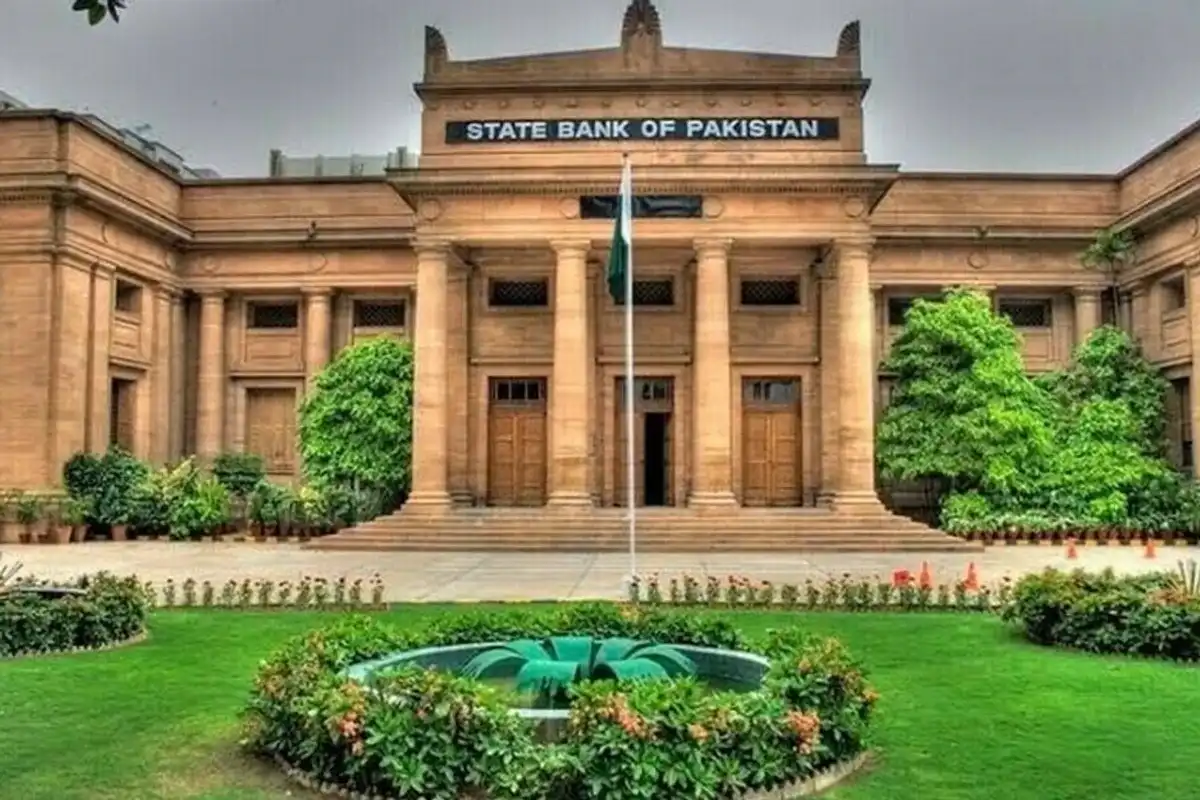
The central bank projected Pakistan's economy to grow between 3.5% and 4.5% in fiscal year 2026-27.
The State Bank of Pakistan (SBP) kept its benchmark policy rate unchanged at 11.5% on Monday.
The central bank said the country's macroeconomic outlook has improved since its last review, but warned that renewed conflict in the Middle East continues to threaten inflation and economic stability.
Why did Pakistan hold its interest rate?
The Monetary Policy Committee (MPC) unanimously decided that keeping the rate at 11.5% was appropriate to guide inflation toward its medium-term target of 5-7%.
The central bank noted that headline and core inflation eased in June, high-frequency indicators pointed to a pickup in economic activity, and pressures on the external account remained moderate.
What is Pakistan's growth outlook for 2026-27?
The SBP projected the economy to grow between 3.5% and 4.5% in fiscal year 2026-27, citing improved agricultural prospects, stronger private-sector credit, tariff rationaliZation and budgetary incentives. Economic activity had slowed in the final quarter of FY26 due to the Middle East conflict, higher global energy prices and government austerity measures. June data pointed to a recovery, supported by stronger automobile sales, cement dispatches, fertilizer offtake and improved business sentiment.
Higher expected sugarcane production is likely to offset weaker cotton output, while stronger performance in commodity-producing sectors should support the services sector. The SBP warned that volatile global commodity prices, geopolitical tensions and uncertain weather, including the evolving effects of El Niño, remain key downside risks to growth.
How high is inflation in Pakistan right now?
Headline inflation slowed to 11.1% year-on-year in June from 11.7% in May, mainly due to lower global energy prices and favourable electricity tariff adjustments. Core inflation also eased, to 8.4%, though it remained elevated. Food inflation accelerated in June because of higher wheat and perishable food prices.
The SBP expects inflation to stay above its target range in the coming months, driven by higher global commodity prices, rising input costs and domestic food price pressures. It projected inflation would gradually ease to around the upper end of the 5-7% target range by June 2027, though the outlook remains vulnerable to oil price swings, energy tariff changes, weather conditions and fiscal slippages.
How has Pakistan's external position changed?
The MPC highlighted continued improvement in Pakistan's external position. SBP foreign exchange reserves exceeded the end-June target of $18 billion, supported by continued foreign exchange purchases, a small current account deficit during FY26 and planned official inflows. Following sizeable external debt repayments, reserves stood at around $17.3 billion as of July 17.
The current account posted a deficit of $139 million during FY26, near the lower end of the central bank's projected range. Record workers' remittances largely offset a wider trade deficit caused by the Middle East conflict. For FY27, the SBP expects the current account deficit to stay within 0-1% of GDP and projects reserves to reach $20.2 billion by the end of December 2026.
Is Pakistan's fiscal consolidation on track?
The Federal Board of Revenue met its revised FY26 tax collection target of PKR 13 trillion, and Pakistan is estimated to have posted a primary fiscal surplus for the third consecutive year. The overall fiscal deficit also narrowed significantly from the previous year. For FY27, the government aims to maintain a primary surplus of 2% of GDP while limiting the overall fiscal deficit to 3.6% of GDP.
The MPC said meeting these targets would require continued tax reforms, a broader tax base, tighter expenditure management and reduced losses at state-owned enterprises.
What is driving credit growth in Pakistan?
Broad money (M2) growth slowed to 13.2% year-on-year as of July 10, down from 15.2% at the previous policy meeting. Private-sector credit expanded by 14.9%, reflecting easier financial conditions and stronger borrowing for working capital, fixed investment and consumer financing. Textiles, telecommunications, and wholesale and retail trade were the main borrowing sectors.
The MPC also noted that Standard & Poor's had upgraded Pakistan's sovereign credit rating to "B" since its previous meeting. Inflation expectations had eased among both consumers and businesses, though confidence indicators presented a mixed picture. The committee said prudent monetary policy and sustained fiscal consolidation had helped preserve macroeconomic stability despite global uncertainties.





Comments
See what people are discussing