

Pakistan may ration gas if LNG cargoes from Qatar are delayed by Hormuz tensions
Officials warn supply disruptions could tighten gas availability as analysts weigh impact on power and industry

Haris Zamir
Business Editor
Experience of almost 33 years where started the journey of financial journalism from Business Recorder in 1992. From 2006 onwards attached with Television Media worked at Sun Tv, Dawn Tv, Geo Tv and Dunya Tv. During the period also worked as a stringer for Bloomberg for seven years and Dow Jones for five years. Also wrote articles for several highly acclaimed periodicals like the Newsline, Pakistan Gulf Economist and Money Matters (The News publications)
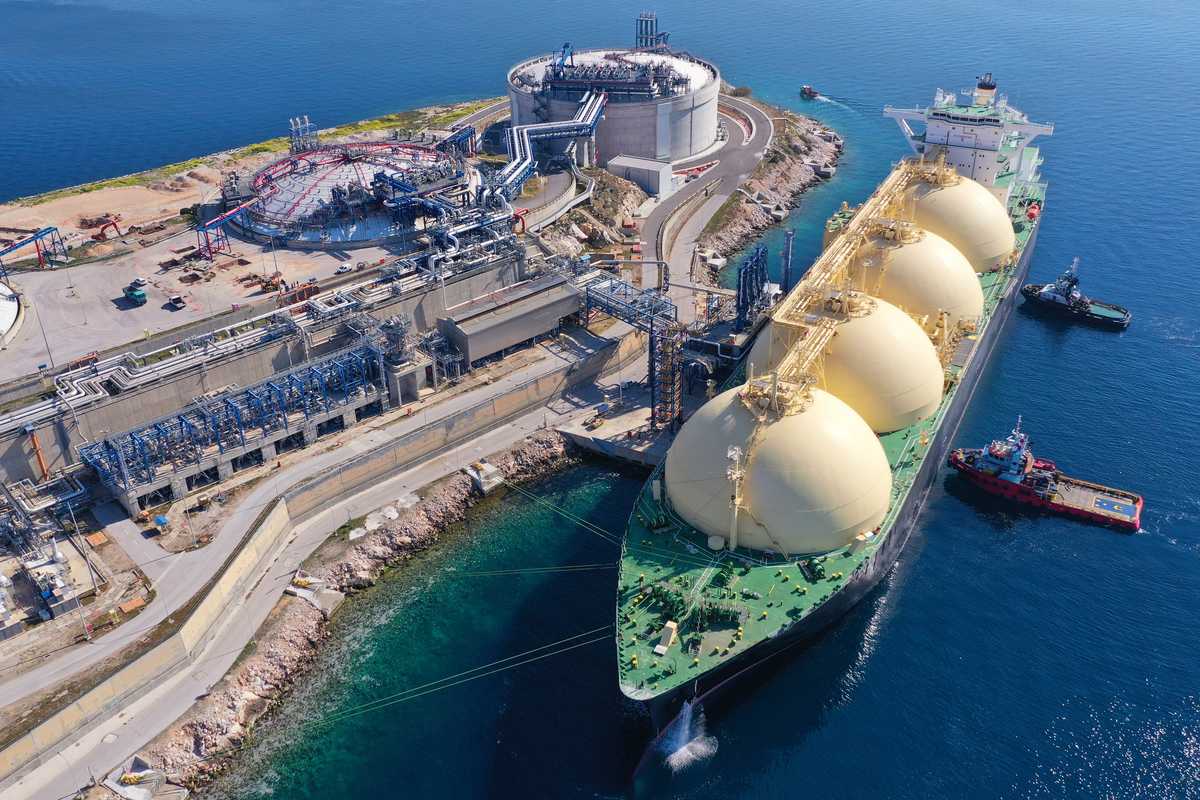
Pakistan may consider gas rationing in the coming weeks if the conflict in the Middle East is prolonged and vessels remain stranded in the Strait of Hormuz, delaying liquefied natural gas (LNG) shipments from Qatar.
The country imports around nine to 10 LNG cargoes per month from Qatar under two agreements — one for 15 years ending in 2031 with a Brent slope of 13.37%, and another for 10 years ending in 2032 with a Brent slope of 10.2%, according to government documents.
Industry officials say Pakistan may receive only a fraction of its usual supply. Two LNG vessels have arrived while one cargo remains stuck at sea, with uncertainty over when it may be released.
A query was sent to the Ministry of Petroleum regarding how many vessels have arrived, but no reply has been received as of yet.
The Oil and Gas Regulatory Authority (OGRA), which sets petroleum product, natural gas and regasified LNG prices, released the RLNG price pattern for March, confirming that two LNG vessels had arrived, according to documents.
Supply risks and potential curtailment
“Following the suspension of LNG production by Qatar Energy amid U.S.-Iran tensions, Pakistan may be deprived of up to eight monthly contracted LNG cargoes (800 mmcfd),” said Hamdan Ahmed, research analyst at Capital Management Ltd., a Karachi-based brokerage firm.
Bilal Ejaz, research analyst at Ismail Iqbal Securities, said delays in LNG arrivals are expected to tighten gas availability across the system.
“Delayed LNG arrivals in Pakistan are expected to tighten gas availability across the system, potentially leading to LNG curtailment for power plants and industries,” he said.
Already, electricity generation from RLNG-fired plants has declined. During the seven months ending Feb. 28 of the current fiscal year, power generation from RLNG plants fell 5% to 12,528 GWh, compared with 13,128 GWh in the same period last year, according to the National Electric Power Regulatory Authority (NEPRA).
The government has increasingly relied on coal, nuclear and domestic gas, which are cheaper energy sources. RLNG costs PKR 19.93 per unit, compared with PKR 2.23 for nuclear power, PKR 12.55 for coal and PKR 12.74 for domestic gas, according to official data.
Bilal said tighter LNG supplies could, however, slow industrial activity because many captive power plants rely on RLNG.
“Reduced availability may increase reliance on costlier fuels for power generation for the country as a whole,” he said.
He added that mitigation would require prioritizing gas allocation to efficient power plants, using alternative generation sources, restoring previously curtailed domestic gas fields and maintaining the suspension of LNG supplies to fertilizer plants to reduce system pressure.
Domestic gas production could offset shortages
Sui Northern Gas has already suspended RLNG supplies to one fertilizer company, AgriTech.
However, despite supply constraints, analysts say domestic gas producers could help offset shortages.
“Despite the absence of RLNG cargoes, domestic oil and exploration companies are well positioned to tackle the situation and have potential to procure nearly 500 mmcfd of gas,” Hamdan said.
In the latest weekly production report of Pakistan Petroleum Information Service dated March 8, domestic gas production rose to 3,005 mmcfd, compared with 2,687 mmcfd the previous week. The increase represents a rise of about 318 mmcfd.
“The current situation presents an opportunity for domestic oil and gas exploration companies to restore their previously curtailed production and bring their new fields online,” said Shankar Tarleja, head of research at Topline Securities.
However, Talreja said this would require government assurances that production would not be curtailed once the situation normalizes or that third-party gas sales would be allowed beyond the current cap of 100 mmcfd.
According to company disclosures and analyst briefings, Oil and Gas Development Co. has reported forced curtailment of 91 mmcfd, Pakistan Petroleum Ltd. around 50 mmcfd, Mari Petroleum about 40 mmcfd, and Pakistan Oilfields nearly 20 mmcfd, Tarleja said.
Analysts divided on economic impact
Syed Fawad Basir, head of research at KTrade Securities Limited, said the supply situation may not have a major impact.
“I don't believe it will have a great impact. If you recall, we had already re-scheduled a few tankers earlier as we had excess gas in the system,” he said.
“We cut the number of shipments from nine to seven per month. If these do not come, then I believe the curtailment will be lifted on domestic producers, while the remaining will be imported from Azerbaijan,” he said. “The contingency plan is in place.”
“From an energy perspective, I don't think there will be any impact. However, potential impacts from higher oil prices will be reflected in a month or two in the form of higher current account deficit, higher inflation and potential adverse impact on exchange rate,” he added.




Comments
See what people are discussing