

Pakistan military warns attacks on Saudi energy sites risk wider regional escalation
Army leadership backs Riyadh, urges restraint as Iran strikes raise fears for Middle East stability

News Desk
The News Desk provides timely and factual coverage of national and international events, with an emphasis on accuracy and clarity.
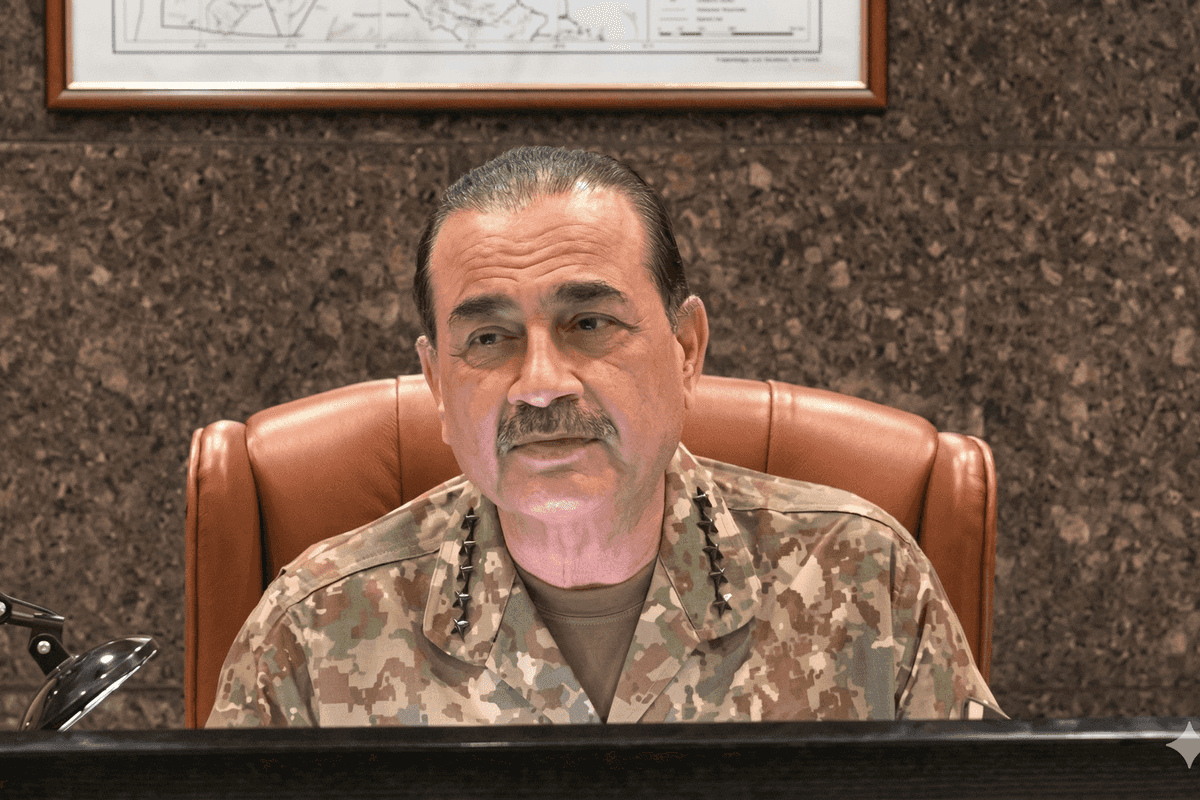
Chief of Army Staff and Chief of Defense Staff Field Marshal Syed Asim Munir addressing the 274th Corps Commanders’ Conference held at General Headquarters in Rawalpindi on Tuesday, April 7, 2026.
ISPR/Screengrab
Pakistan’s top military leadership on Tuesday expressed concern over recent attacks on Saudi Arabia’s petrochemical and industrial facilities, warning that escalating violence could undermine ongoing diplomatic efforts in the Middle East, according to a statement by the military’s media wing.
The concerns were voiced during the 274th Corps Commanders’ Conference held at General Headquarters in Rawalpindi and chaired by Chief of Army Staff and Chief of Defense Staff Field Marshal Syed Asim Munir.
The forum described the incidents as dangerous escalations that risk derailing peace efforts. It said Saudi Arabia’s measured and restrained response had created space for diplomatic engagement and warned that continued aggression could reverse those gains.
The statement came hours after Pakistan’s Foreign Office condemned overnight missile and drone attacks by Iran targeting energy facilities in eastern Saudi Arabia, calling them a serious violation of the kingdom’s sovereignty and a threat to regional stability.
In a separate statement, Pakistan’s Ministry of Foreign Affairs expressed “deep concern and unequivocal condemnation” of the attacks carried out by the Islamic Republic of Iran against energy installations in Saudi Arabia’s eastern region.
Pakistan mourned the loss of life resulting from the strikes and deplored damage to what it described as vital infrastructure. It conveyed condolences to victims’ families and expressed solidarity with the Saudi government and people.
The ministry said the attacks constituted a serious violation of Saudi Arabia’s sovereignty and territorial integrity and warned they represented a dangerous escalation undermining regional peace and stability. Pakistan also reaffirmed its “unwavering support” for the kingdom’s security.
A source on the ground told AFP that the overnight strikes hit a petrochemical complex in the sprawling industrial area of Jubail, hours after similar installations in Iran were targeted.
Jubail hosts one of the world’s largest industrial cities, producing steel, gasoline, petrochemicals, lubricating oil and chemical fertilizers.
Saudi air defense forces engaged what authorities described as a barrage targeting the eastern region. A defense ministry spokesperson said seven ballistic missiles were intercepted and destroyed.
Pakistan has consistently condemned Iranian strikes on Gulf countries while also denouncing attacks on Iran in late February. Islamabad has facilitated communication between Washington and Tehran and says it is working with regional states to end hostilities.
Last September, Islamabad and Riyadh signed a joint defense pact under which an attack on one would be considered an attack on both. Deputy Prime Minister Ishaq Dar said at the outset of the conflict that Pakistan had reminded Iran of the agreement.
Iran has launched repeated missile and drone attacks on Saudi Arabia and other Gulf states in recent weeks, heightening fears of a broader regional conflict.
The escalation has disrupted global energy markets. Iran’s blockade of the Strait of Hormuz – a key global oil supply route – has contributed to rising prices and economic uncertainty worldwide.
The conference began with a Fateha prayer for members of the armed forces, law enforcement agencies and civilians who lost their lives defending the country. Participants paid tribute to their sacrifices, calling them the foundation of Pakistan’s national security.
Munir commended the armed forces for professionalism and operational success in intelligence-based counterterrorism operations, saying coordination between the government, military and public had helped consolidate security gains, strengthen economic resilience and improve Pakistan’s regional and global standing.
Participants reviewed the internal and external security environment and reaffirmed their resolve to eliminate terrorist proxies allegedly supported by external sponsors, vowing action against facilitators without exception.
The leadership reiterated its commitment to continue Operation Ghazab-lil-Haq with full momentum until terrorist safe havens are dismantled and the use of Afghan soil against Pakistan is effectively ended.
The forum also appreciated the government’s diplomatic efforts to de-escalate Middle East tensions, emphasizing restraint, dialogue and peaceful conflict resolution, and reaffirmed Pakistan’s role as a responsible regional actor promoting peace and stability.
It rejected what it described as persistent disinformation campaigns and baseless allegations attributed to India, saying such narratives had been widely discredited internationally. The commanders also expressed concern over ongoing human rights violations in Indian-administered Kashmir, including reports of extrajudicial killings allegedly disguised as fake encounters.
In concluding remarks, Munir directed commanders to maintain the highest levels of operational readiness, professionalism and adaptability, expressing confidence in the armed forces’ ability to counter threats and safeguard Pakistan’s sovereignty and territorial integrity.




Comments
See what people are discussing