

Pakistan needs fresh discourse, not old binaries
Growth is the first casualty of stabilization in economies like Pakistan that exhibit cyclical behavior

Asad Ejaz Butt
Guest Contributor
Asad Ejaz Butt is an economist based in Boston, US. He tweets @asadaijaz.
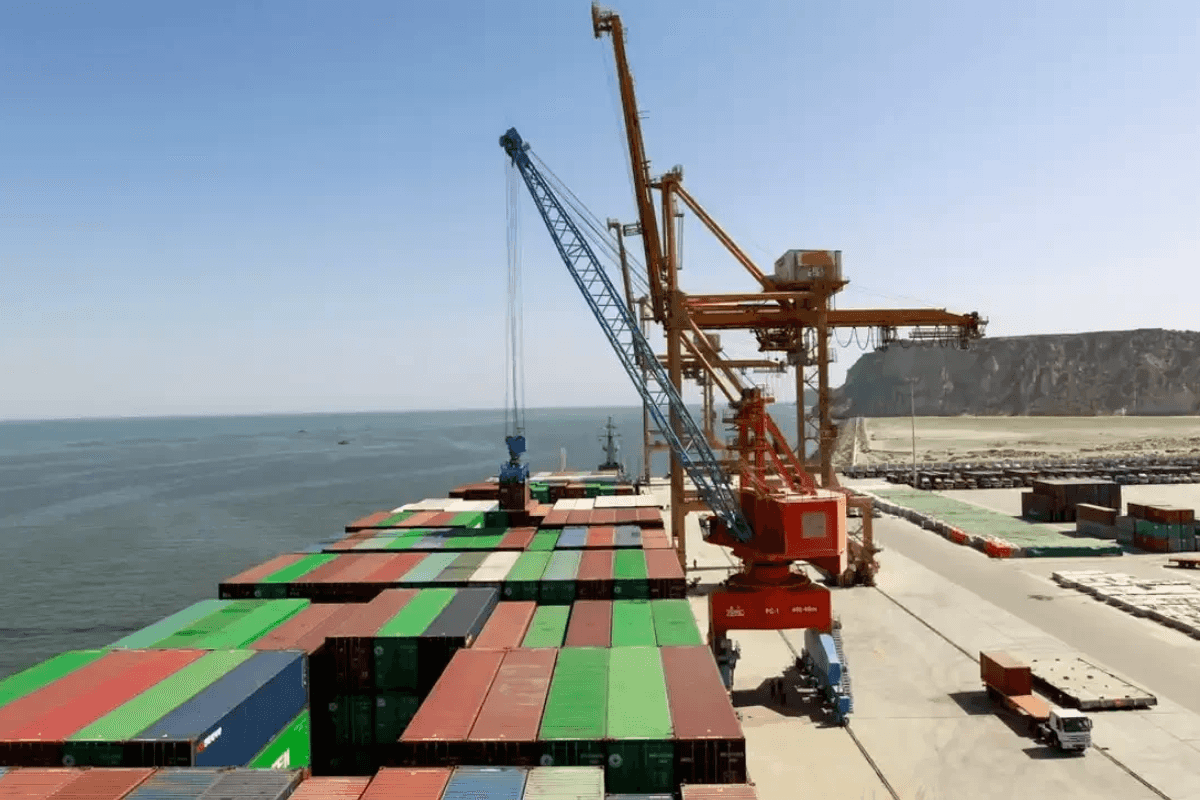
Policymakers must use current stabilization to build a broad, agenda-driven consensus.
Reuters/File
While having achieved some sense of external account stability due to a continued rise in remittances over the last few years, Pakistan's economy is showing signs of weakness yet again as it re-enters the spotlight. Growth is the first casualty of stabilization in economies like Pakistan that exhibit cyclical behavior.
Foreign direct investment has also declined perceptibly in late 2025, the current account has widened, and inflation remains relatively elevated. Therefore, one can argue that while Pakistan's economy is no longer in tatters, it retains the tendency to return to the situation it found itself in at the end of 2022, and is not completely out of the woods.
Policymakers must attend to the opportunity that the current stabilization provides, even if that stabilization looks spurious or untenable, and use this time to build a broad-based, agenda-driven political consensus that settles at least a few baseline issues. Pakistan's policy discourse is lazy and outmoded, lacking any sense of intellectual freshness.
In fact, zooming into the country's development discourse, one is confronted with the disappointing reality that we have failed to move beyond the classic human-versus-infrastructure development debate to attend to more salient issues of the economy – a preoccupation ripe with clichés and redundancy. If social media is any guide, this binary appears to be raising its head again, and the sound bites these conversations produce aren't very pleasing to the ears.
Our policy discourse remains stuck in the past, debating whether the Orange Line Metro was a better investment than the Sehat Card. With nearly 20 million children out of school, infant mortality at 57 per 1,000 live births, and our investment-to-GDP ratio stagnating at 13.6% compared to Bangladesh's 31%, we're failing at both infrastructure and human development simultaneously.
The debate between building roads versus developing humans continues to rage while we achieve neither because we're still trapped in a binary that should have been retired decades ago.
The 1960s already explored these trade-offs systematically—the lesson was about coherent planning, not choosing sides. Yet here we are in 2025, relitigating the same debate instead of addressing challenges that didn't exist then: climate adaptation, digital transformation, and regional economic integration.
Pakistan achieved spectacular results from the Second Five-Year Plan in 1965. GNP grew 29% instead of the targeted 24%, while per capita income also exceeded expectations, growing 13% against a 10% target. Foreign exchange earnings were expected to grow by only 15% but actually grew by 40%. Agricultural output increased 7% during the first plan, then jumped 19% in the second when it was expected to merely double to 14%. Today, as we struggle to maintain even 3% growth, it's worth asking what those economists knew that we've forgotten.
By 1964-65, gross domestic savings as a percentage of GNP had risen to 9.5%—approximately a 70% increase over 1959-60. Large-scale industry was saving and reinvesting 75% of its profits. The government's marginal rate of saving from its revenue was over 40%, and revenues were expected to rise by 70%. These numbers didn't materialize from thin air—they were the product of systematic planning that acknowledged trade-offs while pursuing clear objectives. In stark contrast, Pakistan's current investment-to-GDP ratio languishes below 15%.
The debate we're having today between infrastructure and human development is identical to one we had in 1956. Zahid Hussain, chairman of the Planning Commission, told his audience in November that year that "social services, that is education, health, housing, etc., are important and some of the main ultimate objectives of national policy. We shall, however, meet with frustration and defeat if we put social services before economic development." Mahbub ul Haq, evaluating the same plan, fundamentally disagreed—he believed the first plan succeeded in building infrastructure and industry but failed to address the basic problems of Pakistan that lay in the fields of agriculture, education, and housing.
The first plan allocated only 11% of total investment funds to agriculture compared to 28% for industry, despite giving agriculture the highest rhetorical priority. Investment targets fell short by 30%, and the momentum built in the early phase of industrialization was lost. The second plan corrected course—it proposed 19,000 million rupees of investment and required domestic capital formation of 7.8% of GNP even with 42% external financing. That plan exceeded its targets quite comfortably.
The economic situation changed during the third plan as we deviated from this path. The marginal savings rate, which had reached 24% during the second plan, collapsed to 5.7% during the third. This represented the reversal of economic momentum that had taken years to build. Investment as a percentage of GNP jumped from 9.7% in 1959-60 to 18.8% in 1964-65, only to fall back to 13.3% by 1969-70. Pakistan seems to be experiencing the same collapse today without truly understanding why. One reason is political instability and lack of trust amongst the country's key stakeholders.
The nationalization of industries in the 1970s provides the clearest example of how political upheaval destroys institutional memory. Whatever industrial progress had been achieved in the 1960s was held back, and the discourse underwent a paradigm shift from focus on industrialization's positive growth impacts to debates about whether industries could perform optimally under nationalized structures. As each new political era began, a complete divorce from the previous was seen—policy transitions became neither smooth nor coherent. We've been repeating this pattern ever since, with economic policy swinging wildly with each change of government.
In the three post-inception decades, a power contest ensued between the military, bureaucracy, and political elite. The three contested to arrogate more power and constituency as the country swung between various military and civilian regimes, each bringing totally new economic policies and defining a new role for the bureaucracy. This held both growth and progress back while East Asian economies like Singapore and Malaysia, who at one time experienced slower growth rates than Pakistan, developed at a rapid pace in the 1970s. Our current political tensions continue this destructive pattern.
The tragedy isn't just that we're repeating debates from the 1960s. It's that while we argue about metros versus health cards, we're ignoring the economic challenges unique to our time—challenges that the Zahid Hussains and Mahbub ul Haqs of that era never had to confront and that require entirely fresh thinking. Pakistan achieved spectacular results in the 1960s due to the quality of its discourse despite some degree of institutional conflict and political instability that existed even then.
Someone must step up to build bridges and gather stakeholders under a one-point agenda to reconstruct the policy discourse, weaving it around issues that Pakistan's economy faces today.



Comments
See what people are discussing