

Pakistan orders work-from-home, school closures as oil surges past $100
Prime Minister Shehbaz Sharif says the region was facing a 'serious and dangerous situation' as Iran and parts of the Middle East were engulfed in conflict

Aamir Abbasi
Editor, Islamabad
Aamir; a journalist with 15 years of experience, working in Newspaper, TV and Digital Media. Worked in Field, covered Big Legal Constitutional and Political Events in Pakistan since 2009 with Pakistan’s Top Media Organizations. Graduate of Quaid I Azam University Islamabad.
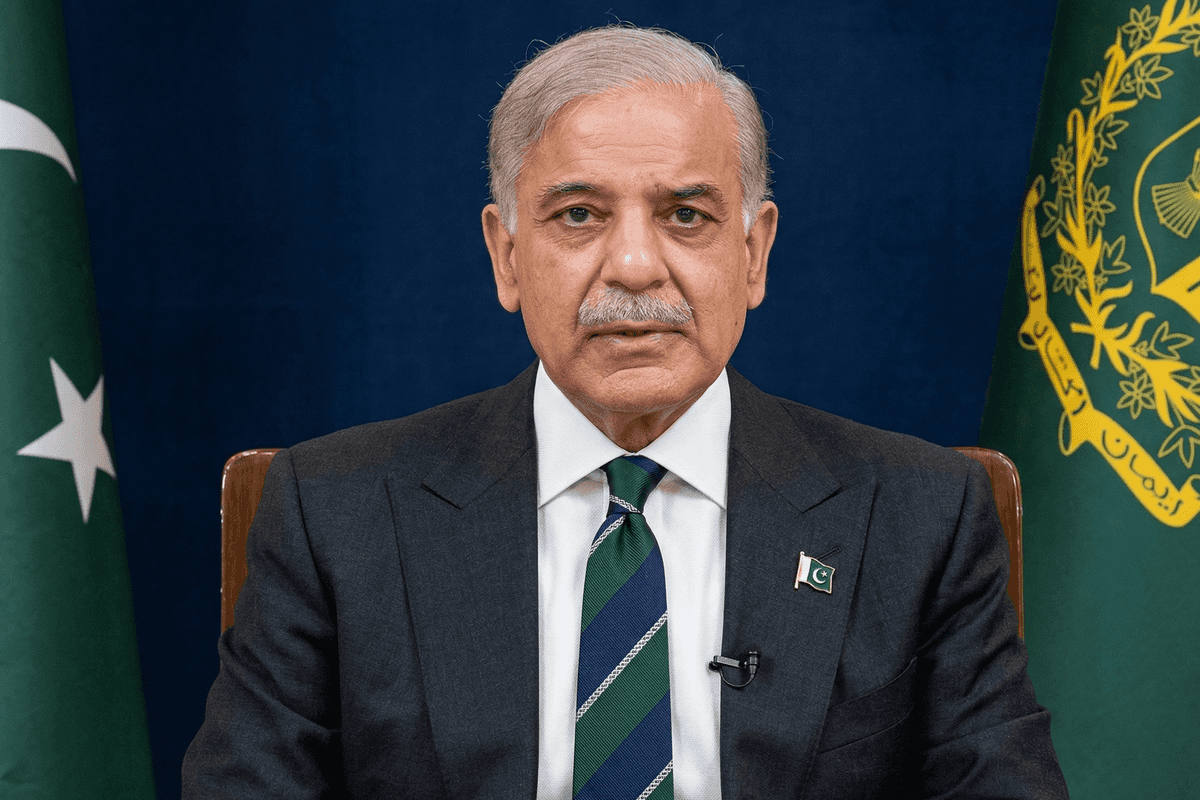
Pakistani Prime Minister Shehbaz Sharif addressing the nation on March 9, 2026.
Screengrab
Prime Minister Shehbaz Sharif announced on Monday nationwide austerity and energy-conservation measures, including work-from-home arrangements for half of government staff and a two-week closure of schools, citing rising Middle East tensions and the risk of a global energy crisis.
In a televised address, Sharif said the region was facing a “serious and dangerous situation” as Iran and parts of the Middle East were engulfed in conflict, resulting in loss of life, displacement and threats to regional peace.
He said Pakistan was pursuing diplomatic efforts to help de-escalate the situation.
Sharif expressed deep sorrow over the deaths of Iranian citizens, including Iran’s Supreme Leader Ayatollah Ali Khamenei and members of his family, in Israeli attacks. He said Pakistan strongly condemned strikes on Iran.
He also condemned attacks on several Muslim countries, including Saudi Arabia, Qatar, Kuwait, Bahrain, United Arab Emirates, Turkey and Azerbaijan, saying the loss of human lives was deeply regrettable.
Pakistan stood “shoulder to shoulder” with its brotherly Islamic countries and considered their security and stability its own, Sharif said.
He also referred to security challenges at home, saying Pakistan faced terrorism from Afghanistan. He said the country’s armed forces, under Chief of Army Staff Syed Asim Munir, were safeguarding national sovereignty and the lives and property of citizens.
Oil prices and economic impact
Sharif said global crude oil prices had surged from around $60 per barrel before the recent escalation to beyond $100.
He warned that prices could rise further if the situation worsened.
Pakistan’s economy, agriculture, industry and transport sectors rely heavily on oil and gas supplies routed through the Gulf region, making the country vulnerable to disruptions, he said.
Sharif acknowledged that the government had recently increased petroleum prices “with a heavy heart,” saying economic realities required the move but the increase was limited to reduce the burden on the public.
He said Pakistan had previously faced severe economic difficulties and was close to default, but tough decisions and public support had helped stabilize the economy. Inflation had declined significantly, the policy rate had been halved, the rupee had stabilized and electricity prices had been reduced, according to the prime minister.
Austerity and energy measures
Sharif announced a series of steps aimed at conserving energy and cutting public spending.
The petrol quota for government vehicles will be reduced by 50% for the next two months, except for ambulances and public transport buses.
Sixty percent of government vehicles will remain off the roads to save fuel.
Federal ministers, advisers and special assistants will forgo salaries for two months, while lawmakers’ salaries will be cut by 25%.
Officers in grade 20 and above earning more than PKR 300,000 will contribute two days’ salary toward public relief.
Non-salary expenditures of government departments will be cut by 20%, and purchases of vehicles, furniture and air conditioners will be banned.
Foreign visits by ministers and officials will be restricted except in unavoidable cases.
Government meetings will preferably be held online, and official dinners, receptions and iftar gatherings will be banned. Seminars and conferences will be held in government offices instead of hotels.
Office and education changes
Except for essential services, 50% of government staff will work from home.
Government offices will operate four days a week with an additional weekly holiday. The policy will not apply to banks, industry or agriculture.
All schools will close immediately for two weeks. Higher education institutions will shift to online classes.
Warning against hoarding
Sharif warned hoarders and profiteers against exploiting the situation, particularly in the sale of petrol and diesel.
“If anyone attempts to take advantage of the situation, the iron hand of the law will act,” he said, adding that provincial governments had been directed to ensure strict enforcement.
Calling the moment critical, Sharif urged national unity, saying global power dynamics were shifting and new alliances were forming.
Referring to the holy month of Ramadan, he said it taught patience, sacrifice and collective responsibility, and that nations overcome crises through unity, wisdom and cooperation.



Comments
See what people are discussing