

Pakistan's policy rate among world's highest despite aggressive easing, survey shows
Pakistan's policy rate remains among the world's highest despite SBP cutting it from 22% to 10.5%, then raising it to 11.5%
Haris Zamir
Business Editor
Experience of almost 33 years where started the journey of financial journalism from Business Recorder in 1992. From 2006 onwards attached with Television Media worked at Sun Tv, Dawn Tv, Geo Tv and Dunya Tv. During the period also worked as a stringer for Bloomberg for seven years and Dow Jones for five years. Also wrote articles for several highly acclaimed periodicals like the Newsline, Pakistan Gulf Economist and Money Matters (The News publications)
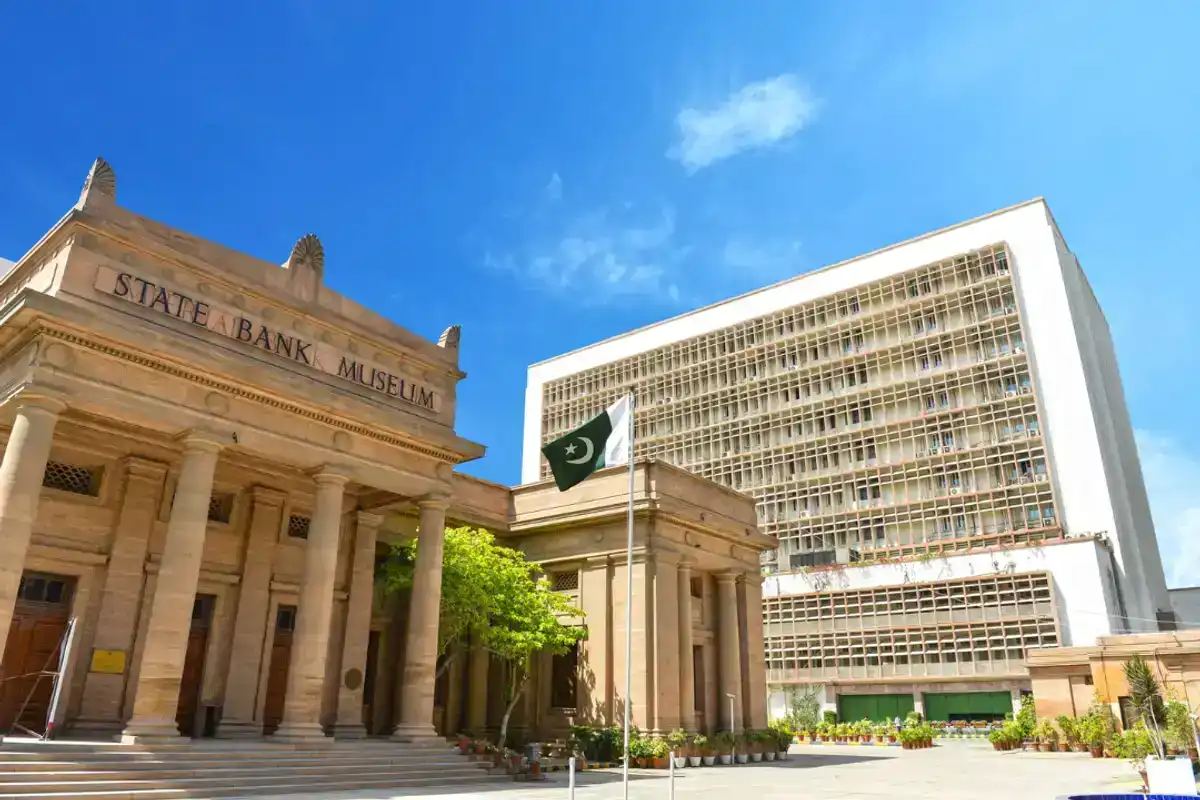
Pakistan's policy rate stood at 11.5% as of April 2026, ranking behind only Türkiye, Brazil and Russia among major economies.
Pakistan remained among the countries with the highest policy rates globally despite aggressive monetary easing over the past year, according to the Economic Survey 2025-26.
The survey highlighted the central bank's continued focus on containing inflation and preserving macroeconomic stability.
How high is Pakistan's policy rate compared to other countries?
Pakistan's policy rate stood at 11.5% as of April 2026, ranking behind only Türkiye, Brazil and Russia among major economies. The State Bank of Pakistan (SBP) had cut the rate by a cumulative 1,150 basis points from a peak of 22% in December 2023 to 10.5% by December 2025, before raising it again in response to renewed inflationary risks.
The rate hike followed higher global oil prices and geopolitical tensions in the Middle East. Despite the substantial easing carried out over the past two years, Pakistan's policy rate remains among the highest in the world, exceeding those of most advanced and emerging economies.
Pakistan ranks behind Türkiye, Brazil and Russia
Türkiye maintained the world's highest benchmark interest rate at 37% in April 2026, despite cutting rates from 47.5% in December 2024, the survey said. Brazil and Russia followed with policy rates of 14.5% each, while Pakistan ranked next at 11.5%. This reflects the SBP's relatively restrictive monetary policy, aimed at anchoring inflation expectations and maintaining positive real interest rates.
The survey said the central bank's policy remained forward-looking and data-dependent. It said the SBP was balancing support for economic recovery with the need to safeguard price, financial and external sector stability.
How does Pakistan's interest rate compare to advanced economies?
Most advanced economies continued to operate with substantially lower borrowing costs as inflation moderated and monetary conditions eased. The United States maintained a policy rate of 3.63%, the United Kingdom 3.75% and the Euro Area 2%. Canada held its rate at 2.25%, Japan at 0.75%, Australia at 4.1% and New Zealand at 2.25%.
The survey said these lower rates reflected relatively stable macroeconomic conditions and easing inflationary pressures compared with Pakistan.
What are interest rates like in other Asian economies?
Regional central banks also maintained comparatively accommodative policy settings to support investment and economic growth. China's benchmark rate stood at 3%, India at 5.25%, Malaysia at 2.75% and Indonesia at 4.75%. Thailand held its rate at 1%, South Korea at 2.5%, the Philippines at 4.5% and Hong Kong SAR at 4%.
Among other emerging economies, Saudi Arabia maintained a policy rate of 4.25%, South Africa 6.75% and Morocco 2.25%. The survey noted that these policy settings remained well below Pakistan's benchmark rate, underscoring the SBP's tighter monetary stance.
Why did the SBP raise its policy rate again in 2026?
The SBP held the policy rate at 11% during three consecutive Monetary Policy Committee meetings between July and November FY2026, the Economic Survey said, as authorities assessed inflation risks from energy price adjustments and flooding during 2025. As inflation eased amid lower international commodity prices and economic growth strengthened to 3.9% in the first quarter of FY2026, the central bank cut the policy rate by 50 basis points in December 2025 to 10.5%.
The SBP also reduced the average cash reserve requirement for banks to 5% from 6% in January 2026, aiming to improve liquidity and encourage private-sector lending. Rising global oil prices following the Middle East conflict then pushed inflation above earlier projections in March and April 2026, prompting the SBP to raise the policy rate to 11.5% effective April 28. The rate has remained unchanged since, with the next monetary policy announcement due on July 27.
What do analysts expect for Pakistan's interest rates next?
Economists said Pakistan's relatively high policy rate reflects the central bank's determination to consolidate recent macroeconomic gains while guarding against renewed inflationary pressures. "Although inflation has moderated considerably from its peak, the SBP is maintaining a positive real interest rate to preserve exchange rate stability, protect external accounts and reinforce confidence under the IMF-supported reform program," an analyst said.
Analysts said further monetary easing would likely depend on a sustained decline in inflation, stability in international oil prices and continued improvement in Pakistan's external sector. They warned that geopolitical tensions and commodity price volatility remain key risks to the inflation outlook.




Comments
See what people are discussing