

Pakistan, Qatar spearhead diplomacy as US-Iran conflict enters fragile pause
Kamran Khan says Pakistan and Qatar lead diplomatic efforts to maintain the current pause in US-Iran fighting

News Desk
The News Desk provides timely and factual coverage of national and international events, with an emphasis on accuracy and clarity.
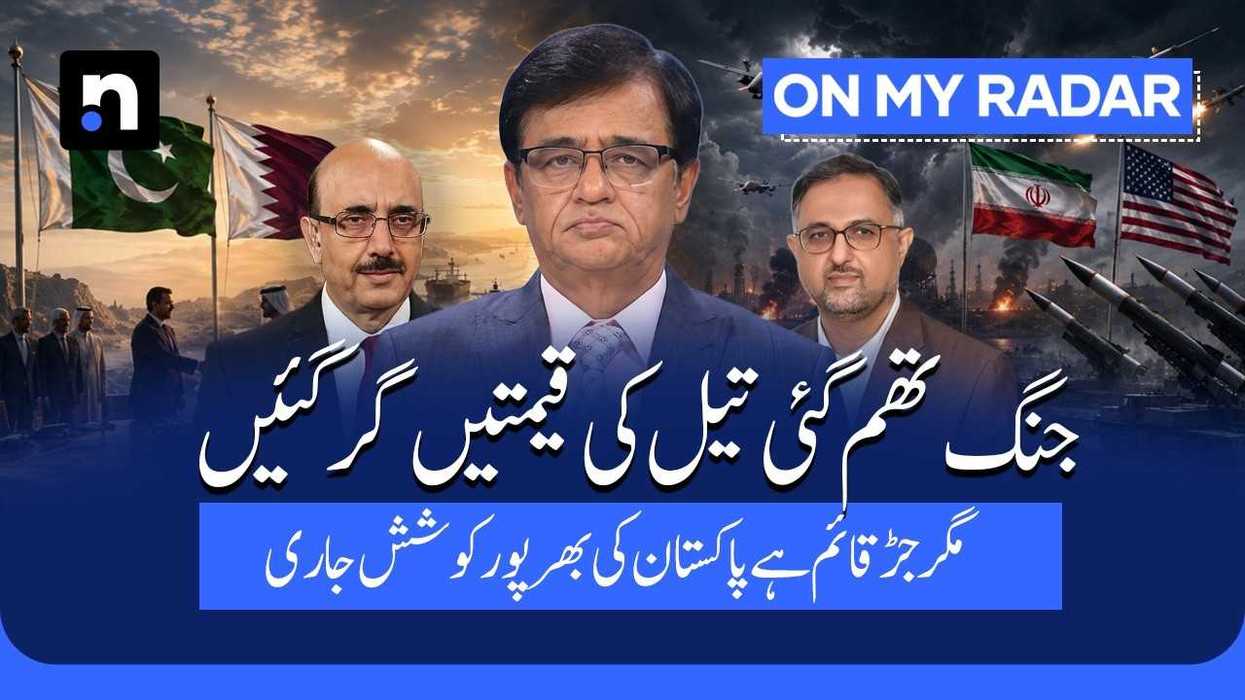
Pakistan and Qatar have emerged as key players in behind-the-scenes diplomacy aimed at preventing a wider Middle East conflict, as a fragile pause in hostilities between the United States and Iran holds despite persistent risks of renewed fighting. While no direct attacks have been reported between the two sides since Friday, regional security remains volatile, with reports of Iranian drone activity underscoring that the underlying tensions have yet to be resolved.
There have also been significant diplomatic developments surrounding the Strait of Hormuz, one of the world's most strategically important shipping lanes. Iranian Foreign Minister Abbas Araghchi has held discussions with his Saudi and Omani counterparts on the issue. According to Reuters, Oman has proposed that the Strait of Hormuz be administered through a joint regional mechanism involving Gulf states rather than remaining under Iran's sole management.
Discussing the latest developments in the region, Kamran Khan said in the latest episode of On My Radar that Pakistan and Qatar have played a central role in securing the current pause in fighting. He said Pakistan, in particular, has repeatedly helped facilitate ceasefires between Washington and Tehran since the conflict began and continues to work actively with Qatar to push for a lasting diplomatic settlement.
According to media reports citing Pakistani government sources, Islamabad and Doha are currently serving as channels for exchanging messages between the United States and Iran after both sides responded to a joint mediation proposal. Reports say Pakistan and Qatar jointly presented a de-escalation formula earlier this week, urging Washington and Tehran to return, as an initial confidence-building measure, to the positions they held before July 9 in order to restart negotiations aimed at reaching a permanent peace agreement.
Iran has also acknowledged receiving de-escalation proposals from mediating countries and said it is reviewing them. Tehran has reiterated that it remains committed to pursuing diplomacy as the preferred path forward.
President Donald Trump also expressed optimism about diplomacy, saying, "We're having good talks with Iran right now, and we're hopeful of good results." However, Iran's Foreign Ministry rejected Trump's assertion, insisting that "there are currently no negotiations taking place between Iran and the United States."
Further details have also emerged about President Trump's decision on Friday to halt the bombing campaign after two weeks of sustained strikes. According to reports, the move was driven by mounting concerns within his own administration over the risks of a broader regional war. During a White House meeting, Vice President JD Vance and Chairman of the Joint Chiefs of Staff, General Dan Caine, reportedly warned about the dangers of further military escalation.
Axios has also reported that Admiral Brad Cooper, commander of U.S. forces in the Middle East, recommended suspending military operations around the Strait of Hormuz. According to the report, Cooper argued that the United States had already achieved its principal military objectives through airstrikes and that additional attacks would offer little strategic value while increasing the risk of escalation.
The report says President Trump ultimately decided to suspend further strikes following advice from his political and military advisers. Concerns over prolonging the conflict, however, extend beyond the White House, with public support for the war also reportedly declining as more Americans grow wary of deeper U.S. involvement.
Taken together, the current lull in fighting appears to reflect more than a temporary military pause. It comes amid increasing political, military and public pressure within the United States to avoid a wider conflict, while Pakistan and Qatar's joint diplomatic initiative offers both Washington and Tehran a potential face-saving framework to resume negotiations and reduce the risk of another dangerous escalation across the region.




Comments
See what people are discussing