

Pakistan in talks with Qatar to resume LNG supplies
Shortages fuel power cuts as shipments remain stuck at Strait of Hormuz

Haris Zamir
Business Editor
Experience of almost 33 years where started the journey of financial journalism from Business Recorder in 1992. From 2006 onwards attached with Television Media worked at Sun Tv, Dawn Tv, Geo Tv and Dunya Tv. During the period also worked as a stringer for Bloomberg for seven years and Dow Jones for five years. Also wrote articles for several highly acclaimed periodicals like the Newsline, Pakistan Gulf Economist and Money Matters (The News publications)
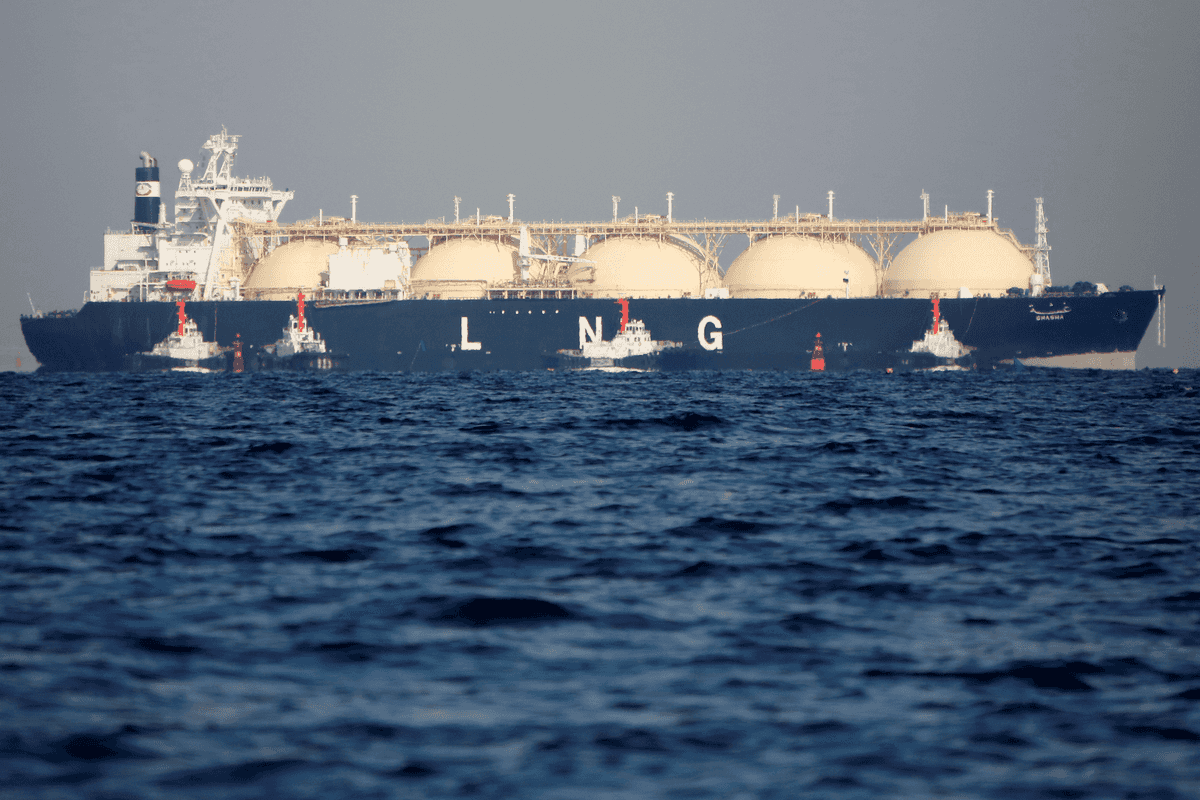
Pakistan State Oil, the country's largest importer of energy products, has been holding negotiations with state-run QatarEnergy on resumption of LNG supplies, which have been halted for over a month, industry sources have told Nukta.
The move comes as LNG shortages lead to lower electricity production and hours of loadshedding.
However, any positive outcome of the negotiations is subject to opening of Strait of Hormuz and other operational conditions, the industry sources said on Tuesday.
Pakistan typically imports about 9-10 LNG cargoes each month from Qatar under long-term LNG purchase contracts.
Pakistan's agreements with Qatar
The country has two contracts with Qatar: one is a 15-year agreement ending in January 2031 with a Brent slope of 13.37%, and the other is a 10-year contract maturing in December 2032 with a Brent slope of 10.2%.
Pakistan and Qatar are in discussions for the supply of four cargoes of Liquified Natural Gas which have been stuck at the Strait of Hormuz. Their delivery will improve gas availability in a country that has been facing a shortfall of 400 million cubic meters of gas, an official of the Ministry of Energy said on the condition of anonymity.
Pakistan's LNG inflows fell to $70 million in March, from $189 million in February and $226 million in March 2025, according to data released April 16 by the Pakistan Bureau of Statistics, a state-run entity that compiles trade data.
LNG imports in the nine months ended March 31 decreased to $1.884 billion from $2.682 billion during the same period a year earlier, Pakistan Bureau of Statistics, data showed.
In a separate letter seen by S&P Global, Pakistan's Ministry of Energy has written a letter to the Petroleum Division to manage and allocate the Qatar-contracted RLNG cargoes in a manner that ensures the availability of RLNG in line with the demand.
“With the onset of the summer season, electricity demand has started to rise significantly across the country,” the letter said. In this regard, the availability of RLNG remains critical for ensuring optimal power generation and maintaining system availability, the letter said.
It is highlighted that any shortfall in RLNG supply would necessitate increased reliance on expensive alternative fuels such as high-speed diesel. This would not only result in substantial increase in the overall cost of generation but would lead to prolonged hours of load management, the letter said.
RLNG-based power generation
In the first nine months of the fiscal year beginning July 1, electricity generation from regasified LNG fell to 13,777 GWh from 15,690 GWh during the same period a year earlier, according to NEPRA data. The share of regasified LNG-based plants in total electricity generation declined to 14.8% from 17.4% over the period, the data showed.
Pakistan may consider spot LNG purchases as the country faces a daily electricity shortfall of about 4,000 megawatts, with around 3,000 MW attributed to the closure of regasified LNG-powered electricity units following a Qatari force majeure, Power Minister Awais Ahmad Khan Leghari said during a televised address on April 16.
LNG flows into the country have been hampered by developments in the Middle East, he said.
While purchasing spot LNG cargoes remains an option, he cautioned that this could lead to higher prices.
According to Leghari, contractual cargoes were available at about $16/million British thermal units. However, spot purchases could cost as much as $22-25/MMBtu, potentially burdening consumers.





Comments
See what people are discussing