

Pakistan's $3 billion gold trade largely escapes tax net
Kamran Khan highlights gold and silver prices plunge globally as central banks keep buying

News Desk
The News Desk provides timely and factual coverage of national and international events, with an emphasis on accuracy and clarity.
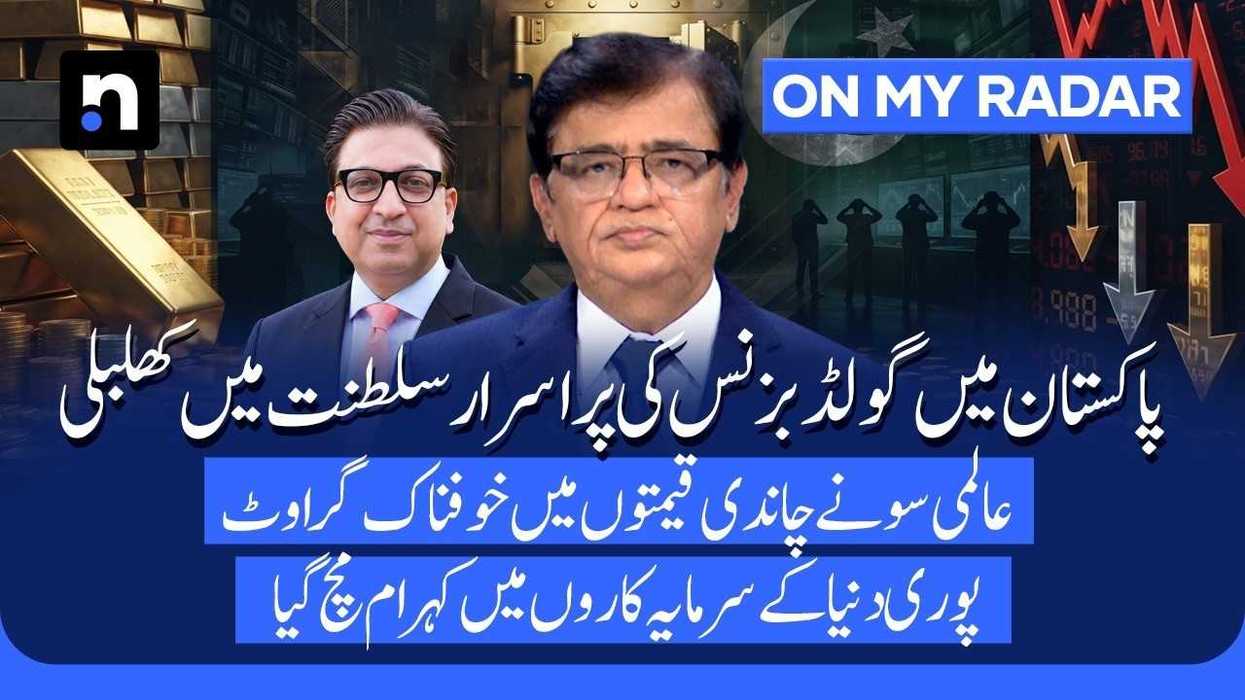
Pakistan's gold market, estimated to be worth up to Rs3 trillion annually, operates largely outside the formal economy, with more than 90% of the trade conducted through undocumented channels, even as gold and silver prices suffer historic declines in global markets.
In the latest episode of his program On My Radar, Kamran Khan examined the dramatic reversal in precious metal prices, the contrasting buying spree by central banks and the questions surrounding Pakistan's largely undocumented gold industry.
According to research by the Competition Commission of Pakistan, the country consumes between 60 and 90 metric tons of gold annually. At current prices, the trade is worth approximately Rs2 trillion to Rs3 trillion. Yet more than 90% of transactions take place through informal channels. Pakistan's documented gold imports amounted to just $17 million in the 2023-24 fiscal year.
The scale of the undocumented trade raises questions about where the gold comes from, who imports and sells it, who buys it and how much tax the industry contributes.
While salaried employees have their incomes closely monitored by the Federal Board of Revenue, and documented businesses face increasing tax obligations, a multitrillion-rupee gold market remains largely outside the tax system.
The concerns come as investors worldwide grapple with steep losses following an extraordinary rally in precious metals that began in 2024.
In January 2024, gold traded at approximately $2,060 per ounce. Its price surged by 64% in 2025, marking the biggest annual increase in 46 years. The rally peaked on Jan. 29, 2026, when gold reached approximately $5,595 per ounce, gaining more than 170% in two years.
Silver recorded an even more dramatic increase, rising from approximately $24 per ounce in January 2024 to more than $121 in January 2026, a fivefold increase. Financial experts had begun forecasting that gold could reach $6,000 to $7,000 per ounce.
However, the rally abruptly reversed. On Jan. 30, gold plunged approximately 9.5% in a single day, its biggest one-day decline in 43 years. Silver fell by nearly 28% during the same session.
The downward trend continued despite intermittent recoveries. Gold fell to approximately $4,176 per ounce in September before declining further to around $3,514 by Nov. 25, about 37% below its record high. Silver dropped from $121 to approximately $41 per ounce, losing more than 66% of its peak value.
In Pakistan, gold prices also suffered a substantial correction. One tola (11.66 grams) of gold, which reached Rs572,862 on Jan. 29, was trading at Rs378,636, a decline of nearly Rs200,000, or 34%, in 10 months.
Silver prices fell from Rs12,175 per tola to Rs4,629, a decrease of approximately 62%.
Khan traced the earlier surge in precious metal prices to geopolitical tensions, including the Russia-Ukraine war, conflicts in the Middle East, the US-China trade war, tariffs imposed by US President Donald Trump and concerns about America's growing debt and the future of the dollar. Expectations of US interest rate cuts also increased gold's appeal as a safe-haven investment.
However, inflation concerns, rising yields on US government bonds and expectations of further interest rate increases have encouraged investors to move away from gold. Unlike bank deposits and government bonds, gold generates no regular income or annual interest, making it less attractive when conventional investments offer higher returns.
Large investors have also sold gold and silver to cover stock market losses and repay debts. Investors who borrowed money to purchase precious metals faced additional pressure to sell as prices declined.
Silver has its own market dynamics because it is used not only in jewelry and investment products but also in solar panels, electric vehicles and electronics.
According to the Silver Institute, 2026 will mark the sixth consecutive year in which global silver demand exceeds production and supply. The market is expected to face a shortfall of approximately 35 million ounces this year. However, rising prices have encouraged solar companies to reduce their silver consumption, while speculation and sudden selling have added to market volatility.
Central banks continue buying gold
Despite the price correction, central banks have continued adding gold to their reserves, highlighting a striking contrast between government buying and investor selling.
According to the World Gold Council, central banks purchased 675 metric tons of gold during the first nine months of 2026. Purchases reached 321 tons between July and September, 42% higher than in the same period last year.
During those three months, China added 63 tons to its reserves, Poland purchased 40 tons, while Kazakhstan and Uzbekistan each acquired 14 tons.
Several governments are seeking to reduce their dependence on the US dollar in national reserves. Financial sanctions imposed by the United States and Europe on Russia have also reinforced concerns about the risks of holding foreign currency assets, making gold an attractive alternative.
In China, demand for gold bars and coins as investment products remains strong. India has also emerged as a major buyer, importing approximately 470 tons of gold worth $47 billion between January and October this year.
That amount exceeds the foreign exchange Pakistan earns from exporting goods to the rest of the world over an entire year, highlighting the scale of India's gold purchases.
The contrasting trends have raised questions about whether gold and silver have completed their correction or face further declines. They have also renewed debate over whether current prices offer an attractive investment opportunity, whether central bank purchases can drive another rally and whether gold remains the world's safest investment or has become another arena for global speculation.
For Pakistan, however, the larger question may be how a multitrillion-rupee gold industry continues to operate largely beyond the reach of the formal tax system.



Comments
See what people are discussing