

Pakistan's mining sector gets its first shared platform for collaboration
SECMC-led forum brings together industry, academia and government to tackle the challenges facing Pakistan's mining ecosystem

Business Desk
The Business Desk tracks economic trends, market movements, and business developments, offering analysis of both local and global financial news.

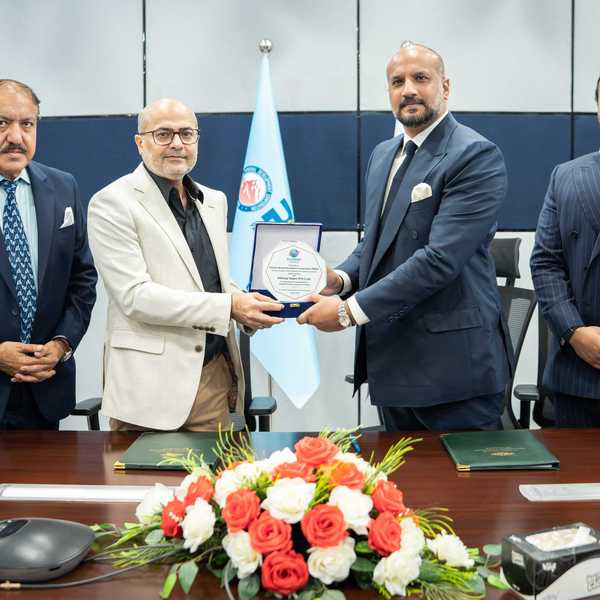
Sindh Chief Minister Syed Murad Ali Shah attended as chief guest at the Mining Technical Conference 2026, held on Thursday, August 6, in Karachi.
Nukta
Pakistan has the mineral resources, the mining companies, and the academic institutions. What it has lacked is a common table for all three to sit at.
That gap was the starting point for the Mining Technical Conference 2026, held on Thursday, August 6, in Karachi, organized by Sindh Engro Coal Mining Company (SECMC) under the theme "Driving Pakistan's Mining Sector through Collaboration, Innovation & Technology."
Drawing on its operational experience developing coal in Thar, SECMC designed the conference as a sector-wide forum, bringing stakeholders who typically operate in separate technical, commercial, academic and policy silos into one room to discuss challenges facing the industry as a whole.
Who showed up?
The conference drew representatives from across Pakistan's mining and energy landscape, including Reko Diq Mining Company, Pakistan Petroleum Limited, SSRL, National Resources Limited, HUBCO, Fauji Group, Fauji Fertilizer Company and Lucky Cement. International participation came from equipment and technology providers including Komatsu, DMT Germany, EACON Mining Technology and Tonly Heavy Industries.
Sindh Chief Minister Syed Murad Ali Shah attended as chief guest and delivered the keynote address, calling the event a landmark gathering of the three pillars that will shape the sector's future: industry, academia and technology.
"Pakistan has vast untapped mineral resources that require investment and technology," Shah said. "The future of the industry depends on developing human capital who will lead the industry for decades. I urge the companies to not just invest in mining and machinery but also people."
The chief minister pointed to the impact of Sindh's policy framework for developing Thar's coal reserves, noting that two blocks are now operational, including one run by SECMC, and that using indigenous coal instead of imported fuel has saved Pakistan an estimated $3.2 billion.
Why did SECMC organize it?
Amir Iqbal, CEO of SECMC, said the company's role was to get the right people talking to each other rather than to solve the sector's problems alone.
"Mining companies understand operational realities, universities bring research and knowledge, technology providers offer innovative solutions, and the government provides policy direction," Iqbal said. "Meaningful progress becomes possible when all these strengths are connected."
He added that no single organization can transform Pakistan's mining sector on its own, and that the industry needs sustained partnerships that link operational experience, academic research, government support, and global technology.
The skills gap at the center of it all?
A recurring theme throughout the day was that new technology is only as useful as the people trained to run it. As mining operations become more digital, automated and data-driven, the sector will need more equipment operators, mining engineers, geologists, data specialists and technical researchers who can work with modern systems.
Participants agreed that closing this gap is a shared responsibility: mining companies can flag operational needs, universities can adjust their curricula and research priorities accordingly, technology providers can support training, and the government can create the conditions for all of this to happen.
Technical sessions throughout the day covered mining technology, equipment modernization, artificial intelligence, automation, digitalization, exploration, mine development, ESG practices and applied academic research, with a consistent focus on which of these solutions are actually relevant to Pakistan's mining conditions, and what it would take to adopt them.
What comes next?
A dedicated panel discussed setting up a National Mining Industry Platform or Society — a permanent body for collaboration, knowledge sharing, skills development, research partnerships and coordinated policy engagement across the sector.
Participants also proposed making the Mining Technical Conference an annual fixture, giving the industry a recurring checkpoint to review progress, assess new technologies, and set priorities for the year ahead.
Whether the conference has lasting impact will depend less on the list of organizations that attended and more on what follows: the partnerships, research initiatives, and training programs it produces. For an industry that has historically operated in fragments, it marks a first step toward something more coordinated.


Comments
See what people are discussing