

Pakistan's poverty rate rises to 28.9% as Middle East tensions threaten further setbacks
Pakistan's poverty rate climbed from 21.9% to 28.9% in 2024-25. Here's what the Economic Survey data reveals and why geopolitical shocks make it worse
Haris Zamir
Business Editor
Experience of almost 33 years where started the journey of financial journalism from Business Recorder in 1992. From 2006 onwards attached with Television Media worked at Sun Tv, Dawn Tv, Geo Tv and Dunya Tv. During the period also worked as a stringer for Bloomberg for seven years and Dow Jones for five years. Also wrote articles for several highly acclaimed periodicals like the Newsline, Pakistan Gulf Economist and Money Matters (The News publications)
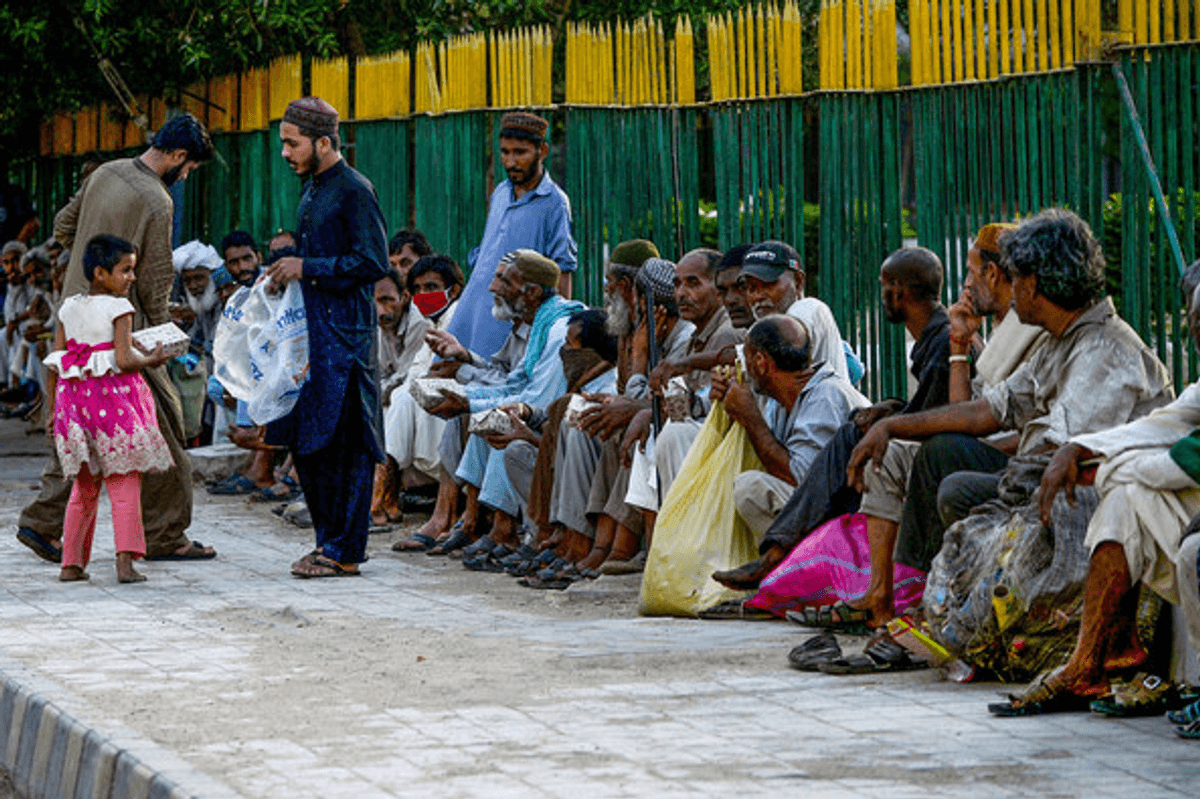
Pakistan's national poverty rate rose to 28.9% in 2024-25, up from 21.9% in 2018-19, according to the Economic Survey 2025-26. The increase reflects years of inflation, climate shocks, and currency devaluation.
With Middle East tensions now adding external pressure, the country's most vulnerable households face further strain on purchasing power and food security.
Why has Pakistan's poverty rate increased so sharply?
Pakistan's poverty rate increased because of compounding domestic and external shocks between 2018-19 and 2024-25. High inflation eroded household purchasing power, while climate-related disruptions hit rural incomes hard.
Currency devaluation raised the cost of imports, including food and energy, disproportionately burdening lower-income households who spend the largest share of their earnings on basic needs.
How does poverty vary across provinces and rural-urban divides?
The data shows a wide gap between rural and urban poverty. Rural poverty rose from 28.2% to 36.2%, while urban poverty climbed from 11.0% to 17.4% over the same period.
At the provincial level, Balochistan recorded the highest poverty rate at 47% in 2024-25, followed by Khyber Pakhtunkhwa at 35.3%, Sindh at 32.6%, and Punjab at 23.3%. In 2018-19, the corresponding figures were 41.8%, 28.7%, 24.5%, and 16.5%. Punjab remained the least affected province, but poverty increased across all four.
These regional disparities reflect uneven exposure to economic shocks. Provinces with weaker infrastructure, greater climate vulnerability, and fewer formal employment opportunities absorbed a heavier blow.
The widening national Gini coefficient, from 28.4 to 32.7, confirms that recent economic stabilisation measures benefited higher-income groups more than those at the bottom.
What role does the Middle East conflict play in Pakistan's poverty outlook?
Pakistan's dependence on the Middle East makes it acutely exposed to regional instability. Around 55% of Pakistan's remittances originate from Gulf countries, according to a UNDP regional assessment.
Any disruption to labour markets or financial flows in that region feeds directly into household income for millions of Pakistani families.
The UNDP assessment also found that 33 out of 36 countries in Asia and the Pacific are highly vulnerable to oil price shocks, 25 face major trade and supply-chain disruption, and 22 are exposed to food and fertiliser stress.
Even a short disruption scenario could push around 8.8 million people across the region into poverty, with estimated output losses of US$97-299 billion. War-risk premiums on vessels transiting the Persian Gulf reportedly surged by more than 1,000% in some cases, and Asia-Europe shipping times stretched from around 31 days to 41 days via longer reroutes.
Middle East urea prices rose from under US$500 per tonne to above US$700 per tonne, threatening agricultural input costs in Pakistan.
How is Pakistan's social protection system responding?
The Benazir Income Support Programme remains the primary vehicle for reaching vulnerable households. BISP currently covers 10.20 million unconditional cash transfer beneficiaries and 6.59 million conditional cash transfer beneficiaries.
Social Protection Wallets are being rolled out to around 10 million additional beneficiary households, extending digital access to support payments.
Critics have raised a valid concern: cash transfers are often not fully indexed to cumulative inflation, meaning their real value has declined over time for recipients. This limits the programme's ability to offset the full impact of rising prices on lower-income households.
What does shock-responsive social protection mean for Pakistan?
Routine social protection programmes are designed for stable conditions. Shock-responsive systems, by contrast, are built to scale quickly, reach the right households fast, and operate through digital infrastructure that does not depend on manual processes.
Pakistan's experience with repeated external shocks, from commodity price spikes to conflict-driven remittance disruptions, makes this shift a practical necessity rather than a policy aspiration.
The Economic Survey's own framing is direct on this point: durable poverty reduction depends on translating macroeconomic stability into broad-based welfare gains.
That requires sustained growth, job creation, effective targeting, stronger institutional coordination, and timely support to at-risk households.
What will it take to reverse Pakistan's poverty trajectory?
Pakistan's poverty rate did not rise because of a single event. It rose because a sequence of shocks, economic, climatic, and now geopolitical, compounded over several years without sufficient buffers in place.
Reversing that trajectory requires more than stabilisation. It requires investment in human resource development, inclusive growth, and a social protection architecture capable of absorbing future shocks before they translate into lasting deprivation.
Geopolitical instability in the Middle East is a reminder that external shocks do not stay external for long.
They enter domestic economies through fuel, freight, fertiliser, and food prices, and they exit through the livelihoods of the poorest households first.



Comments
See what people are discussing