

Pakistan, Saudi Arabia discuss regional security amid Red Sea tensions
Pakistan and Saudi Arabia discussed regional security in a call between their foreign ministers amid rising Red Sea tensions

News Desk
The News Desk provides timely and factual coverage of national and international events, with an emphasis on accuracy and clarity.
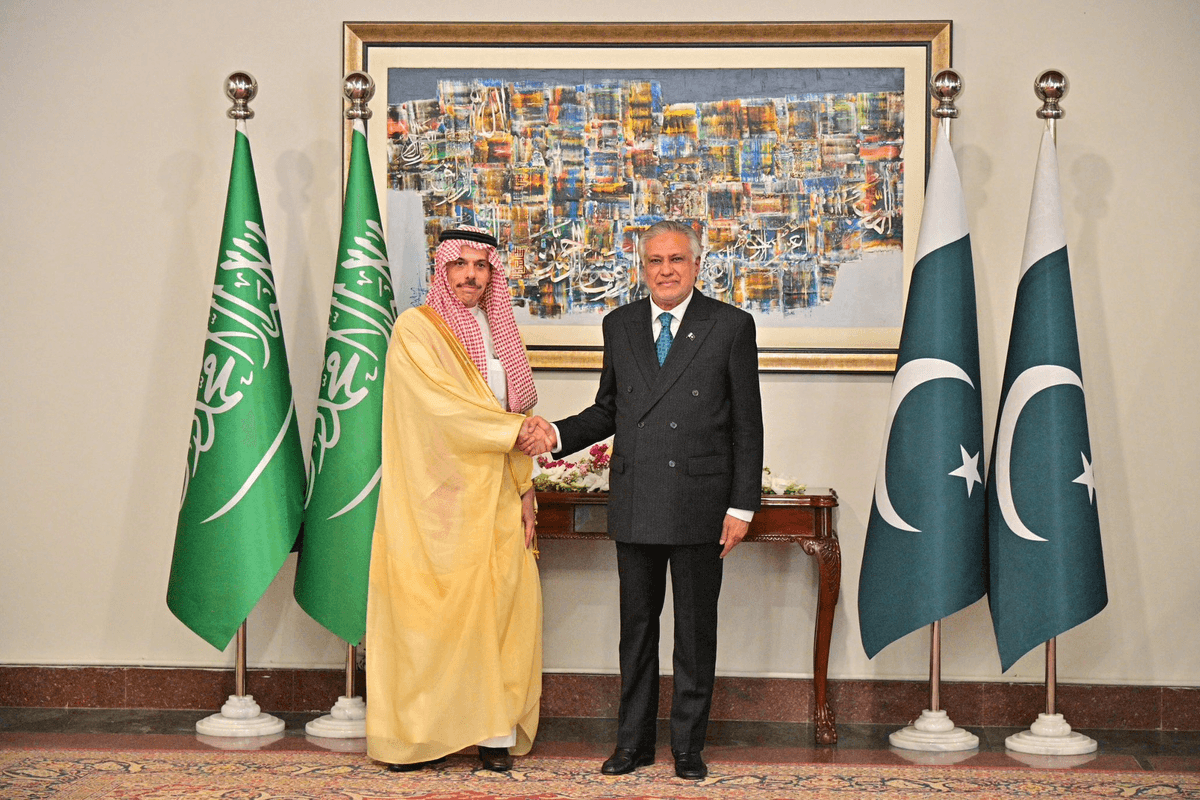
The two ministers exchanged views on the latest regional developments and reiterated the close ties between Islamabad and Riyadh.
FO/File
Pakistan's Deputy Prime Minister and Foreign Minister Ishaq Dar held talks with his Saudi counterpart, Prince Faisal bin Farhan Al Saud, on Saturday.
The two countries reaffirmed their commitment to regional stability and diplomatic engagement amid rising tensions in the Red Sea.
What did Pakistan and Saudi Arabia discuss in their call?
The two ministers exchanged views on the latest regional developments and reiterated the close ties between Islamabad and Riyadh, according to Pakistan's Foreign Ministry.
They stressed the importance of continued diplomacy and agreed to work together to promote peace, stability and constructive engagement across the region.
Deputy Prime Minister/Foreign Minister Senator Mohammad Ishaq Dar @MIshaqDar50 spoke with the Foreign Minister of Saudi Arabia, His Highness Prince Faisal bin Farhan Al Saud @FaisalbinFarhan.
The two leaders exchanged views on the latest regional developments and reaffirmed the… pic.twitter.com/MOSvnhktyl
— Ministry of Foreign Affairs - Pakistan (@ForeignOfficePk) July 25, 2026
Why did Pakistan reach out to Saudi Arabia now?
The conversation comes as Pakistan steps up its diplomatic support for Saudi Arabia following escalating threats by Yemen's Iran-aligned Houthi movement against the kingdom and commercial shipping in the Red Sea. Earlier this week, Prime Minister Shehbaz Sharif reaffirmed Pakistan's "complete solidarity" with Saudi Arabia during a telephone call with Saudi Crown Prince Mohammed bin Salman. Sharif condemned Houthi attacks on Saudi-linked oil tankers, describing them as a violation of international law and a threat to freedom of navigation.
Sharif said Pakistan would continue working closely with Saudi Arabia to safeguard regional security and ensure the uninterrupted flow of maritime trade through the Red Sea, the Strait of Hormuz and surrounding waterways. The two leaders also agreed to maintain close coordination on efforts to preserve peace and stability in the region, according to a statement issued by the prime minister's office.
What has Pakistan's Foreign Ministry said about the Houthi threats?
Pakistan's diplomatic outreach followed a strongly worded statement by its Foreign Ministry on Wednesday condemning Houthi threats against Saudi Arabia and commercial vessels operating in the Red Sea. The ministry said the threats endangered regional security, undermined freedom of navigation and risked disrupting global trade. It warned that any attack on Pakistani-flagged vessels or the country's maritime interests would be regarded as a serious threat to Pakistan's national security.
What triggered the Houthi blockade announcement?
The statement came after the Houthis warned international shipping companies against using Saudi ports, saying vessels loading or unloading cargo there could become military targets. The group also announced what it described as a naval blockade of Saudi Arabia. This prompted concern over the security of one of the world's busiest maritime trade routes and the potential impact on global energy supplies.
Saudi Arabia rejected the Houthi allegations that it was imposing a siege on Yemen and condemned the blockade announcement. The Houthis, who control much of northern Yemen including the capital Sanaa, have been fighting a Saudi-led coalition backing Yemen's internationally recognized government since 2015. The conflict has fueled one of the world's worst humanitarian crises, and repeated Houthi attacks on commercial shipping have disrupted trade through the Red Sea, a critical artery for global commerce.




Comments
See what people are discussing