

Pakistan says Afghan ceasefire holding, although border trade remains halted
Foreign Office says transit trade halt will stay until Afghan border security concerns are fully addressed

Aamir Abbasi
Editor, Islamabad
Aamir; a journalist with 15 years of experience, working in Newspaper, TV and Digital Media. Worked in Field, covered Big Legal Constitutional and Political Events in Pakistan since 2009 with Pakistan’s Top Media Organizations. Graduate of Quaid I Azam University Islamabad.
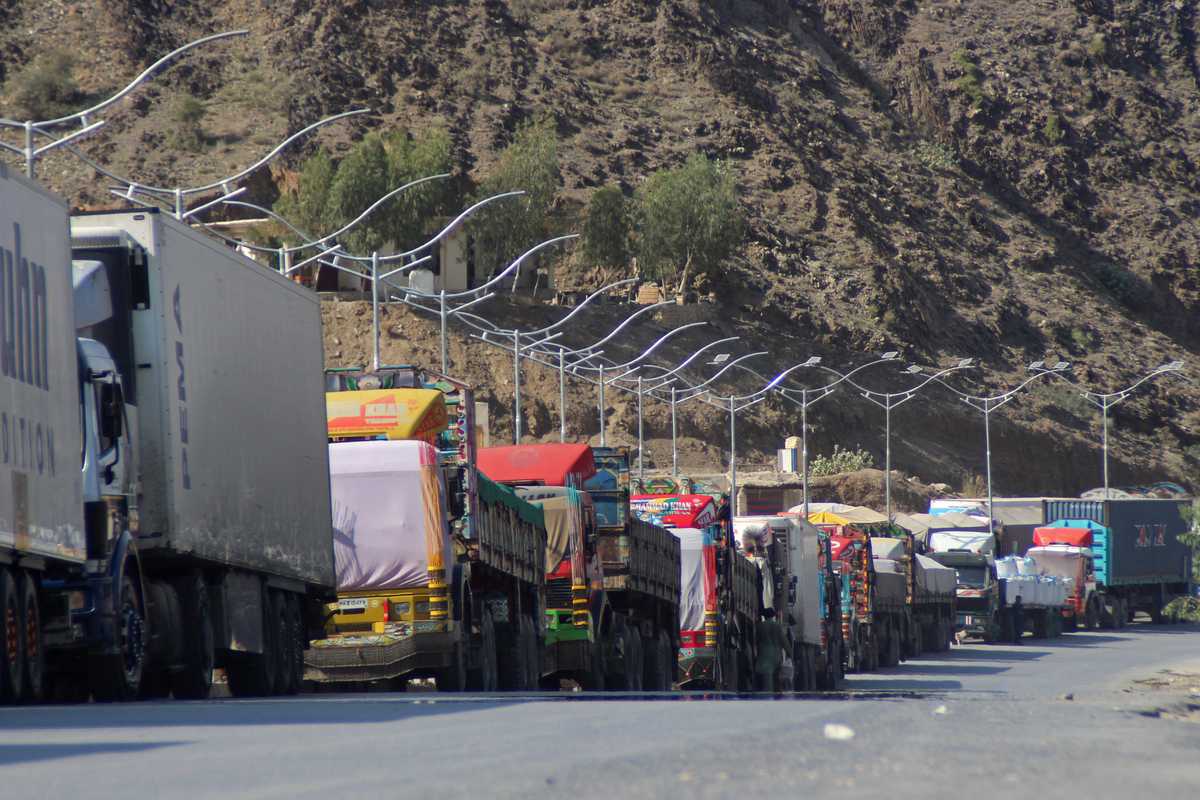
Goods carrier trucks stalled near the closed Torkham border crossing between Afghanistan and Pakistan in Nangarhar province on October 21, 2025.
AFP
Pakistan has said that cross-border transit trade with Afghanistan will remain suspended until “satisfactory progress” is made on border security, even as a fragile ceasefire between the two countries continues to hold after recent deadly clashes.
Foreign Office spokesperson Mumtaz Zahra Baloch confirmed during the weekly media briefing on Thursday that all movement of Afghan transit goods through Pakistan has been halted. She said the suspension will remain in effect until Islamabad’s concerns over militant infiltration and border safety are addressed.
“The ceasefire between Pakistan and Afghanistan is still intact,” the spokesperson said. “Terrorist incidents originating from inside Afghanistan have significantly declined since the implementation of the truce.”
The statement came days after Pakistan and Afghanistan agreed to a ceasefire in Doha, Qatar, following the worst border violence since the Taliban seized power in Kabul in 2021.
The clashes, which left dozens dead, included Pakistani airstrikes across the 2,600-kilometer (1,600-mile) frontier and ground fighting between the two sides.
Islamabad said the hostilities were triggered by its demand that Kabul rein in militants operating from Afghan soil. Pakistani officials accuse the Tehreek-e-Taliban Pakistan (TTP), an umbrella organization of militant groups, of launching attacks from Afghan havens “in connivance” with the ruling Taliban.
Kabul, however, denies harboring anti-Pakistan militants and accuses Islamabad of spreading misinformation to destabilize Afghanistan. Afghan officials have also alleged that Pakistan shelters Islamic State-linked fighters to undermine Afghan sovereignty — a claim Pakistan rejects.
The TTP, which has fought for years to overthrow the Pakistani government and impose its own strict version of Islamic rule, has intensified attacks on Pakistani security forces in recent months.
Earlier this month, Pakistan carried out multiple airstrikes inside Afghanistan, including one targeting TTP leader Noor Wali Mehsud in Kabul on October 9.
Follow-up talks in Turkey
The Foreign Office said that the upcoming meeting in Turkey on October 25 will build on the Doha agreement. The talks, to be attended by representatives from Pakistan, Afghanistan, and regional partners, aim to formalize mechanisms for enforcing the ceasefire and improving counterterrorism cooperation.
Qatar’s Foreign Ministry, which co-mediated the Doha talks along with Turkey, said the follow-up meetings were designed “to ensure the sustainability of the ceasefire and verify its implementation in a reliable and sustainable manner.”
Rejecting recent statements by the Afghan Taliban that no agreement was reached in Doha, Baloch clarified, “The assertions made by the Afghan Taliban are incorrect. Documents were indeed signed between Pakistan and Afghanistan during the Doha talks.”
Dar holds key regional talks
Separately, Foreign Minister Ishaq Dar held a series of high-level diplomatic engagements this week.
Dar spoke with his counterparts from the United Arab Emirates, Saudi Arabia, and Morocco, discussing bilateral ties, regional security, and joint efforts to promote peace and economic stability in the Muslim world.
“These engagements reflect Pakistan’s proactive diplomatic outreach and its commitment to strengthening ties with brotherly nations,” the spokesperson said.
Pakistan reiterates support for Palestine
Commenting on developments in the Middle East, the Foreign Office reaffirmed Pakistan’s “unwavering support” for the Palestinian cause and condemned Israel’s attempts to annex parts of the occupied West Bank.
The spokesperson welcomed the recent advisory opinion of the International Court of Justice, which found Israel responsible for obstructing humanitarian assistance in Gaza and violating international law.
“This is the fourth ruling by the ICJ against Israel since January 2024, reaffirming the illegality of its actions,” she said.
She added that the Organization of Islamic Cooperation and several Muslim-majority countries have issued a joint communiqué condemning Israel’s new annexation laws.
“Pakistan fully supports the OIC’s collective stance and reiterates its firm commitment to the Palestinian people’s right to self-determination and statehood,” she concluded.



Comments
See what people are discussing