

Pakistan stocks face volatile week amid geopolitical risks
Pakistan stocks face a volatile week as Hormuz closure, US-Iran tensions and PTI uncertainty weigh on investors, brokerages say after a 2.3% KSE-100 gain

Haris Zamir
Business Editor
Experience of almost 33 years where started the journey of financial journalism from Business Recorder in 1992. From 2006 onwards attached with Television Media worked at Sun Tv, Dawn Tv, Geo Tv and Dunya Tv. During the period also worked as a stringer for Bloomberg for seven years and Dow Jones for five years. Also wrote articles for several highly acclaimed periodicals like the Newsline, Pakistan Gulf Economist and Money Matters (The News publications)
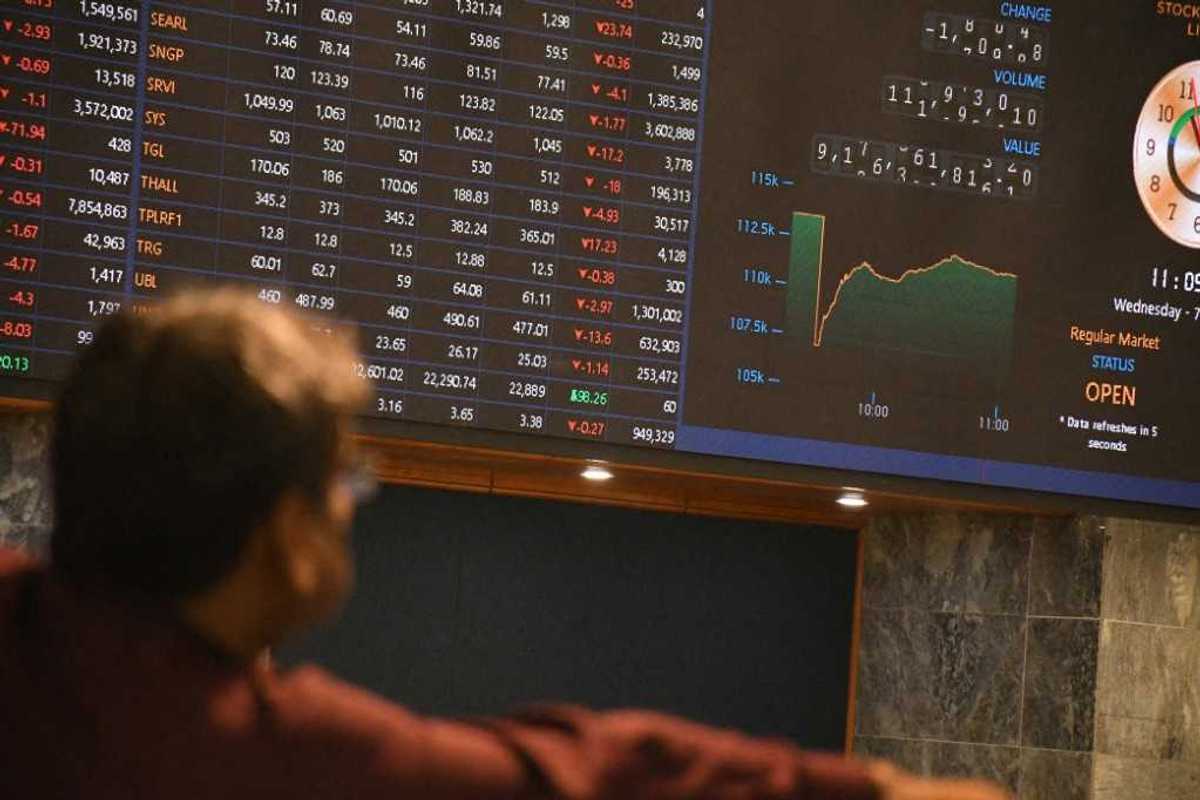
Pakistan stocks are expected to face a volatile week ahead, brokerage houses said. Developments in the Middle East conflict, the continued closure of the Strait of Hormuz and domestic political uncertainty are likely to shape investor sentiment, though easing oil prices and stronger economic indicators could support further gains.
Why are Pakistan stocks expected to be volatile this week?
Brokerages say geopolitics and domestic politics will drive the market. Any escalation between the United States and Iran could trigger fresh selling and revive inflation concerns. Spectrum Securities and InterMarket Securities expect caution, while Arif Habib Ltd. sees room for a rally if oil prices stay stable.
Spectrum Securities said investors were likely to remain cautious as the closure of the Strait of Hormuz constrains global oil supplies and keeps energy prices elevated. Any adverse geopolitical development could wipe out gains made by the benchmark index during the outgoing week, it added.
It also warned that escalating tensions between Washington and Tehran could push the market back towards levels recorded at the height of the conflict. That would also drive international oil prices higher and renew inflationary pressures.
What domestic risks could affect the market?
Spectrum Securities flagged domestic political uncertainty, particularly developments involving Pakistan Tehreek-e-Insaf (PTI). Reports of a possible transfer of the party’s chairman to hospital could add to political instability and trigger public unrest if confirmed, it said.
InterMarket Securities also expects the market’s near-term direction to depend largely on geopolitical developments and domestic political uncertainty. In contrast, Arif Habib Ltd. kept a cautiously optimistic outlook, saying the market could extend its rally if international oil prices remained stable.
How did the KSE-100 perform last week?
The benchmark KSE-100 Index gained 2.3% week-on-week to close at 177,874 points on Friday, supported by diplomatic efforts to ease tensions in the Middle East. These included a Qatar-mediated proposal involving the United States and Iran to reopen the Strait of Hormuz, as well as Russia-Ukraine peace talks in Abu Dhabi.
The developments eased concerns over oil supplies and contributed to a decline in international crude prices. Brent crude fell 3% during the week to USD96.1 per barrel on Friday.
Average daily trading volume rose 24% week-on-week to 1.3 billion shares, according to Arif Habib Ltd.
What do Pakistan’s economic indicators show?
Workers’ remittances rose 14% year-on-year to USD3.9 billion in October. Cumulative inflows during the first four months of FY27 reached USD14.8 billion, also up 14%.
The fiscal surplus stood at PKR1.3 trillion in the first quarter of FY27, while the primary surplus reached PKR3 trillion. Central government debt declined 1% during the fiscal year to date to PKR82.7 trillion as of September 2026.
The government raised PKR551 billion in its latest treasury bill auction, exceeding the PKR400 billion target. Cut-off yields fell by 22, 43, 46 and 48 basis points for the one-, three-, six- and 12-month tenors, respectively.
The State Bank of Pakistan’s foreign exchange reserves rose by USD11 million week-on-week to USD21.6 billion as of November 6, providing import cover of 3.1 months.
Petrol and high-speed diesel prices fell by PKR20.6 and PKR22.3 per litre during the week, to PKR332 and PKR360 per litre. In the automobile sector, passenger car sales surged 60% year-on-year to 21,635 units in October 2026, driven largely by stronger demand for smaller-engine vehicles, the brokerage report said.



Comments
See what people are discussing