

Pakistan targets 72% jump in cotton output to 9.64 million bales
Production plan aims to reverse last season's weak harvest as extreme heat raises concerns over crop yields

Business Desk
The Business Desk tracks economic trends, market movements, and business developments, offering analysis of both local and global financial news.
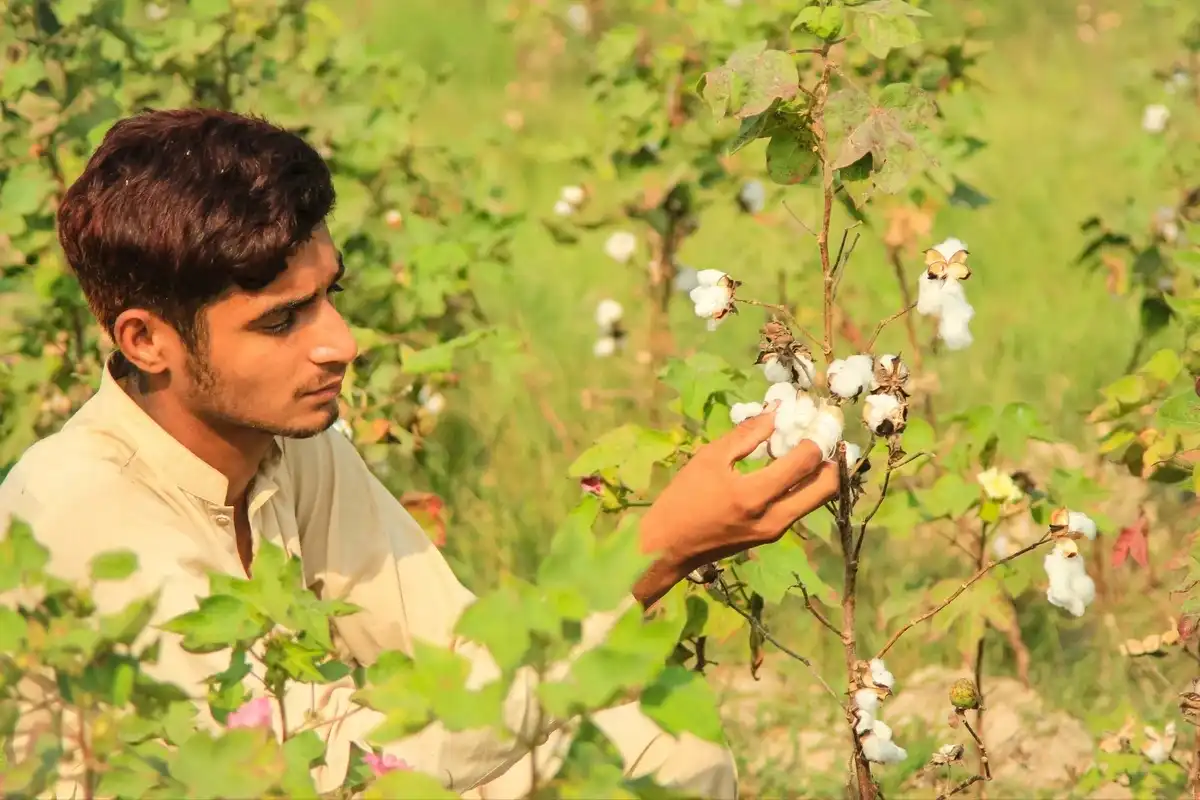
Pakistan has set an ambitious target to increase cotton production by 72% to 9.64 million bales during the 2026-27 kharif season, aiming to recover from last season's output of 5.6 million bales, according to the government's production plan.
The plan targets cotton cultivation on 2.16 million hectares nationwide. Punjab is expected to account for 1.295 million hectares with a production target of 5 million bales, followed by Sindh with 615,000 hectares and a target of 4.042 million bales. Balochistan has been assigned a target of 600,000 bales from 250,000 hectares, while Khyber Pakhtunkhwa is expected to produce 930 bales from 300 hectares.
The higher production target comes as domestic cotton prices continue to rise amid concerns over crop conditions.
According to Cotton Ginners Forum Chairman Ahsan-ul-Haq, cotton prices increased by PKR 400 per maund over the past week.
Cotton prices in Punjab have risen to PKR 18,200 per maund, while prices in Sindh have reached PKR 17,700 per maund, he said.
Ahsan-ul-Haq said record-high temperatures across Pakistan's cotton-growing regions have placed the standing crop under stress, raising concerns about yields despite the government's higher production target.
The Agriculture Department has advised farmers to shorten irrigation intervals and apply light irrigation to reduce heat stress on cotton plants.
The department has also recommended applying micronutrient sprays to improve plant health and help protect the crop from the effects of extreme weather.
Pakistan's textile industry, the country's largest export sector, is closely monitoring the cotton crop as domestic production remains well below historical levels, increasing reliance on imported cotton to meet industrial demand.




Comments
See what people are discussing