

Pakistan to host Iran-US peace deal signing ceremony in Geneva on June 19, PM says
Pakistan will host the signing ceremony of the Iran-US peace deal in Geneva on June 19, PM Shehbaz Sharif announced in parliament

News Desk
The News Desk provides timely and factual coverage of national and international events, with an emphasis on accuracy and clarity.
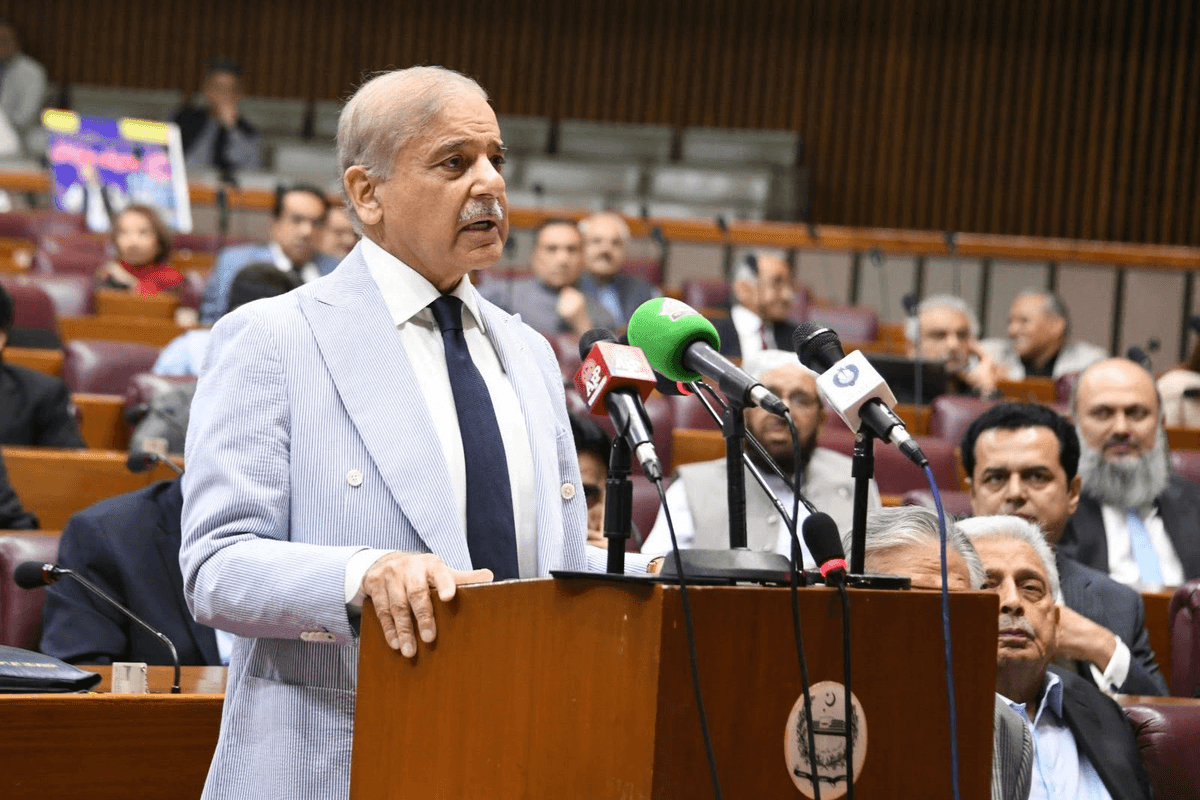
Prime Minister Shehbaz Sharif addresses a session of the National Assembly on June 15.
PID
Pakistan Prime Minister Shehbaz Sharif announced on Monday that Pakistan will host the signing ceremony for a United States-Iran peace agreement in Geneva on June 19, calling it a "historic milestone for global peace."
The US and Iran agreed to the deal on Sunday, declaring an "immediate and permanent" end to military operations, including in Lebanon. Pakistan acted as a mediator throughout the process.
What is the Iran-US peace deal that Pakistan helped broker?
The United States and Iran agreed on Sunday to an immediate and permanent halt to military operations on all fronts, including Lebanon. Pakistan mediated the negotiations and will host the formal signing in Geneva on June 19.
The deal also includes the reopening of the Strait of Hormuz and the removal of a US naval blockade on Iranian ports.
What did Shehbaz Sharif say in parliament about the agreement?
Addressing the National Assembly, Sharif said the agreement followed months of diplomatic effort and marked the end of military operations between the two sides across all fronts. He called it the "end of a long night of conflict and the dawn of peace." Sharif said Pakistan's sustained diplomatic engagement over 106 days had contributed directly to the outcome.
The prime minister congratulated the people of Pakistan and the wider international community, describing the accord as a breakthrough for regional and global stability.
He expressed gratitude to Nawaz Sharif, President Asif Ali Zardari and PPP chairman Bilawal Bhutto Zardari for their support, and also thanked Abdul Aleem Khan for his assistance during the process.
Sharif also acknowledged the role of Qatar, Saudi Arabia and Turkey in facilitating talks, crediting regional cooperation for helping bring both sides to an agreement.
Did Iran agree to open the Strait of Hormuz?
US President Donald Trump confirmed on Sunday that the Strait of Hormuz would reopen as part of the deal and that a US naval blockade on Iranian ports would be lifted. Trump announced the agreement on his Truth Social platform, saying the deal was "now complete." US Vice President JD Vance said he planned to attend the Geneva signing ceremony and indicated Trump could also participate.
World leaders welcomed the announcement, with leaders across Europe, Asia and the Middle East praising it as a significant diplomatic breakthrough. They also acknowledged the role of Pakistan and other regional actors in facilitating the negotiations. The memorandum of understanding is expected to be formally signed in Switzerland on Friday.
What were the economic consequences of the US-Iran conflict?
The conflict, which began in late February with US-Israeli strikes on Iran, had wide economic consequences.
Iran's near-blockade of the Strait of Hormuz, a key global energy shipping route, pushed up oil and gas prices and disrupted supply chains, including fertilizers. Vance said the agreement would help drive down the cost of energy and contribute to long-term regional prosperity.



Comments
See what people are discussing