

Pakistan hailed as key mediator after US-Iran peace deal announced
World leaders hailed the US-Iran peace deal as a diplomatic breakthrough, praising Pakistan's key mediation role and welcoming the Strait of Hormuz reopening

News Desk
The News Desk provides timely and factual coverage of national and international events, with an emphasis on accuracy and clarity.
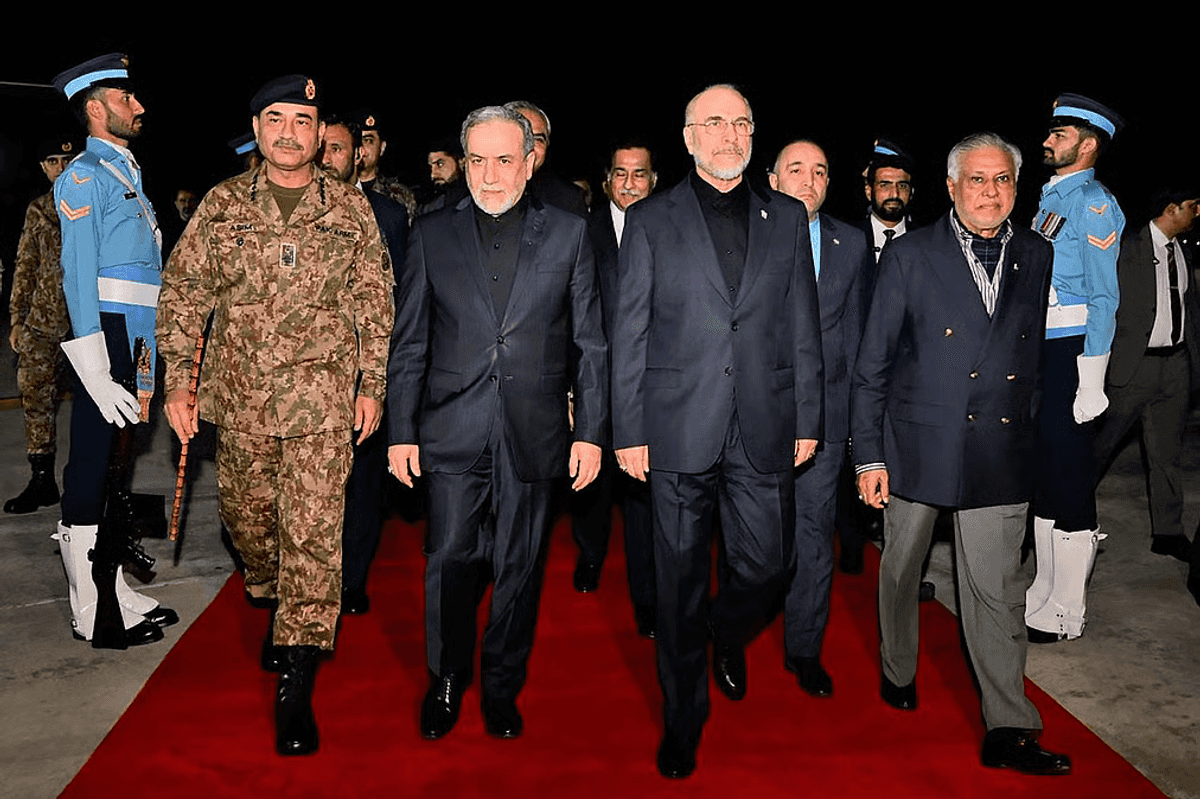
World leaders on Sunday welcomed a peace agreement between the United States and Iran, calling it a major diplomatic breakthrough.
Leaders across Europe, Asia and the Middle East praised Pakistan and other regional countries for their role in facilitating negotiations. The memorandum of understanding is set to be formally signed in Switzerland on Friday.
What did world leaders say about the US-Iran deal?
Global leaders broadly welcomed the US-Iran deal as a turning point for regional and economic stability.
UN Secretary-General Antonio Guterres called it a major step toward a peaceful settlement and thanked Pakistan, Qatar, Egypt, Saudi Arabia, Turkey and other countries for their constructive role in supporting the negotiations. The agreement includes an immediate and permanent ceasefire and a framework for further talks.
What does the US-Iran peace deal include?
U.S. President Donald Trump announced on his Truth Social platform that the deal with Iran was complete, posting at around 5:30 p.m. Eastern Time.
The agreement covers a framework to end the war, lift the U.S. blockade of Iran and reopen the Strait of Hormuz, a vital global shipping route.
Following intensive talks, we are pleased to announce that the Peace Deal between the United States of America and Islamic Republic of Iran has been REACHED. Both sides have declared the immediate and permanent termination of military operations on all fronts, including in…
— Shehbaz Sharif (@CMShehbaz) June 14, 2026
Pakistani Prime Minister Shehbaz Sharif had announced the agreement shortly before Trump's post.
How did Turkey and Gulf states respond to the agreement?
Turkish President Recep Tayyip Erdogan called the deal an important step toward regional peace and praised Pakistan for its exceptional mediation efforts. He also acknowledged support from Qatar and Saudi Arabia for diplomatic initiatives that contributed to the outcome.
Qatari Prime Minister Sheikh Mohammed bin Abdulrahman bin Jassim Al Thani thanked Pakistan and other regional and international parties for helping create conditions that made the agreement possible.
What did Western leaders say about the US-Iran deal?
British Prime Minister Keir Starmer called the agreement a hugely important step toward ending the war and ensuring regional stability, congratulating Trump and mediators from Pakistan, Qatar and other countries.
French President Emmanuel Macron welcomed the deal and urged its swift and full implementation, saying it should allow the urgent reopening of the Strait of Hormuz. German Chancellor Friedrich Merz described it as a diplomatic breakthrough that could strengthen the global economy and stabilize the Middle East.
What are European powers pledging on Iran sanctions?
The leaders of the United Kingdom, France, Germany and Italy issued a joint statement saying they were prepared to lift sanctions on Iran in response to steps related to its nuclear program.
The four countries pledged to work with the United States, Iran and the International Atomic Energy Agency to ensure Iran never acquires a nuclear weapon. German Chancellor Merz stressed that implementation of the deal would be crucial.
How did Asia-Pacific leaders react to the Iran-US agreement?
Australian Prime Minister Anthony Albanese welcomed the agreement and commended Pakistan, Qatar, Saudi Arabia, Turkey and other mediating countries for their efforts.
Japanese Prime Minister Sanae Takaichi said Japan strongly hoped free and safe navigation through the Strait of Hormuz would be guaranteed and that a final agreement on Iran's nuclear issue would follow as soon as possible. New Zealand Foreign Minister Winston Peters called the deal a pivotal step toward reducing tensions in a region critical to global economic security.



Comments
See what people are discussing