

Pakistan urges restraint as ceasefire violations threaten US-Iran truce
Shehbaz Sharif calls on all sides to respect agreed two-week ceasefire to allow diplomacy to take lead toward a peaceful settlement

News Desk
The News Desk provides timely and factual coverage of national and international events, with an emphasis on accuracy and clarity.
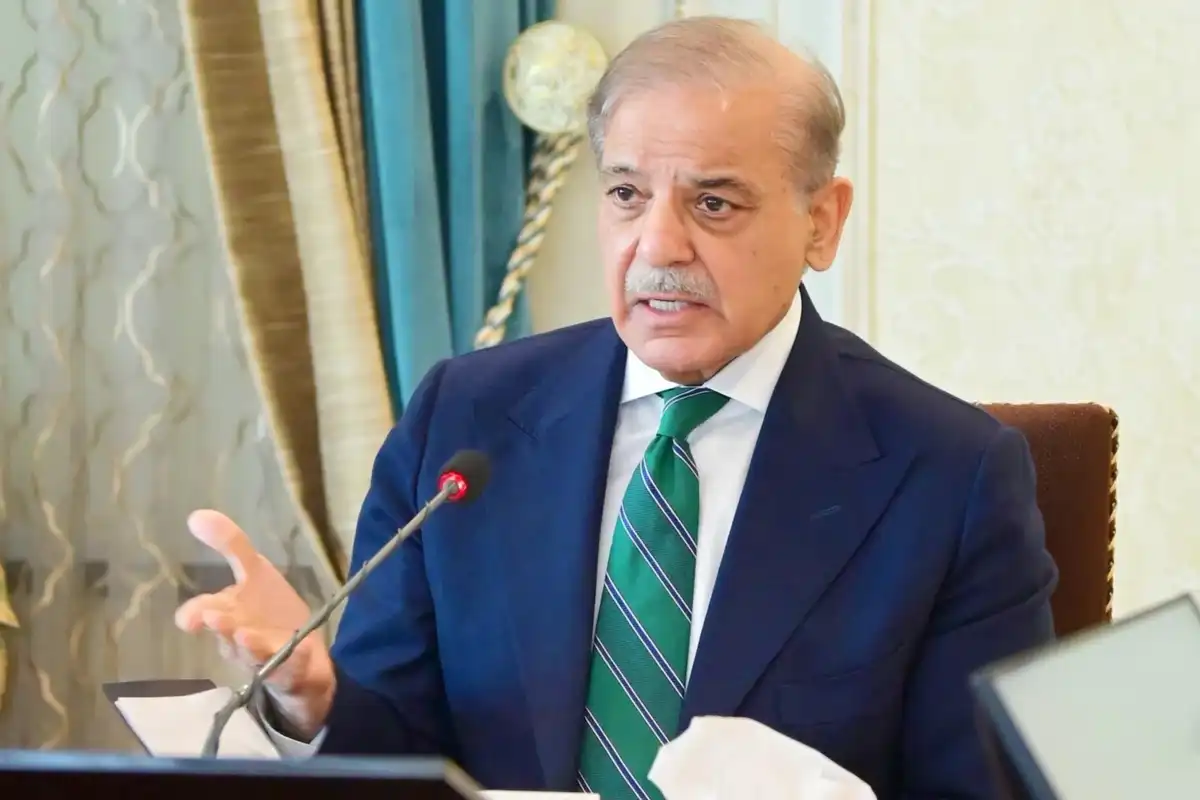
Pakistani Prime Minister Shehbaz Sharif urged on Wednesday all parties to exercise restraint after reports of ceasefire violations across parts of the conflict zone, warning that such incidents undermine ongoing peace efforts.
“Violations of ceasefire have been reported at few places across the conflict zone which undermine the spirit of peace process,” Sharif said in a post on X.
He called on all sides to respect the agreed two-week ceasefire to allow diplomacy to take the lead toward a peaceful settlement.
Violations of ceasefire have been reported at few places across the conflict zone which undermine the spirit of peace process. I earnestly and sincerely urge all parties to exercise restraint and respect the ceasefire for two weeks, as agreed upon, so that diplomacy can take a…
— Shehbaz Sharif (@CMShehbaz) April 8, 2026
Iranian Foreign Minister Abbas Araghchi also raised concerns over alleged ceasefire violations by Israel in a call with Pakistan’s army chief, Field Marshal Asim Munir, according to an Iranian foreign ministry statement.
Araghchi referred to what he described as violations in Iran and Lebanon during the conversation.
Islamabad talks scheduled as diplomacy intensifies
Less than 24 hours after the announcement of a ceasefire, Sharif said delegations from the United States and Iran would visit Pakistan on Friday for talks aimed at resolving the conflict.
Addressing a federal cabinet meeting, the prime minister said the ceasefire had delayed the war “for the time being” and stressed that it should serve as a foundation for broader peace.
“A ceasefire is the first step. But our destination is lasting peace… Day after tomorrow (Friday), at my invitation, a U.S. delegation is coming to Pakistan. In the same way, an Iranian delegation is also coming to Pakistan,” he said.
Earlier in the day, Sharif held a telephone conversation lasting more than 45 minutes with Iranian President Masoud Pezeshkian to discuss regional developments and efforts to ease tensions between Iran and the United States.
Islamabad: April 8, 2026.
Prime Minister Muhammad Shehbaz Sharif held a telephone conversaiton with His Excellency Dr. Masoud Pezeshkian, President of the Islamic Republic of Iran, this afternoon.
During their warm and cordial conversation that lasted for over forty-five… pic.twitter.com/jbjiFjYkRh
— Prime Minister's Office (@PakPMO) April 8, 2026
According to a statement from the Prime Minister’s Office Media Wing, the call was described as cordial and constructive. Sharif appreciated what the statement termed the Iranian leadership’s willingness to pursue a ceasefire amid heightened tensions and thanked Pezeshkian for accepting Pakistan’s offer to host negotiations in Islamabad later this week.
Sharif also conveyed respect for Iran’s Supreme Leader, Ayatollah Mojtaba Khamenei, and reaffirmed Pakistan’s support for diplomatic initiatives aimed at promoting peace and stability, the statement said.
Pezeshkian expressed gratitude for Pakistan’s role in facilitating what he described as a temporary ceasefire between Iran and the United States. He acknowledged Islamabad’s diplomatic outreach and confirmed Iran’s participation in the upcoming talks, while extending best wishes to the people of Pakistan.
Both leaders agreed to remain in close contact and continue consultations to advance diplomatic engagement and pursue a peaceful resolution, according to the statement.
US pause, Hormuz passage and regional stakes
The developments followed remarks by U.S. President Donald Trump, who said he had agreed to suspend a planned large-scale military strike on Iran for two weeks after mediation efforts involving Pakistan.
In a social media post shortly before a stated deadline, Trump said the pause in military action was contingent on Tehran ensuring the reopening of the Strait of Hormuz, a critical artery for global energy supplies.
Iran said it would guarantee safe maritime passage through the strait for the same period. In a post on X, Araghchi said safe passage would be possible through coordination with Iran’s armed forces and with due consideration of technical limitations, describing the pause as an opportunity to renew negotiations with Washington.
Earlier Wednesday, Sharif welcomed what he described as an “immediate and comprehensive” ceasefire between the United States and Iran and expressed hope that planned talks in Islamabad would yield further progress.
In a separate statement, he called the ceasefire a “sagacious gesture,” praising both sides for opting for restraint and dialogue. He said the move marked a step toward de-escalation and reflected a shared commitment to regional stability.
Sharif said Pakistan would host the “Islamabad Talks” on April 10, focusing on confidence-building measures, consolidation of the ceasefire and the development of a possible roadmap for a more durable agreement.
The recent escalation between Iran and the United States had raised concerns about wider regional instability and potential disruptions to global energy supplies. Pakistan, which maintains relations with both Tehran and Washington, has positioned itself as a facilitator of dialogue.
Sharif said both sides had shown “remarkable wisdom and understanding” by remaining constructively engaged and voiced optimism that the upcoming discussions would help advance sustainable peace. He added that Pakistan looked forward to further positive developments as diplomatic efforts continued.
Sharif thanks international partners
Later, Sharif took to X to express gratitude to stakeholders who contributed to securing the ceasefire and paving the way for the Islamabad Talks.
He thanked what he described as “brotherly countries” — China, Saudi Arabia, Turkey, Egypt and Qatar — for extending “invaluable and all-out support” toward achieving the ceasefire and enabling diplomatic efforts. He also acknowledged the support of the Gulf Cooperation Council, calling its role “quintessential” to regional peace efforts.
As we proceed to *Islamabad Talks*, I wish to extend our deepest and sincere gratitude to our brotherly countries People’s Republic of China, Kingdom of Saudi Arabia, Republic of Türkiye, Arab Republic of Egypt and State of Qatar for extending invaluable and all out support…
— Shehbaz Sharif (@CMShehbaz) April 8, 2026
Sharif said the leadership of partner countries, along with the United States, had demonstrated “exceptional strategic foresight, sagacity and patience” in giving diplomacy a chance. He also thanked partners and countries worldwide that had acknowledged Pakistan’s efforts for global peace.
“Let us all work together to forge a lasting peace in the region and beyond,” he said.



Comments
See what people are discussing