

Trump rejects Iran counterproposal as Pakistan pushes to keep US-Iran diplomacy alive
Kamran Khan says Pakistan, China and Gulf states are working to prevent collapse of peace efforts

News Desk
The News Desk provides timely and factual coverage of national and international events, with an emphasis on accuracy and clarity.
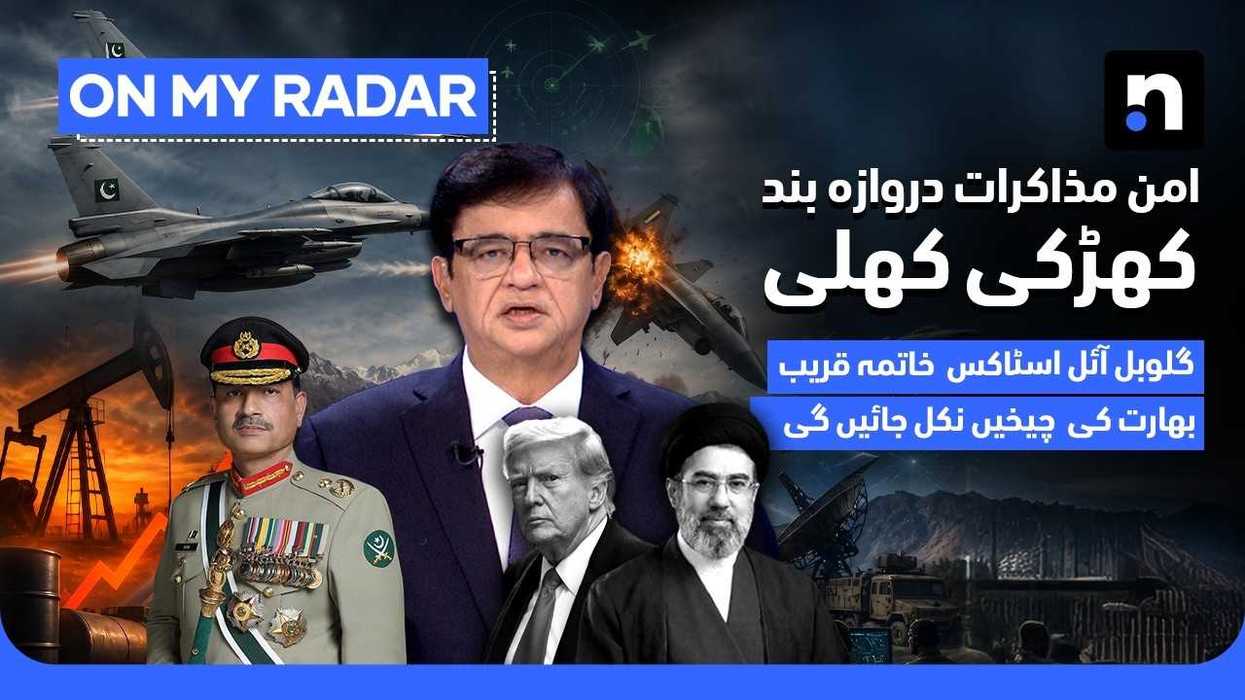
Hopes for a breakthrough in U.S.-Iran peace talks suffered a setback early Monday after President Donald Trump rejected Tehran’s counterproposal to Washington’s 14-point peace plan, according to details discussed on Kamran Khan’s current affairs program “On My Radar.”
Iran had sent its response to the United States through Pakistan on Sunday after weeks of indirect diplomacy aimed at ending regional hostilities and preventing a wider conflict.
According to Iranian state media, Tehran viewed the American proposal as equivalent to “surrendering before Trump’s wishes.” Instead, Iran submitted its own set of demands, including an immediate end to the war and guarantees against future attacks.
Trump dismissed the proposal in a brief social media post, calling it “Totally Unacceptable.” He did not provide further details, but the statement signaled that Washington remains dissatisfied with Tehran’s position.
Iranian Foreign Ministry spokesperson Esmaeil Baghaei said Tehran was prepared to move talks forward quickly if Washington responded positively.
“The decision is now in America’s hands,” he said, adding that Iran wanted an immediate end to the war while discussions on its nuclear program could take place later.
Despite nearly a month of negotiations and repeated exchanges of proposals, no major breakthrough toward a permanent peace agreement has emerged. The deadlock continues because both sides remain unwilling to retreat from their core demands.
Still, the report noted that neither side is currently talking about resuming war and that the ceasefire remains in place.
According to Al Jazeera, Pakistan is trying to persuade Iran to adopt a middle-ground approach in the negotiations. Pakistan’s Chief of Defense Staff, Field Marshal Syed Asim Munir, also reiterated the country’s commitment to supporting peace efforts between Tehran and Washington.
Alongside Pakistan, Qatar, Saudi Arabia, Turkey and China are also engaged in diplomatic contacts aimed at reducing tensions and keeping negotiations alive.
Trump is expected to travel to Beijing in the coming days for talks with Chinese President Xi Jinping. Washington hopes China will use its influence to encourage Iran toward a deal.
The developments suggest that despite the latest setback, diplomatic efforts to end the crisis and secure a broader peace agreement are still underway.
Retired Air Vice Marshal Shehzad Chaudhry, a defense and security analyst, also appeared on the program to discuss the regional implications of the stalled negotiations.




Comments
See what people are discussing