

Pakistan warns Israeli strikes on Lebanon risk derailing fragile Iran ceasefire
Ministry of Foreign Affairs says Israeli actions risk widening the conflict at a critical moment when diplomatic efforts had just begun to ease tensions

Ali Hamza
Correspondent
Ali; a journalist with 3 years of experience, working in Newspaper. Worked in Field, covered Big Legal Constitutional and Political Events in Pakistan since 2022. Graduate of DePaul University, Chicago.
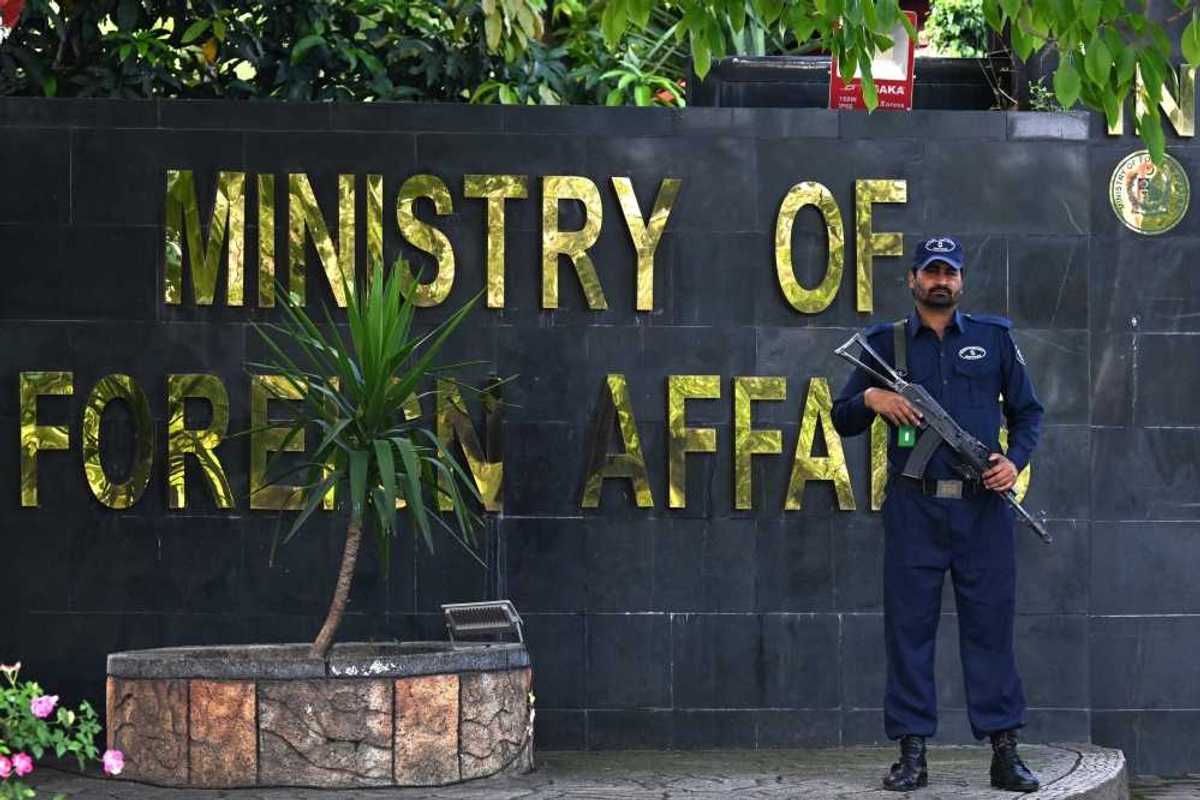
A security personnel stands guard outside the Foreign Ministry office in Islamabad on April 9, 2026.
AFP
Pakistan’s Ministry of Foreign Affairs condemned on Thursday Israeli strikes on Lebanon, warning they could undermine a recently brokered ceasefire between Iran and the United States that Islamabad helped secure.
In a press release, the ministry said the Israeli actions risk widening the conflict at a critical moment when diplomatic efforts had just begun to ease tensions. It reiterated Pakistan’s call for restraint and urged all parties to avoid steps that could jeopardize what it described as a fragile truce.
The warning comes days after Pakistan led an urgent diplomatic push to de-escalate a looming confrontation between Iran and the United States. The effort resulted in a two-week ceasefire endorsed by Tehran and acknowledged by Washington, halting imminent strikes and opening the door for further talks.
The agreement was seen as a breakthrough after days of brinkmanship between the two sides, raising hopes that a broader diplomatic process could follow.
Strikes raise fresh concerns
However, fresh Israeli strikes on Lebanon have raised questions about whether the ceasefire can hold, particularly as the conflict risks spilling across multiple fronts.
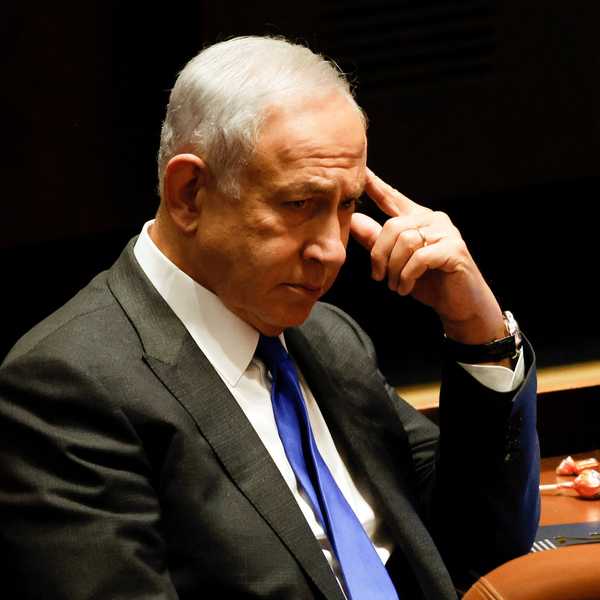
Israeli Prime Minister Benjamin Netanyahu said Israel would continue its operations in Lebanon, signaling no immediate pause despite diplomatic developments elsewhere.
At the same time, White House spokesperson Karoline Leavitt said Lebanon was not part of the ceasefire arrangement, suggesting the truce was narrowly focused on U.S.-Iran tensions.
That position appeared to contrast with earlier indications from President Donald Trump that a broader de-escalation was under discussion.
International affairs expert and journalist Shaukat Paracha told Nukta that Israel’s strikes on Lebanon act as a “spoiler” to the ceasefire process.
He said Israel would not want a halt in conflict with Iran or a return to regional stability, and urged both Washington and Tehran to remain vigilant about such spoilers.
Paracha said the United States, in particular, needs to recognize this dynamic and use its influence to press Israel to stop its attacks.
He added that peace efforts should not be abandoned because of such disruptions. Instead, he said, both sides must keep the process alive while managing actors that could derail it.
He emphasized that peace in conflict situations comes through compromise rather than rigid positions, warning that sticking to maximalist stances could prolong instability.
International concern grows
Concerns about derailment have also been echoed internationally.
United Nations officials have repeatedly warned in recent days that escalating cross-border violence involving Lebanon could widen the conflict and undermine diplomatic efforts elsewhere in the region. They have called for maximum restraint from all sides.
Analysts say the divergence highlights a vulnerability in the ceasefire framework. While it may have reduced the immediate risk of direct confrontation between Washington and Tehran, it does not address Israel’s parallel conflict dynamics, particularly in Lebanon, where tensions have been escalating.
Pakistan’s intervention had been widely credited with helping avert imminent military action, with officials in Islamabad positioning the country as a mediator capable of bridging communication gaps.
But the latest developments underscore how quickly gains can unravel in a region where multiple conflicts intersect.
Diplomats warn that if Israeli operations intensify and provoke a wider response from Iran or its regional allies, the ceasefire could collapse before talks have a chance to begin in earnest.
Timeline of events
Tensions escalated sharply as the United States and Iran moved closer to potential military confrontation following a series of threats and counterthreats.
Pakistan launched a late-night diplomatic effort, with Prime Minister Shehbaz Sharif reaching out to key stakeholders to push for immediate de-escalation.
A two-week ceasefire was agreed between the United States and Iran, halting imminent strikes and opening a path for dialogue.
Markets reacted swiftly, with global oil prices falling and equities rebounding on signs of reduced conflict risk.
Soon after, Israel carried out fresh strikes in Lebanon, raising concerns about broader regional escalation.
Netanyahu said Israel would continue military actions in Lebanon despite the ceasefire elsewhere.
The White House clarified that Lebanon was not included in the ceasefire framework, narrowing its scope.
Pakistan’s foreign ministry then issued its condemnation, warning that the strikes could jeopardize the ceasefire and calling for restraint.


Comments
See what people are discussing