

Pakistan warns of swift self-defense against emerging security threats
FO spokesperson says Pakistan urges Afghan Taliban to take effective action against terrorist groups operating with impunity
Aamir Abbasi
Editor, Islamabad
Aamir; a journalist with 15 years of experience, working in Newspaper, TV and Digital Media. Worked in Field, covered Big Legal Constitutional and Political Events in Pakistan since 2009 with Pakistan’s Top Media Organizations. Graduate of Quaid I Azam University Islamabad.
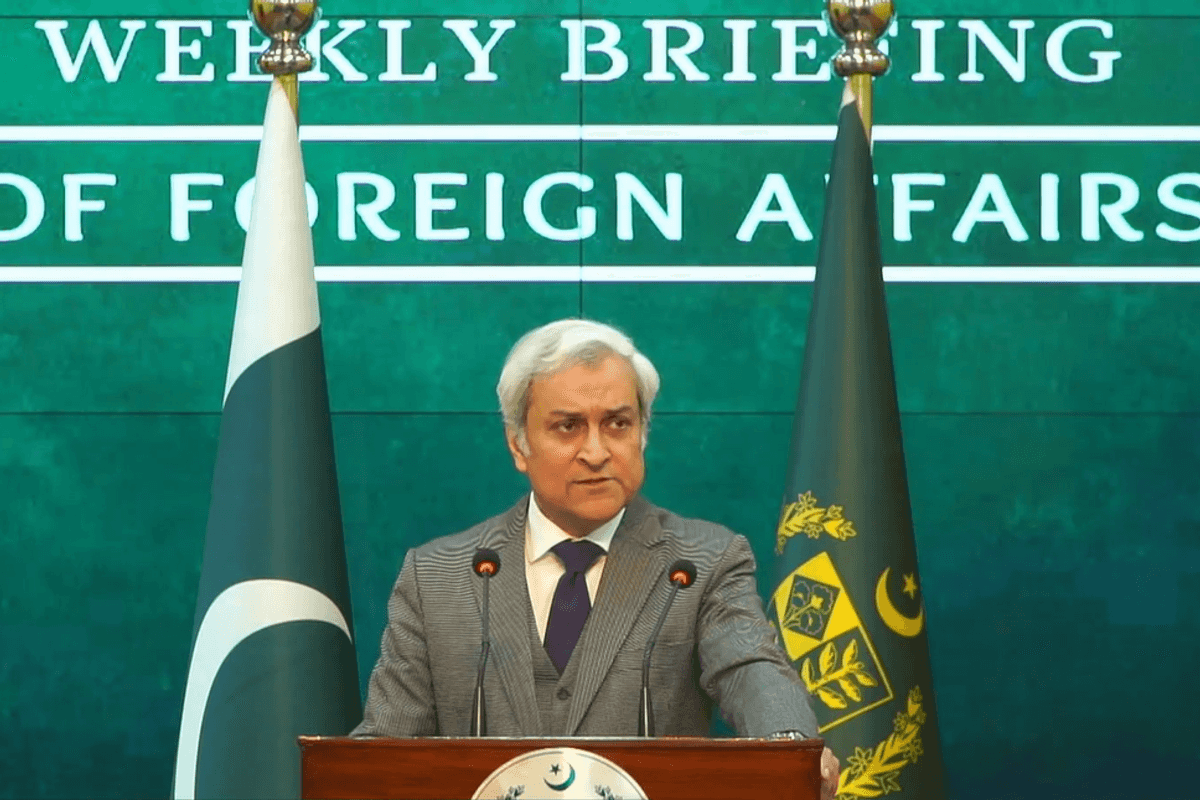
Pakistan said on Thursday it would respond “swiftly and strongly” in the exercise of its right to self-defense if further security threats emerge, as it underlined concerns over militant groups operating from neighboring Afghanistan and reiterated calls for international accountability.
Speaking at a weekly news briefing, Foreign Office spokesperson Ambassador Tahir Hussain Andrabi said Pakistan had recently conducted intelligence-based, precision strikes against what it described as terrorist hideouts in Afghanistan to prevent imminent attacks on its territory.
He said the actions were selective and carried out with “utmost caution” to avoid civilian casualties, adding that the measures were taken solely to safeguard Pakistani citizens.
“Pakistan will not hesitate to act in self-defense if threats persist,” Andrabi said, adding that Islamabad remains vigilant about dangers emanating from across its western border.
He noted that Pakistan had repeatedly raised the issue of cross-border militancy at the United Nations Security Council, which has stressed the need to hold perpetrators, facilitators and sponsors of terrorism accountable.
Message to Afghan authorities
The Foreign Office urged Afghan authorities to take decisive action against militant groups allegedly operating from Afghan soil, saying continued inaction posed a serious risk to regional stability.
“We demand that the Afghan Taliban regime take effective measures against these terrorist groups who continue to operate with impunity,” Andrabi said, describing recent threatening statements from Afghanistan as “highly discouraging.”
At the same time, he said Pakistan did not seek to harm relations with the Afghan people and called for mutual respect and responsibility, stressing that Kabul bears responsibility for the security of Pakistani diplomats and nationals, just as Islamabad provides protection to Afghan diplomatic staff.
He added that Pakistan was not aware of any structured bilateral dialogue currently under way between the two sides.
India remarks rejected
Later in the briefing, Andrabi rejected recent remarks by India’s foreign ministry following a militant attack in Balochistan, describing the statement as “callous and irresponsible.”
“India’s callousness confirms its role as an official and political accomplice in this heinous attack,” he said, adding that Pakistan possessed what he described as “complete evidence” of Indian patronage of militant organizations.
New Delhi has repeatedly denied such allegations.
The spokesperson also recalled that February marks the 19th anniversary of the Samjhauta Express bombing, which killed more than 70 people, mostly Pakistanis.
He said individuals implicated in the attack, including Swami Aseemanand and Lt Col Prasad Shrikant Purohit, had publicly confessed to involvement, but those accused remained free.
“Justice remains elusive for the victims,” he said, expressing disappointment that those responsible had not been held to account.
Kashmir, regional security
Andrabi raised concerns over what Pakistan describes as ongoing human rights violations in Indian-administered Kashmir, including the Kunan Poshpora case, saying victims were still awaiting justice.
He also pointed to growing India-Israel ties, saying Pakistan remained alert to potential future threats, and noted the anniversary of Operation Swift Retort, praising the Pakistan Air Force’s conduct during the 2019 crisis.
Diplomatic engagements
Separately, the Foreign Office said Deputy Prime Minister and Foreign Minister Ishaq Dar is visiting Saudi Arabia to attend an extraordinary meeting of the Organization of Islamic Cooperation’s executive committee in Jeddah.
The February 26 session is expected to focus on recent Israeli decisions affecting the occupied West Bank, which Pakistan says aim to convert Palestinian land into so-called state property. Dar is also scheduled to hold bilateral meetings with counterparts from OIC member states.
The spokesperson also said Prime Minister Shehbaz Sharif visited Qatar from February 23–24 at the invitation of the Amir of Qatar, during which the two sides discussed expanding economic cooperation and strengthening bilateral ties.


Comments
See what people are discussing