

Pakistan weighs sharp cuts in vehicle import duties under new five-year auto policy
Pakistan weighs sharp cuts in vehicle import duties under a new five-year auto policy aimed at boosting competition
Haris Zamir
Business Editor
Experience of almost 33 years where started the journey of financial journalism from Business Recorder in 1992. From 2006 onwards attached with Television Media worked at Sun Tv, Dawn Tv, Geo Tv and Dunya Tv. During the period also worked as a stringer for Bloomberg for seven years and Dow Jones for five years. Also wrote articles for several highly acclaimed periodicals like the Newsline, Pakistan Gulf Economist and Money Matters (The News publications)
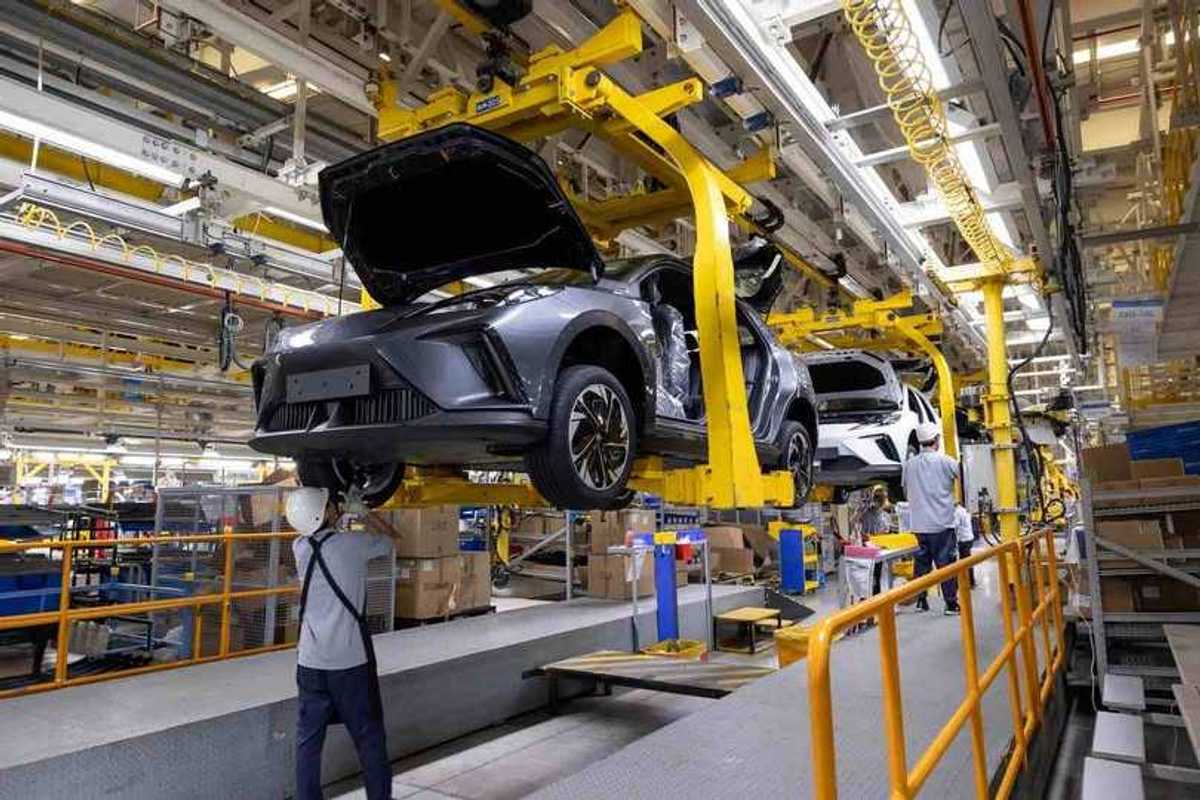
The current auto policy is set to expire on June 30.
Pakistan's government is considering substantial reductions in import duties and taxes on vehicles across multiple engine categories under a proposed five-year Auto Industry Development Policy.
The plan aims to boost competition and improve consumer access to automobiles.
What is Pakistan's new five-year auto policy?
The plan was discussed during a meeting of the National Assembly Standing Committee on Finance, chaired by MNA Syed Naveed Qamar, where officials briefed lawmakers on the upcoming framework.
The current auto policy is set to expire on June 30, and Minister of State for Finance Bilal Azhar Kayani told the committee that the government is finalizing a new five-year framework for the automotive sector.
How much will vehicle import duties be cut?
Secretary Commerce Jawad Paul informed lawmakers that the government intends to significantly reduce duties and taxes on imported vehicles over the new policy period. The total tax and duty incidence on vehicles with engine capacities of 1,800cc and above will be reduced to 74% from the current level of up to 156%.
For vehicles above 1,500cc, duties are proposed to fall to 57% from 91%, while those in the 1,000cc to 1,500cc range will see rates reduced to 52% from 76%. Small vehicles with engine capacities up to 850cc will face a proposed reduction to 42% from the current 66%. Officials said the measures are designed to gradually liberalize the automotive sector while aligning with Pakistan's international trade commitments.
How will electric vehicles be taxed under the new policy?
The committee also reviewed the taxation framework for electric vehicles (EVs), with lawmakers raising concerns over proposed duties and the lack of supporting infrastructure.
Federal Board of Revenue (FBR) officials told the committee that electric vehicles priced up to $75,000 (around PKR 20 million) are currently not subject to Federal Excise Duty (FED), though EVs priced above PKR 20 million would fall under the proposed excise duty regime outlined in the Finance Bill.
Committee member Shahida Akhtar Ali questioned how electric vehicles could be promoted without adequate charging infrastructure in place. "If there are no charging stations, how will these vehicles operate?" she asked, adding that Pakistan's power sector constraints should also be factored into EV policy planning.
What concerns did lawmakers raise about EV policy?
Several lawmakers urged the government to establish a more consistent and coherent policy for electric vehicles. MNA Sharmila Faruqui said the government should either fully support the transition to EVs or avoid measures that could discourage adoption, criticising what she described as policy inconsistency amid global shifts toward cleaner transport.
Committee member Hina Rabbani Khar noted that EVs remain significantly more expensive than conventional internal combustion engine vehicles and said policymakers must account for the rapid pace of technological change in the sector. "Automotive technology is evolving very quickly, with new developments emerging every six months," she said.
Kayani acknowledged that even luxury electric vehicles currently attract a lower tax burden compared with conventional vehicles, reflecting the government's broader objective of encouraging cleaner mobility.
What happens next with the auto policy?
The committee directed officials to further refine the proposed framework and address concerns related to taxation, infrastructure readiness and market competitiveness before finalizing the new auto policy.




Comments
See what people are discussing