

Pakistan’s global image shines despite economic strains
Pakistan’s international rebranding praised, yet economic pressures persist, Kamran Khan highlights

News Desk
The News Desk provides timely and factual coverage of national and international events, with an emphasis on accuracy and clarity.
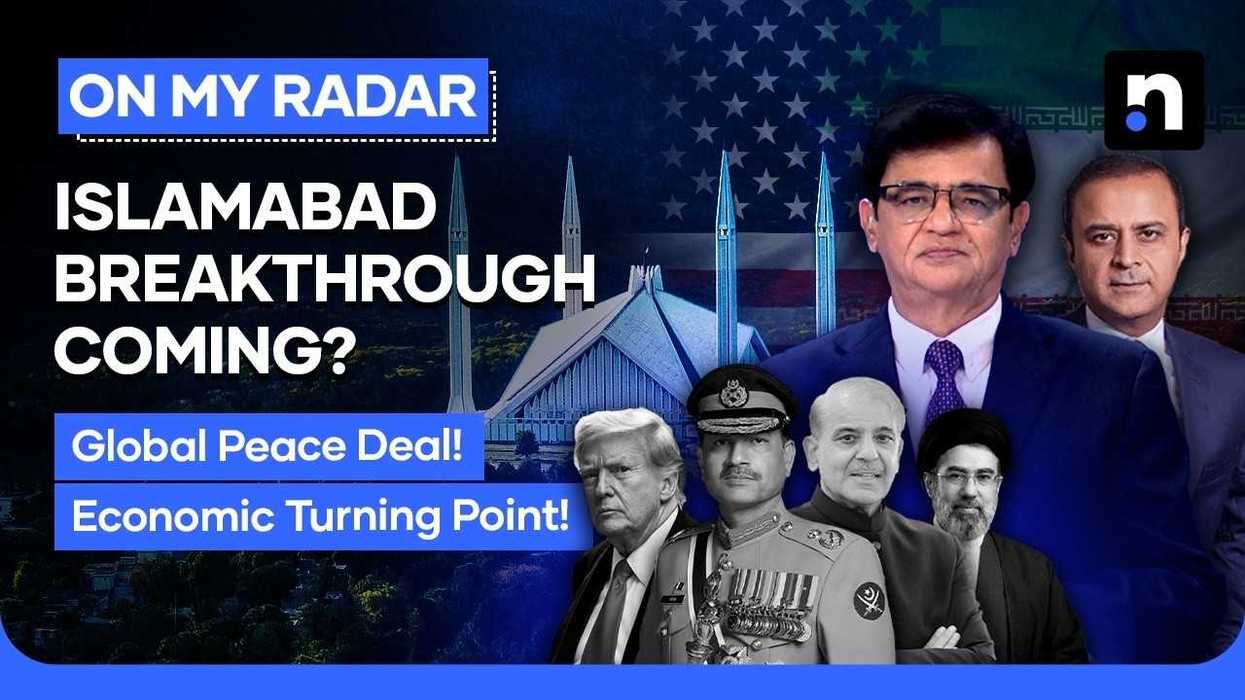
Kamran Khan says Pakistan is earning global attention for its international image, even as economic challenges persist at home.
“Today, the world is talking about Pakistan, Mashallah,” Kamran Khan said on his show On My Radar. “The country has prevented ongoing conflicts involving the U.S. and Iran, reflecting its strongest period of global rebranding in recent history.”
Khan highlighted that international observers widely acknowledge Pakistan’s efforts over the past year, describing the country’s image as undergoing a positive transformation.
Yet, he cautioned that the economic reality presents a contrasting picture. Pakistan’s foreign exchange reserves recently fell to approximately $15 billion after a $1.4 billion eurobond payment, with an additional $3.5 billion due to the UAE in the coming weeks. Khan said IMF disbursements could leave reserves near $12.5 billion by next month.
“The country has always struggled with external debt, currently totaling $138 billion due by December 2025,” he said. The State Bank of Pakistan had aimed to service $25.6 billion this fiscal year, of which $14.6 billion has been arranged. Debt repayments of $7.5 billion have already been made in the first six months, while a large portion is being managed through rollovers. Khan warned this only delays, rather than eliminates, financial pressures.
Trade deficits also surged. Data from the Pakistan Bureau of Statistics showed a 23% increase in the first nine months of the current fiscal year, reaching $27.81 billion. Foreign investment is also declining, with just $700 million inflows through February compared with $1.5 billion in the same period last year.
Energy costs are another major concern. Gas and electricity supply remain unreliable, while fuel prices have jumped to 378 PKR per liter for petrol and 520 PKR per liter for diesel. Global Brent crude prices, which rose to $118 per barrel amid tensions in Iran, remain near $100, signaling a new wave of inflation affecting transport, food, and industrial electricity costs.
Pakistan now has the highest industrial electricity prices in the region. At the same time, tax-to-GDP ratios have risen from 8.8% to 10.2%, burdening the documented sector. The Federal Board of Revenue is facing a revenue shortfall of 610 billion PKR for July–March, straining businesses already coping with high operational costs.
Khan said the government faces a delicate balancing act. “It must meet IMF conditions while addressing economic weaknesses,” he said. “Pakistan now has an opportunity to leverage its growing global stature to strengthen the economy.”
He called for aligning the country’s economic policies with its international reputation, making it a top priority for civilian and military leadership and the nation’s 250 million citizens.
Khan invited Lucky Group CEO Muhammad Ali Tabbah to discuss how Pakistan can turn its global brand into economic growth.
“Pakistan’s rising global prestige should not remain symbolic,” Khan said. “It needs to translate into tangible gains for the economy and its people.”

Comments
See what people are discussing