

PSX up 9% after highest-ever rally following US-Iran ceasefire
Analysts say market reaction reflects a shift from fear to optimism as investors reassess the risk of a broader regional conflict

Business Desk
The Business Desk tracks economic trends, market movements, and business developments, offering analysis of both local and global financial news.
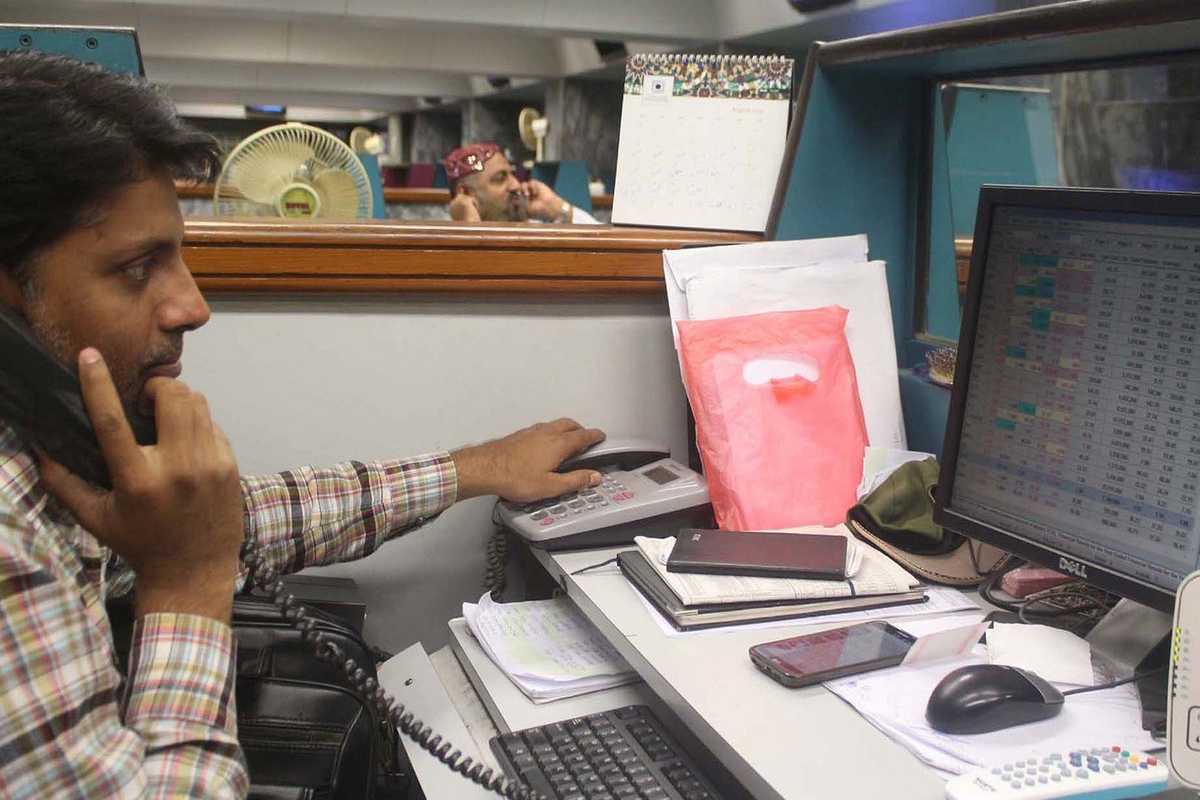
Pakistan’s stock market rose by 9% — its highest-ever rally — as the announcement of the US-Iran ceasefire boosted investors' confidence.
Before the rally, the Pakistan Stock Exchange (PSX) lost over 16,000 points since February 28, when the US and Israel launched attacks on Iran. The period was marked by panic-driven selloffs followed by aggressive buying, with multiple circuit breaker halts interrupting trading.
The benchmark KSE-100 index recovered some of those losses as it gained 14,138 points to close at 165,811 points on Wednesday.
According to an analyst from Al Habib Capital Markets, said that the record recovery in the stock market is attributed primarily to the announcement of a temporary ceasefire between the United States, Israel, and Iran.
In immediate response, oil prices declined sharply, slipping below the USD100 per barrel mark as geopolitical tensions eased significantly and fears of supply disruptions
The development raised expectations of a gradual resumption of oil flows through the strategically vital Strait of Hormuz. According to analysts, investor confidence was further boosted by Pakistan's timely repayment of $1.43 billion Eurobond obligations.
Index gains were led by FFC, UBL, ENGROH, HUBC, and OGDC, which collectively contributed 4,537 points.
The two-week ceasefire, brokered through intensive backchannel diplomacy led by Pakistan, is aimed at enabling negotiations toward a permanent agreement. Iran has submitted a 10-point proposal, while the United States has conditioned any extension on the reopening of the Strait of Hormuz. Israel has not formally signed the agreement, but is facing pressure to refrain from military action during the period.
Pakistan has emerged as a central diplomatic player, hosting talks involving Egypt, Turkey, and Saudi Arabia while facilitating communication between Washington and Tehran.
The economic effects
Market participants say the ceasefire could have far-reaching economic implications for Pakistan. Lower oil prices resulting from a reopened Strait of Hormuz could reduce the country’s import bill by an estimated $2 billion to $4 billion annually, easing inflation and stabilizing the external account.
Analysts noted that reduced energy costs would lower production expenses across key sectors, support industrial output and help stabilize the rupee, while remittances from Pakistani workers in the Gulf — a critical source of foreign exchange — are expected to remain steady.
“Much of the macroeconomic stress had already been priced into the market through higher risk premiums and cautious positioning,” Al Habib Capital Markets said. “With the ceasefire in place, the probability of worst-case outcomes has declined, opening room for a recovery in sentiment.”
However, both firms cautioned that the gains remain contingent on the ceasefire holding beyond the initial two-week window and progress toward a diplomatic resolution.
Looking ahead, Ismail Iqbal Securities said the next phase of the market is likely to be more selective rather than broadly bullish.
“The initial rally reflects relief,” the firm noted, “but sustained upside will depend on sector-specific fundamentals, particularly companies benefiting from lower oil prices, easing inflation, and improved external visibility.”
Failure to extend the ceasefire, analysts warned, could reverse recent gains and return the market to heightened volatility.



Comments
See what people are discussing