

Punjab cement makers could see 18% earnings boost from royalty relief
Federal Constitutional Court reserves judgment on Punjab's limestone royalty calculation, with a ruling expected next week

Business Desk
The Business Desk tracks economic trends, market movements, and business developments, offering analysis of both local and global financial news.
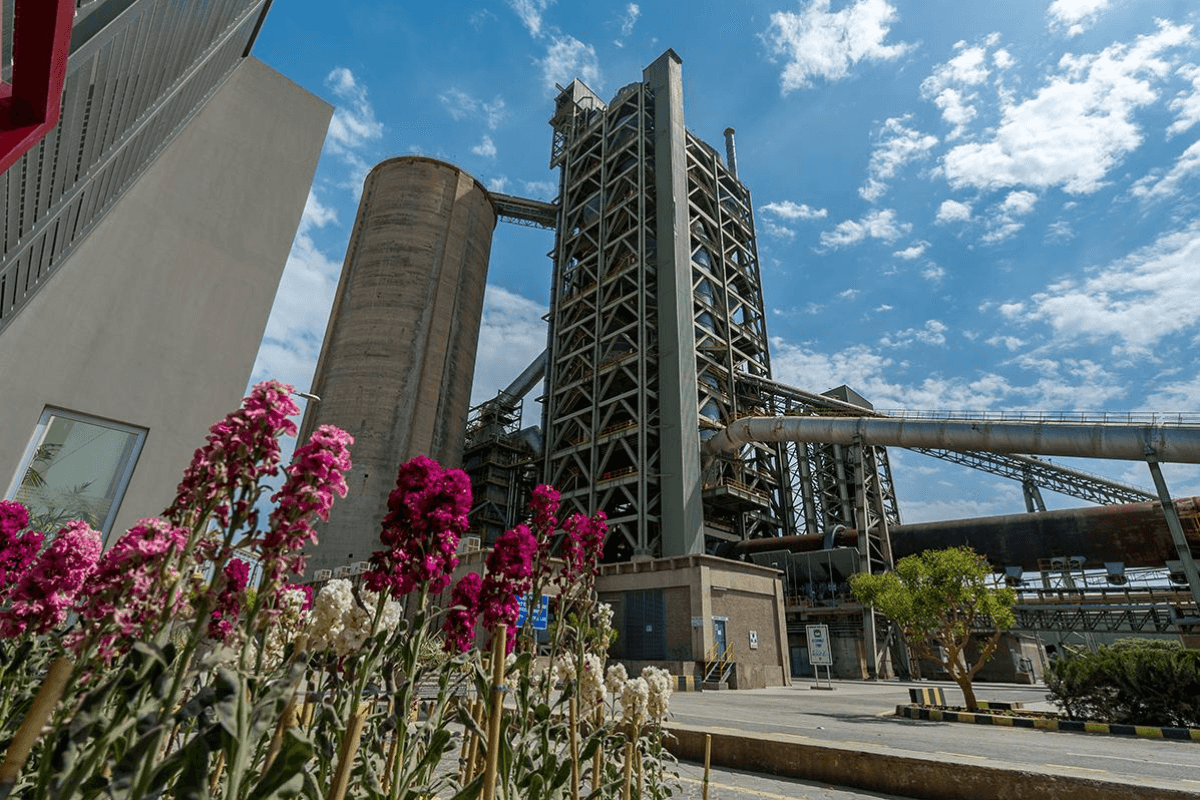
A D.G. Khan Cement production facility. The company is among four cement manufacturers that could benefit from changes to Punjab's limestone royalty calculation
D.G. Khan Cement
Punjab-based cement manufacturers could see their average earnings per share (EPS) rise by an estimated 18% in fiscal year 2027 if the Federal Constitutional Court (FCC) strikes down the province's existing royalty calculation method and it is replaced with a lower fixed-rate system, according to InterMarket Securities.
The court has reserved its judgment in the cement royalty case following the conclusion of arguments by the Additional Attorney General. The brokerage expects a verdict next week.
Why are Punjab cement manufacturers seeking royalty relief?
Punjab's disputed formula links limestone royalty to 6% of cement's ex-factory price. InterMarket Securities estimates that this amounts to PKR 1,740 per metric ton of cement, or PKR 87 per 50-kilogram bag. By comparison, KP's fixed royalty structure equates to around PKR 29 per bag, putting Punjab manufacturers at a cost disadvantage.
Under Khyber Pakhtunkhwa's (KP) existing framework, manufacturers pay PKR 385 per metric ton of limestone, equivalent to approximately PKR 578 per metric ton of cement.
The brokerage said the difference allows KP-based producers to potentially undercut Punjab manufacturers by PKR 40–50 per bag.
KP's royalty is scheduled to increase annually by 10% through FY28 and 7.5% thereafter through FY31, though it remains substantially below Punjab's disputed levy.
The Punjab formula remains subject to litigation, with the Supreme Court previously staying enforcement of the Lahore High Court's ruling. Company disclosures show that at least some manufacturers have continued making lower interim royalty payments while recording the disputed amounts as payable.
How could the court ruling change royalty costs?
InterMarket Securities outlined two possible outcomes that could reduce royalty expenses for Punjab-based manufacturers.
The first involves adopting a fixed-rate methodology similar to KP's, while the second would see Punjab return to its previous royalty of PKR 250 per metric ton of limestone.
Both alternatives would reduce the estimated royalty burden compared with Punjab's disputed price-based formula.
However, any relief would depend on the court's judgment and subsequent decisions by provincial authorities.
Which cement companies could benefit?
InterMarket Securities estimated that adopting KP's existing royalty methodology could increase average FY27 EPS by 18% for four Punjab-based cement producers, based on projected provincial dispatches.
The companies covered are Maple Leaf Cement Factory Limited, D.G. Khan Cement Company Limited, Fauji Cement Company Limited and Pioneer Cement Limited.
Based on the company-level earnings figures reconciled against outstanding shares, the estimated FY27 post-tax benefits under a KP-equivalent royalty system are PKR 4.11 billion for Maple Leaf Cement, PKR 1.70 billion for D.G. Khan Cement, PKR 2.16 billion for Fauji Cement and PKR 1.44 billion for Pioneer Cement.
A return to Punjab's previous fixed royalty would offer a larger potential benefit, with estimated post-tax earnings gains of PKR 4.89 billion for Maple Leaf Cement, PKR 2.01 billion for D.G. Khan Cement, PKR 2.55 billion for Fauji Cement and PKR 1.75 billion for Pioneer Cement.
What risks could limit the expected relief?
InterMarket Securities cautioned that a favorable court ruling would not necessarily guarantee the projected savings.
The FCC could reject the existing 6% ex-factory price-based methodology while allowing Punjab to introduce a higher fixed royalty on limestone.
Such a change could reduce or eliminate the expected financial benefit.
The brokerage said bringing royalty methodologies closer together across Punjab and KP could narrow the cost disadvantage faced by Punjab-based manufacturers and improve their competitive position.





Comments
See what people are discussing