

Rubio heads to India for trade diplomacy and Jamnagar refinery tour amid tariff disputes
US Secretary of State will launch his second official visit to India this year, meeting External Affairs Minister S. Jaishankar in Mumbai and visiting Reliance Industries' mega-refinery

News Desk
The News Desk provides timely and factual coverage of national and international events, with an emphasis on accuracy and clarity.
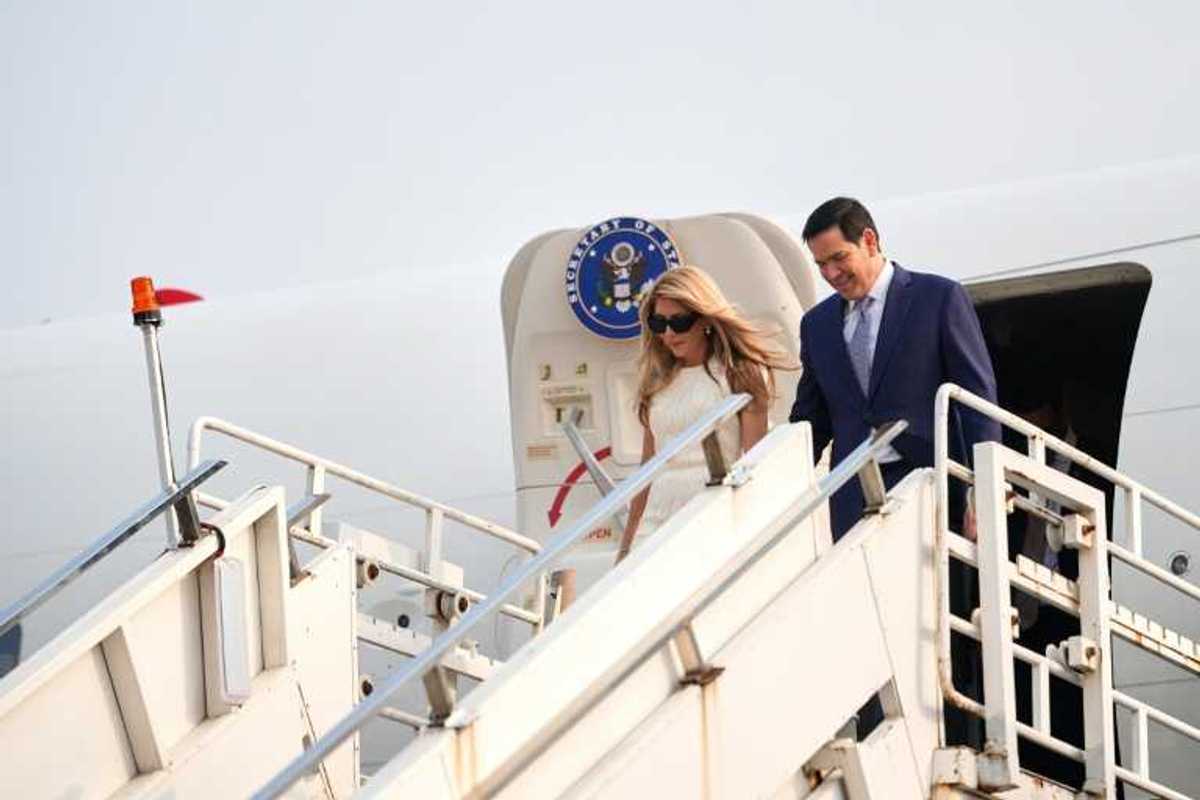
FILE: US Secretary of State Marco Rubio and his wife Jeanette arrive in Kolkata at the start of a four-day visit to India.
United States Secretary of State Marco Rubio touched down in India on Tuesday, October 20, launching a targeted diplomatic and commercial tour designed to unfreeze stalled bilateral trade negotiations, inspect critical energy refining infrastructure, and align maritime security objectives across South and Central Asia.
What is on Rubio’s agenda in Mumbai and the Jamnagar refining hub?
Rubio’s arrival in India marks the second leg of an expansive Asian tour that commenced in Samarkand, Uzbekistan, where he led a delegation of 200 American corporate executives to deepen economic partnerships and counter Chinese dominance over Central Asian critical minerals and energy transit corridors.
This trip marks Rubio's second official visit to India in 2026, following a May visit to New Delhi and Kolkata where he held comprehensive talks with Prime Minister Narendra Modi.
No meeting with Modi is scheduled during the current tour. In Mumbai, the top American diplomat is scheduled to hold strategic consultations with External Affairs Minister Subrahmanyam Jaishankar and convene with senior executives across the Indian financial and manufacturing sectors. He will also lay a wreath at a memorial site in tribute to the 166 victims killed in the November 2008 Mumbai terrorist attacks.
Rubio’s itinerary also includes an inspection of Jamnagar in Gujarat state, an industrial maritime center and the operational stronghold of billionaire Mukesh Ambani’s Reliance Industries conglomerate.
Jamnagar houses the world's largest export-oriented crude oil refining complex, an asset that has played an indispensable role in processing global fuel supplies amidst severe tanker mine strikes and US-Iran naval confrontations in the Strait of Hormuz.
What obstacles have stalled the US-India bilateral trade agreement?
The diplomatic push unfolds against months of protracted commercial talks. Although Rubio told reporters in Samarkand on Monday that Washington and New Delhi are "very close" to an agreement, analysts see slim chances of an immediate breakthrough. Indian Finance Minister Nirmala Sitharaman acknowledged earlier this month that bilateral trade talks had reached "a plateau, beyond which giving or taking might be very, very difficult."
The deadlock traces back to an interim framework negotiated in February 2026 intended to lower US duties on Indian manufactured goods. However, that understanding was upended days later when the US Supreme Court struck down President Donald Trump’s sweeping reciprocal tariff regime, creating domestic legal confusion over the executive branch's authority to enact tariff concessions and implement bilateral trade terms.
Broader geopolitical irritants have further complicated the bilateral dynamic, including New Delhi's wariness over warming ties and security mediation between Washington and Pakistan, as well as President Trump’s earlier imposition of 25 percent retaliatory duties on Indian exports over New Delhi's purchases of discounted Russian crude.
While those specific retaliatory tariffs were subsequently rescinded, the issue of Russian petroleum imports remains delicate. Defending Washington's decision to maintain temporary sanctions waivers for Indian refiners, Rubio adopted a pragmatic posture: "You also can't unravel the economy of other countries because of one central issue," Rubio remarked, adding that US policy must realistically account for what partner states are capable of doing to safeguard their own energy security while balancing bilateral commitments.
According to reporting by The Times of India, Rubio and Jaishankar are expected to review bilateral supply chain initiatives and maritime logistics before the US delegation concludes its regional tour later this week.



Comments
See what people are discussing