

Saudi finance minister warns Middle East conflict threatens global stability
Saudi minister calls Middle East conflict a major global shock, warning of early infrastructure and transport disruptions

Business Desk
The Business Desk tracks economic trends, market movements, and business developments, offering analysis of both local and global financial news.
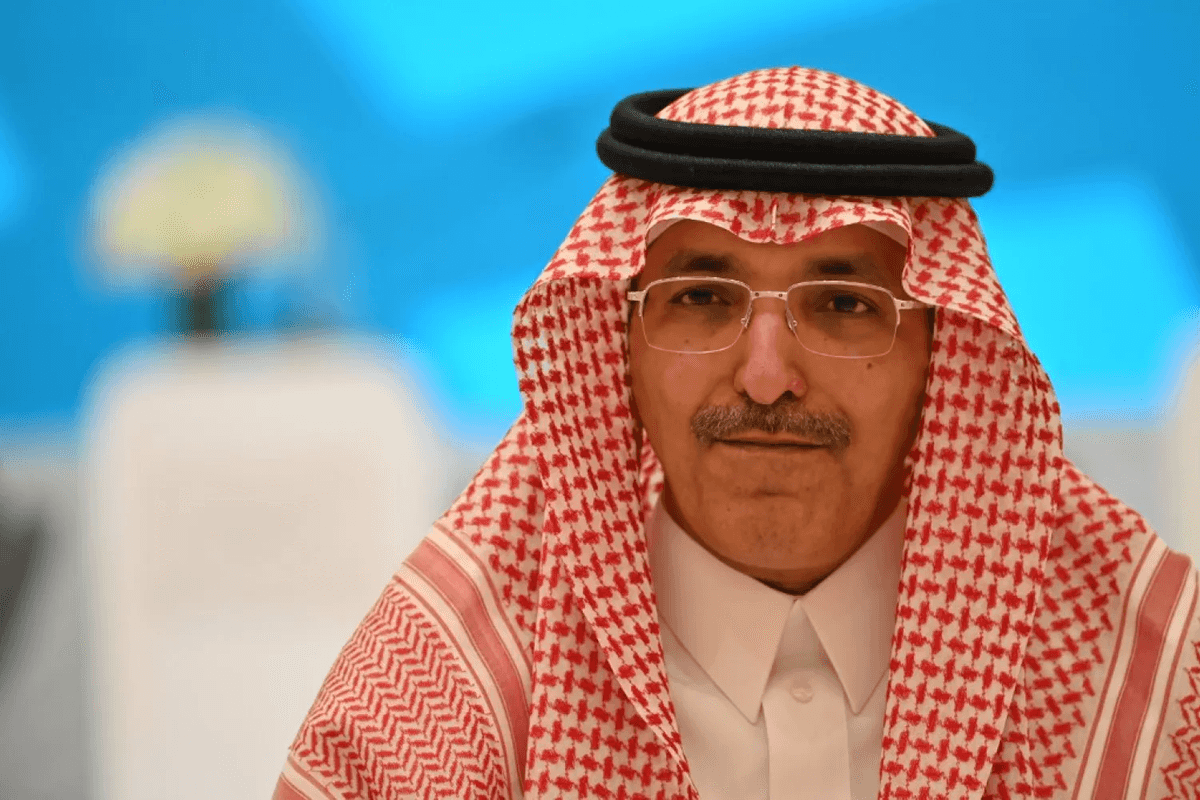
Saudi Arabia’s Finance Minister Mohammed Aljadaan.
Via X
Mohammed Aljadaan, Saudi Arabia’s finance minister, warned on April 17 that rising geopolitical tensions and repeated global shocks are undermining economic stability, urging stronger international cooperation and flexible policy responses in remarks prepared for the International Monetary and Financial Committee.
“The global economy has been tested by repeated shocks over the past few years from wars and conflicts, including the new one in the Middle East,” he said, adding the economic fallout would disproportionately hit the poorest and most vulnerable.
The warning comes amid heightened uncertainty as policymakers confront persistent inflation, tighter financial conditions and slowing growth, with limited policy space and weaker multilateral coordination compounding risks.
“The appropriate policy response depends on how the shock propagates through the domestic economy,” he said, calling for timely, adaptable measures backed by credible frameworks and global cooperation.
Despite recent resilience, Aljadaan described the Middle East conflict as a major new global shock whose impact will depend on its duration and scale, noting early signs of disruption from infrastructure damage and transport constraints.
Energy markets and supply chains remain particularly exposed, he said, warning prolonged instability could push up fuel and fertilizer prices, disrupt key inputs and deepen food and energy insecurity, especially in vulnerable economies.
He also pointed to broader structural shifts—including technological change, demographic trends and climate risks—that are reshaping the global outlook while posing new policy challenges.
“In this highly uncertain environment, our priority is to reinforce macroeconomic and financial stability while enabling strong and broad-based growth,” he said.
The minister stressed that central banks must stay focused on price stability, while fiscal policy should remain disciplined and guided by credible medium-term frameworks, with targeted support where space allows.
He also highlighted the need to monitor financial risks, including those linked to non-bank institutions, digital assets and emerging technologies, while encouraging innovation and private sector-led growth.
Aljadaan underscored the importance of international cooperation in addressing global imbalances, strengthening supply chains and maintaining an open trading system, adding that ending conflicts remains essential for sustainable growth.
He welcomed the role of the International Monetary Fund in supporting vulnerable countries through financing, policy advice and capacity development, and called for improved debt restructuring mechanisms and greater creditor transparency.
“We will continue to cooperate to address global challenges and ensure the stability and effective functioning of the international monetary system,” he said.




Comments
See what people are discussing