

Saudi, UAE ministers use social media to signal unity after months of tension
Saudi and UAE media chiefs posted matching messages on X affirming shared history, capping months of tension over Yemen, oil and regional policy

Dubai Desk
The Dubai Desk reports on major developments across the UAE, covering news, culture, business, and social trends shaping the region.
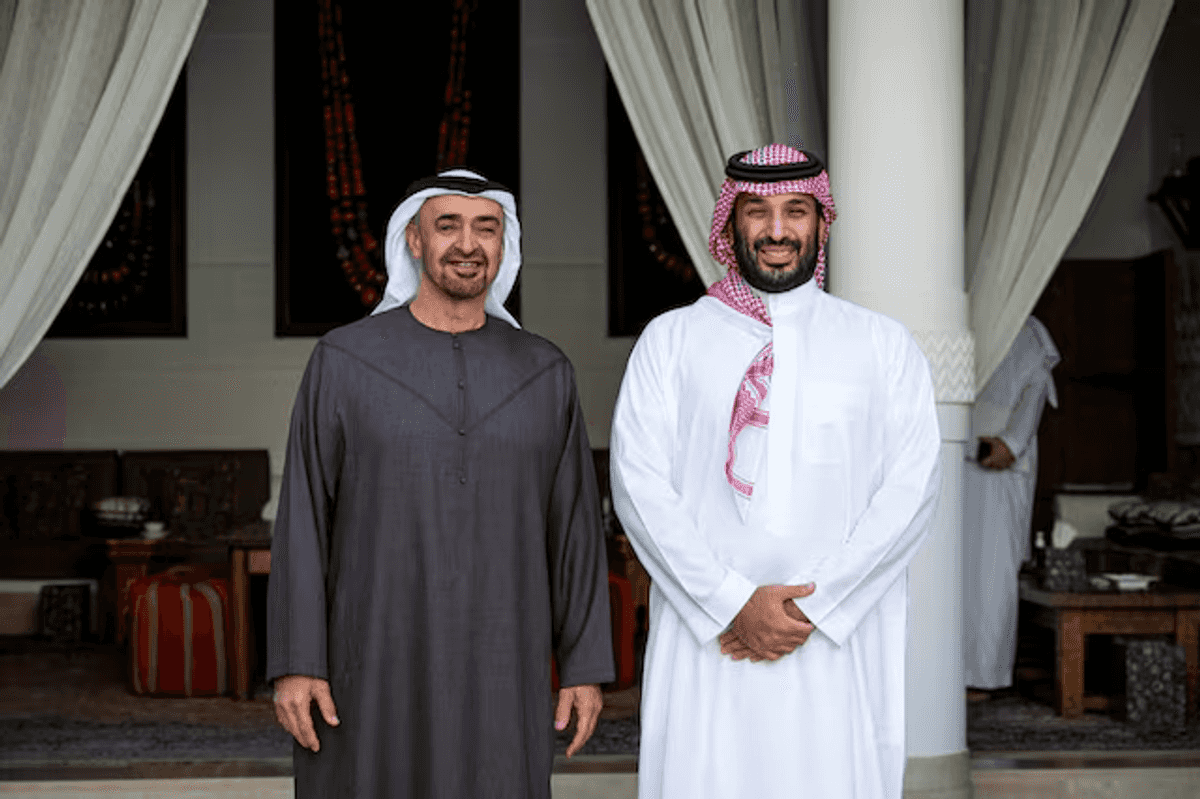
File Photo: Sheikh Mohamed bin Zayed Al Nahyan, President of the United Arab Emirates, stands for a photograph with Prince Mohammed bin Salman bin Abdulaziz, Crown Prince and Prime Minister of Saudi Arabia, in Riyadh, Saudi Arabia September 3, 2025.
Reuters
Senior Saudi and United Arab Emirates officials on Tuesday posted matching messages on X, affirming close historical ties and "wise leadership" in both countries.
The coordinated posts, from Saudi Minister of Media Salman Al-Dosary and UAE National Media Authority chief Abdulla bin Mohammed Alhamed, followed months of tension over Yemen, oil policy and regional influence, Reuters reported.
Why did Saudi Arabia and the UAE post unity messages?
The posts followed a rift that widened last year over the war in Yemen, after Saudi Arabia struck a shipment of UAE military equipment bound for a Yemeni faction Abu Dhabi backed. Tension deepened when the UAE left OPEC in May. Gulf officials have since pushed for unity against Iranian and Houthi threats.
What did the Saudi and UAE ministers say?
Alhamed wrote that "Emirati-Saudi relations are an extension of a shared history and deep-rooted fraternal ties between two brotherly peoples, united by a single destiny."
العلاقة بين المملكة والإمارات هي علاقة شعبين يجمعهما تاريخ وإرث مشترك وقيادة رشيدة في كل من البلدين تسير بشعبي البلدين وفق رؤى تنموية واعدة، ودور الإعلام الرصين التصدي لكل من يحاول نقل صورة مضللة حول العلاقات بين البلدين وتحري الدقة فيما يُنشر عنها.
— سلمان الدوسري (@SalmanAldosary) July 21, 2026
Al-Dosary's post described the relationship as one "between two peoples united by a shared history and heritage, and wise leadership in both countries." Both posts said media coverage should reflect that closeness rather than undermine it. Saudi officials did not respond to questions about what prompted Tuesday's posts.
العلاقات الاماراتية السعودية امتداد لتاريخ مشترك وروابط أخوية راسخة بين شعبين شقيقين يجمعهما مصير واحد. وتعززها قيادة حكيمة في البلدين تمضي بتنسيق وثيق ورؤية واضحة نحو مستقبل يحمل الخير لشعوبنا ومنطقتنا.
ودور الاعلام المسؤول ان يعكس هذا الواقع بموضوعية ويتصدى لأي محاولات للإساءة…
— Abdulla M Alhamed (@AMB_Alhamed) July 21, 2026
What caused the Saudi-UAE rift?
The two Gulf powers have diverged for years on issues ranging from oil quotas to broader geopolitics. Those disagreements became public late last year, driven largely by opposing support in Yemen's civil conflict. Since then, prominent Saudi and Emirati commentators, pundits and some media outlets have traded open criticism.
In March, the UAE blocked the X accounts of Saudi broadcaster Al-Arabiya. The countries also split during the Iran war, disagreeing over the right response to a conflict that threatened regional security. Dubai Public Policy Research Center director-general Mohammed Baharoon called the episode "a storm in a cup," adding that shared interests still outweigh the divergences.
How has the reconciliation played out beyond the ministers' posts?
One hour before the ministers' posts, Turki Alalshikh, a close confidant of Saudi Crown Prince Mohammed bin Salman, shared a photo on X said to have been taken days earlier. It showed Saudi Defense Minister Khalid bin-Salman and UAE Vice President Sheikh Mansour bin Zayed Al Nahyan with arms around each other, smiling. Alalshikh captioned the image as a sign of "brotherly relations and a deeply rooted partnership."
Anwar Gargash, diplomatic adviser to the UAE president, responded with a metaphor about spears: united they resist breaking, but they break once separated. The remarks add to a broader push among Gulf Cooperation Council members for unity as Iran-aligned Houthi forces continue threatening Red Sea shipping.



Comments
See what people are discussing