

Central bank chief briefs global investors on Pakistan's economic outlook amid Gulf crisis
Jameel Ahmad told senior executives at JPMorgan, Barclays, and Fitch that Pakistan's macroeconomic buffers are stronger today than during previous external shocks.

Business Desk
The Business Desk tracks economic trends, market movements, and business developments, offering analysis of both local and global financial news.
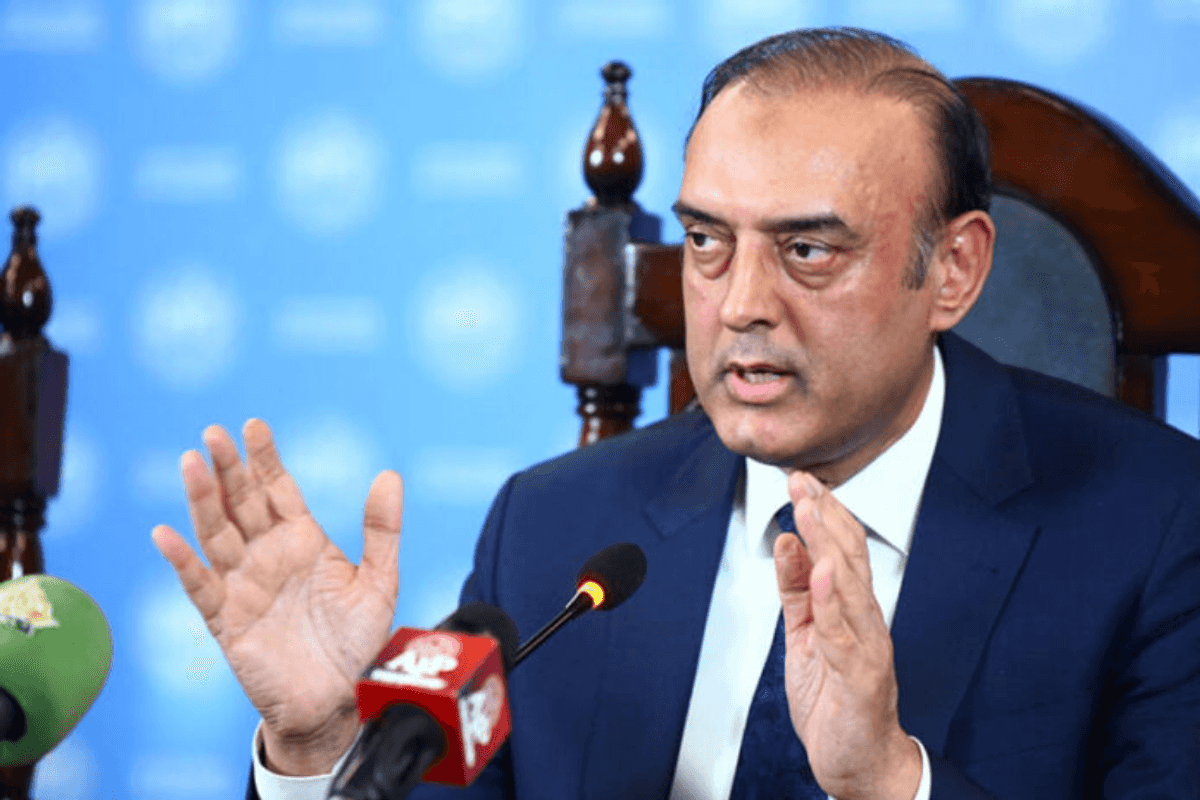
Pakistan's central bank governor has told senior executives from leading global financial institutions that the country's key macroeconomic indicators have improved faster than anticipated this fiscal year, even as the Middle East conflict introduces new risks and uncertainty.
Jameel Ahmad made the remarks while meeting executives from JP Morgan, Barclays, Citibank, Jefferies, and Franklin Templeton, as well as representatives from Fitch, Moody's, and S&P Global, on the sidelines of the IMF-World Bank Spring Meetings held from April 13 to 18. He also held bilateral meetings with the leadership of the IMF and the World Bank Group.
Ahmad told participants that a prudent monetary and fiscal policy mix had helped bring inflation down and stabilize it within the target range during the nine months through March, with average inflation at 5.7%. The external current account remained in surplus over the period, while SBP's foreign exchange reserves strengthened to $16.4 billion, largely through purchases from the interbank market.
He said reserves are expected to rise further to around $18 billion by June, supported by continued SBP purchases and fresh bilateral inflows.
On growth, Ahmad said real GDP expanded 3.8% in the first half of fiscal year 2026, up from 1.8% in the same period last year, reflecting a broad-based acceleration. He emphasized that Pakistan's initial conditions are significantly stronger today than during previous external shocks, such as the Russia-Ukraine conflict in early 2022, and that this positions the economy better to absorb the current pressures.
The governor reaffirmed that the SBP and the government remain committed to preserving price stability and will take whatever measures are necessary to safeguard macroeconomic stability. He noted that the real policy rate remains significantly positive and that the government has posted primary fiscal surpluses while responding to the ongoing conflict through targeted subsidies and demand-management measures.
Ahmad also pointed to the staff-level agreement with the IMF on the third review of the Extended Fund Facility and the second review of the Resilience and Sustainability Facility, as well as recent credit rating reaffirmations, as independent endorsements of Pakistan's reform commitment.
On the sidelines, Ahmad addressed the Pakistani diaspora at a Remittances and Roshan Digital Account roadshow, highlighting that RDA inflows have surpassed $12.4 billion across more than 917,000 accounts. He outlined recent regulatory enhancements to the RDA framework, including the inclusion of non-resident entities, aimed at broadening foreign investment into Pakistan.



Comments
See what people are discussing