

SBP ready to deal with economic shocks caused by Iran conflict, says governor
Ahmed says deferred oil payment arrangement with Saudi Arabia remains on track

Business Desk
The Business Desk tracks economic trends, market movements, and business developments, offering analysis of both local and global financial news.
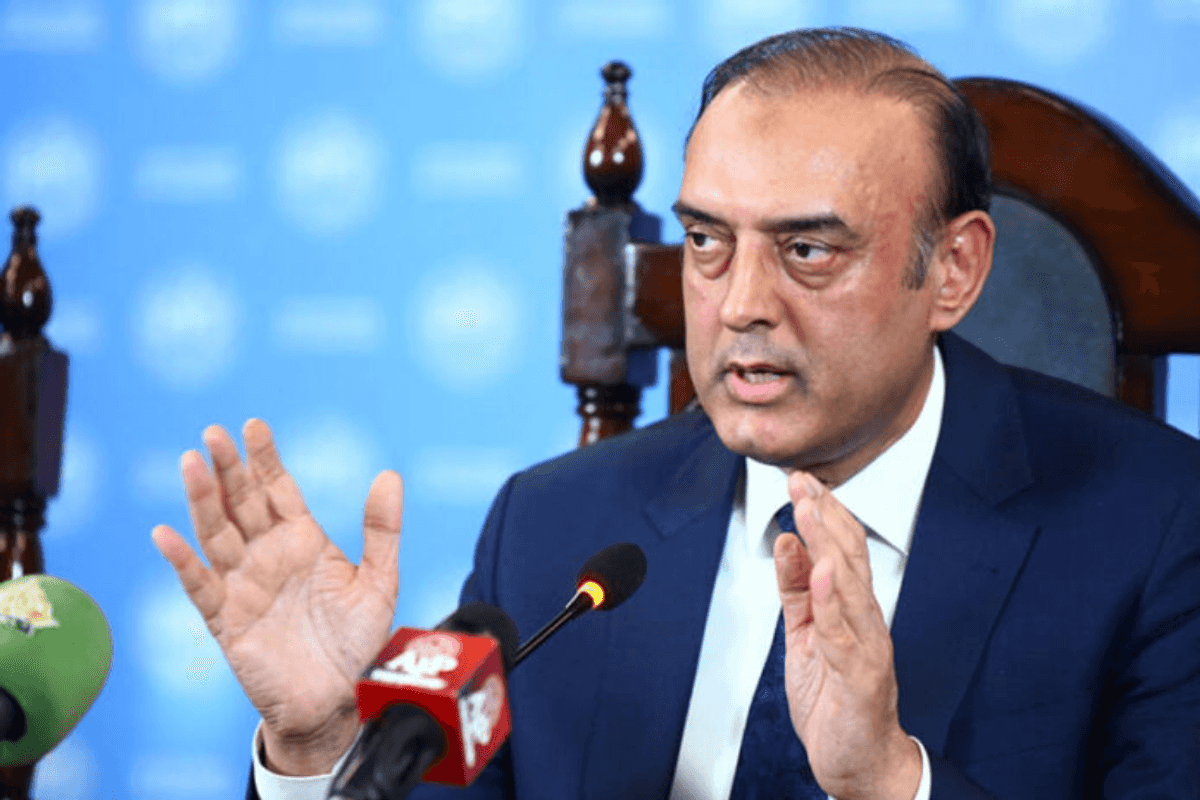
Pakistan’s central bank said on Monday it is prepared to respond to economic risks stemming from geopolitical tensions, particularly the ongoing conflict in the Middle East, but expressed confidence that key economic indicators will remain within manageable ranges.
Pakistan’s central bank said on Monday it is prepared to respond to economic risks stemming from geopolitical tensions, particularly the ongoing conflict in the Middle East, but expressed confidence that key economic indicators will remain within manageable ranges.
In a briefing after the Monetary Policy Committee’s (MPC) meeting, State Bank of Pakistan (SBP) Governor Jameel Ahmad said the government is expected to introduce policy measures to address emerging economic pressures, with the central bank contributing input to the planned actions.
“SBP has provided its input on these issues, some of which have been incorporated into the planned actions,” Ahmad told analysts, adding that the measures are expected to help address concerns arising from the current global and domestic economic environment.
The governor said the central bank will continue to closely monitor economic developments and would not hesitate to act if needed.
“If any policy response becomes necessary, the central bank will not hesitate to act to ensure the continuity of macroeconomic stability despite prevailing uncertainties,” he said.
Ahmad noted that geopolitical developments, particularly the intensity and duration of the Middle East conflict, remain a major risk for Pakistan’s economic outlook. However, he said the central bank expects the inflation and current account outlooks to remain within targeted ranges.
“Any significant deterioration in these indicators will be addressed through an appropriate policy response,” he said.
External debt obligations
During the briefing, SBP officials also provided an update on Pakistan’s external debt repayments.
Pakistan’s total external debt obligations for fiscal year 2026 amount to $25.6 billion, according to the central bank. Of that amount, $14.6 billion has already been addressed through repayments of about $7 billion and rollovers of existing loans.
Roughly $11 billion remains outstanding, with $4.3 billion expected to be repaid during the remaining four months of the fiscal year, while the remainder is likely to be rolled over.
Eurobond maturity and borrowing plans
The officials also highlighted the upcoming maturity of a $1.3 billion Eurobond in April, saying Pakistan remains on track to meet its external debt obligations.
The SBP said preliminary work on new international bond issuances had begun earlier, but authorities will reassess the timing amid heightened global uncertainty.
“Given the evolving geopolitical situation, authorities will assess the appropriate timing before moving ahead,” the governor said.
Oil prices and the Saudi payment facility
Ahmad also said Pakistan’s deferred oil payment arrangement with Saudi Arabia remains on track, adding that there have been no issues with the agreement.
He noted that alternative supply routes are being explored where necessary to ensure the arrangement continues smoothly.
The central bank estimates that a $10 increase in international oil prices could widen Pakistan’s current account deficit by about $1.5 billion, while having a relatively limited effect on inflation, increasing the consumer price index by around 0.2 percentage points.
The SBP Governor stated that all IMF program targets were successfully met, including the quantitative performance criteria for Net International Reserves (NIR), Forward Book, Net Domestic Assets (NDA), and lending to the government.
As a result, no waivers were required from the IMF, reflecting strong program compliance and improved macroeconomic discipline.
MPC statement
In its statement, the SBP’s Monetary Policy Committee highlighted that food prices have started to ease and are expected to decline further, supported by the anticipated bumper wheat crop in the Rabi season and a healthy Kharif harvest, which may help offset energy-led inflationary pressures.
It also noted that crop yields are expected to improve compared to last year based on available data, while the government is undertaking measures under the IMF’s RSF program to mitigate climate-related risks.
The current account posted a $121mn surplus in January, taking the 7MFY26 cumulative deficit to $1.1bn. It added that even though the external environment has become more challenging due to the ongoing Middle East conflict, the current account deficit (CAD) is expected to remain within the earlier projected range of 0-1% of GDP in FY26.
Overall, remittances are expected to reach $42 billion in FY26, compared to $32 billion last year, reflecting a significant increase. However, the ongoing geopolitical situation may have a slight impact, though it is expected to remain manageable.
The MPC noted that economic activity is gaining traction, with real GDP growth expected to remain within the earlier projected range of 3.75–4.75% in FY26. The improvement is supported by recovery in LSM, expansion in credit to the private sector, and improving business sentiment, indicating a gradual strengthening in economic activity.




Comments
See what people are discussing