


News Desk
The News Desk provides timely and factual coverage of national and international events, with an emphasis on accuracy and clarity.
Sharjah has established a dedicated World Heritage Office to oversee the site's preservation and administration.
WAM
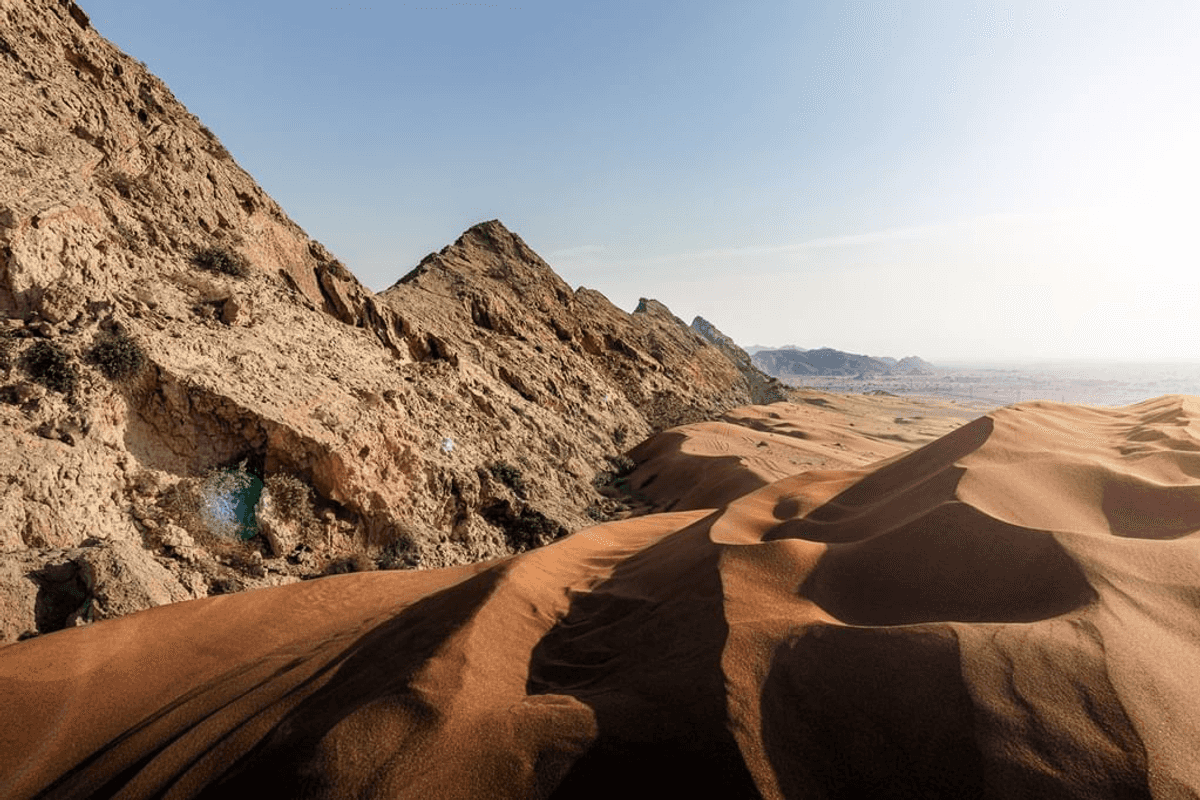
One year after the Faya Palaeolandscape was inscribed on UNESCO's World Heritage List, Sharjah has stepped up efforts to protect and study the prehistoric site.
The emirate has introduced new research funding, conservation programs and long-term management initiatives to safeguard the site.
What has Sharjah done to protect Faya since its UNESCO listing?
Sharjah has established a dedicated World Heritage Office to oversee the site's preservation and administration. It has also launched the AED2 million ($544,000) Faya Research Grant Program, which drew proposals from universities and research institutions across four continents, alongside expanded conservation planning and improved visitor facilities.
Authorities have strengthened international collaboration to safeguard one of the world's oldest known desert landscapes while encouraging further archaeological research. To mark the anniversary, Sharjah released an official documentary featuring Sheikha Bodour bint Sultan Al Qasimi, ambassador of the Faya World Heritage Property, alongside archaeologists whose work contributed to the site's UNESCO recognition. The film traces more than 210,000 years of human history and the discoveries that established Faya's global significance.
"International recognition is meaningful because it affirms the significance of that collective effort, but its greatest value lies in what it enables," Sheikha Bodour said. She said Sharjah had continued investing in research, conservation and education to keep Faya an important source of knowledge about human history.
Why was the World Heritage Office created?
Eisa Yousif, Director-General of the Sharjah Archaeology Authority, said the UNESCO designation created new responsibilities alongside international recognition. He said the past year focused on strengthening the scientific, institutional and conservation framework needed to manage the World Heritage site over the long term.
The newly created World Heritage Office, which operates under the Sharjah Archaeology Authority, coordinates conservation, research, documentation, international cooperation and long-term management of the emirate's World Heritage properties. It also oversees the Faya Research Grant Program and supports future nominations of cultural heritage sites for UNESCO recognition.
Which projects received Faya research grant funding?
The AED2 million research programme received 49 applications from universities and research institutions across Europe, the Middle East, Africa, Asia and North America. Funding was awarded to projects led by the University of Tübingen and Oxford Brookes University, along with researchers from the UAE, Britain, the United States and Spain.
The selected projects examine prehistoric settlement, ancient environments, palaeogenomics, geological landscapes and human migration, contributing to research on early human adaptation in the Arabian Peninsula. The program also includes mentoring fellowships that give young Emirati researchers international archaeological field experience.
How has visitor access to Faya improved?
Sharjah has also expanded public engagement with the site. Since the start of 2026, Faya's official website has attracted more than 7,000 active users, while pages dedicated to the research grant program have recorded more than 5,000 visits from prospective researchers and institutions.
At the Mleiha Archaeological Centre, visitors can now explore a new interactive exhibition highlighting Faya's archaeological discoveries and scientific significance. New directional signage and an official UNESCO World Heritage monument have also improved visitor access across the site.
Earlier this year, the Sharjah Archaeology Authority brought together government agencies responsible for planning, tourism, infrastructure, environmental protection and heritage conservation for a three-day workshop. The workshop focused on updating Faya's long-term management strategy, balancing conservation needs with visitor access, infrastructure development and sustainable management of the World Heritage property.



Comments
See what people are discussing