

Syria arrests pro-Assad militia chief Ali Kayali over 2013 Banias and Bayda massacres
Syrian authorities have arrested pro-Assad commander Ali Kayali, also known as Mihraç Ural, after a 13-year manhunt over his alleged role in the 2013 Banias and al-Bayda massacres

News Desk
The News Desk provides timely and factual coverage of national and international events, with an emphasis on accuracy and clarity.
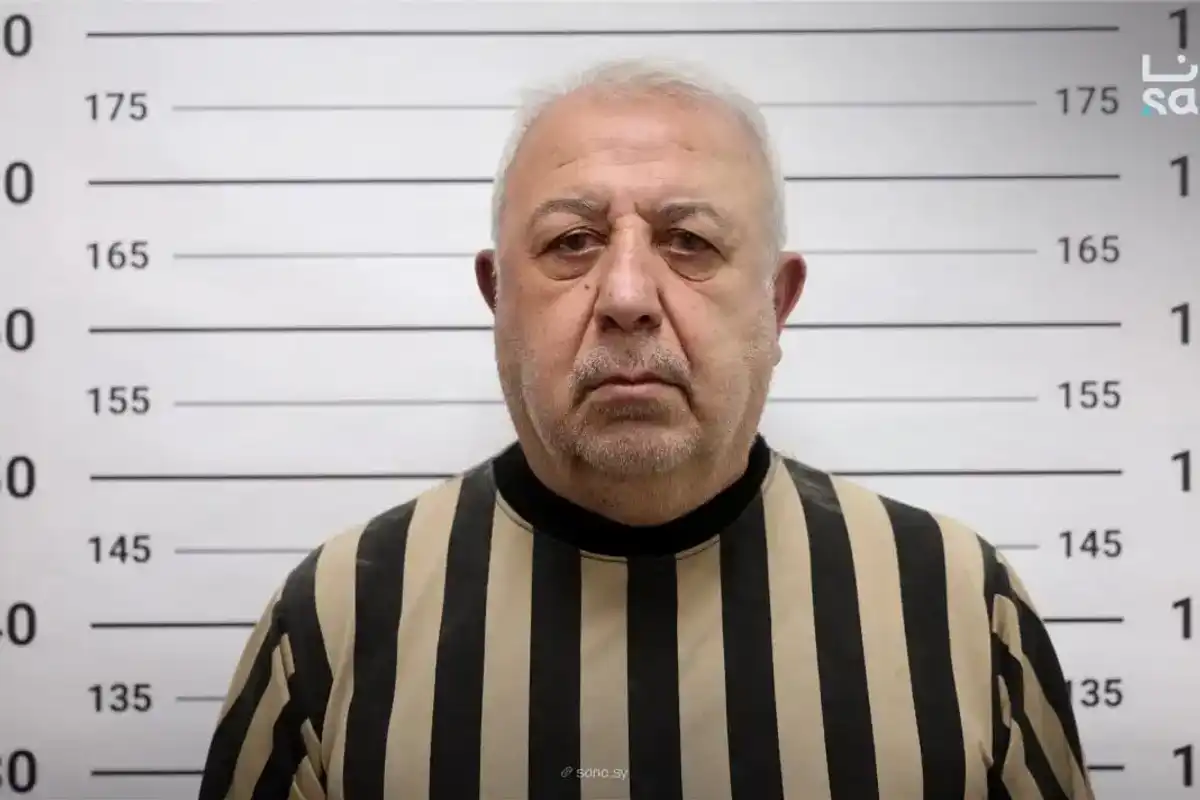
Born in Turkiye, Ali Kayali, also known as Mihrac Ural, fled to Syria in 1982 and developed close ties with the Assad regime.
Picture Courtesy: SANA
Syrian intelligence services have arrested Ali Kayali, a prominent pro-Assad paramilitary commander and the principal suspect behind the 2013 massacres in the coastal towns of Banias and al-Bayda, as he attempted to flee across the border, state media confirmed on Thursday, October 15.
Who is Ali Kayali and what occurred during the 2013 coastal massacres?
According to official news agency SANA, Kayali—widely known by his alias Mihraç Ural and referred to by survivors as the "Butcher of Banias"—was intercepted and detained by the General Intelligence Directorate during an attempted cross-border escape. Born in Antakya, Turkey, Kayali fled a Turkish prison in 1982 before taking refuge in Syria, where he founded the pro-government "Syrian Resistance" (Muqawama Suriya) paramilitary militia to back ousted president Bashar al-Assad's military apparatus during the uprising.
Kayali is identified as the chief instigator of the sectarian assaults carried out in early May 2013 against the predominantly Sunni enclave of Ras al-Nabaa in Banias and the adjacent village of al-Bayda in Tartus province. Human Rights Watch documented at least 248 civilians executed through close-range gunfire, stabbings, and immolation after armed clashes had subsided, describing the atrocity as one of the deadliest instances of mass executions during the Syrian civil war.
Independent monitoring groups, including the Syrian Observatory for Human Rights (SOHR), estimated the combined civilian death toll exceeded 400. Kayali has also remained on Ankara’s wanted list for his alleged involvement in the May 2013 Reyhanlı car bombings in southern Turkey, which killed over 50 people.
How does the capture align with transitional justice and post-Assad trials?
Kayali’s apprehension follows the arrest of his former militia deputy, Jamal Trabulsi, by counterterrorism units on October 4, signaling an intensified judicial sweep by the new Syrian administration that assumed power following the ouster of Bashar al-Assad in December 2024.
Syrian Justice Minister Mazhar Alwais underscored the legal significance of the capture, stating that the operation "sends a clear message: there is no room in Syria for impunity for criminals; the rights of victims will not be lost, no matter how much time passes." Ahmed Zeydan, media adviser to President Ahmed al-Sharaa, affirmed that every operative implicated in atrocities against Syrian civilians will face trial, emphasizing that legal accountability remains central to national reconciliation.
Syrian judicial bodies, which initiated trials against dozens of high-ranking former intelligence and military officers in April, are preparing formal indictments charging Kayali with mass execution, war crimes, and sectarian violence.
According to reporting by SANA, Anadolu Agency, and Enab Baladi, state prosecutors will present evidence gathered from mass graves in Tartus alongside survivor testimonies when Kayali’s preliminary hearing opens before the transitional criminal court in Damascus.





Comments
See what people are discussing