

Tehran reviewing latest US response as Trump suggests he can wait for Iran deal
Iran says it is reviewing Washington's latest position on ending the war as Trump warns renewed attacks are ready if Tehran fails to agree to a deal within days

News Desk
The News Desk provides timely and factual coverage of national and international events, with an emphasis on accuracy and clarity.
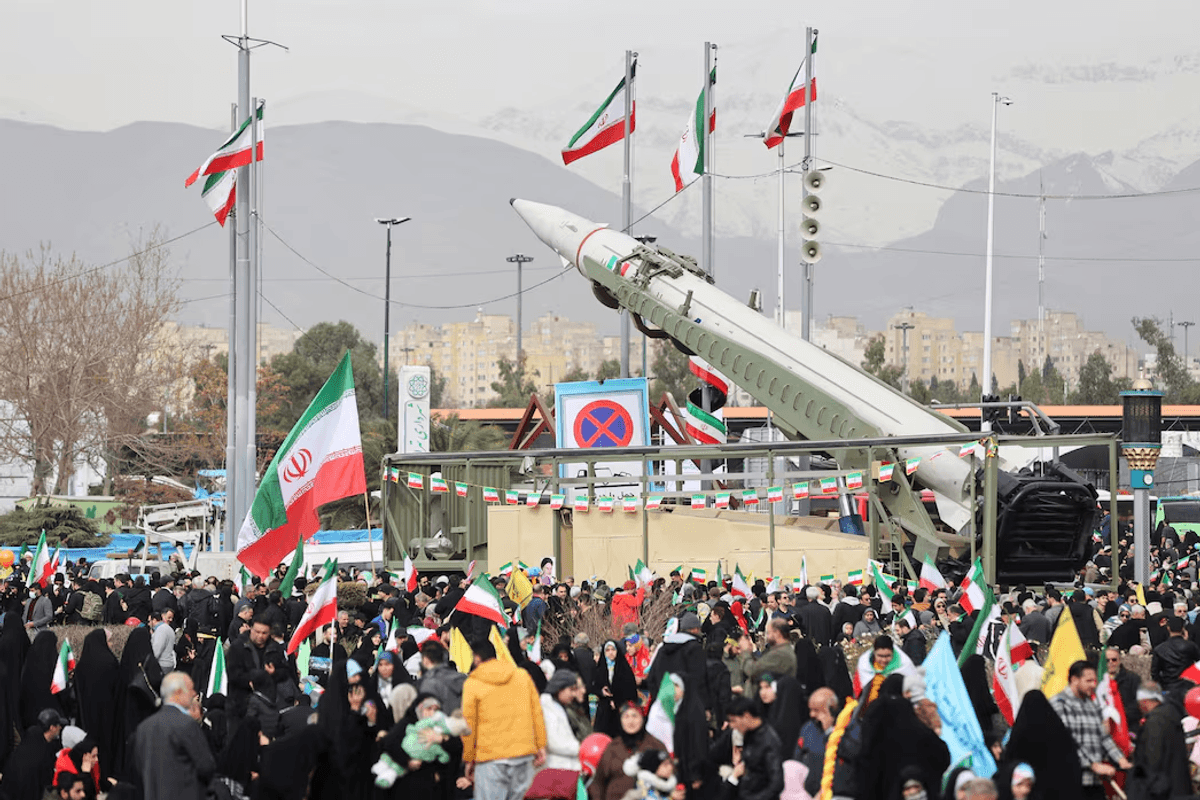
People gather near a missile on display during the 47th anniversary of the Islamic Revolution in Tehran, Iran February 11, 2026.
Reuters
Iran said on Thursday it was reviewing Washington's latest position on ending the war, after US President Donald Trump suggested he was prepared to wait a few days to "get the right answers" from Tehran but warned of renewed attacks if no deal was reached, according to Reuters.
Iranian Foreign Ministry spokesperson Esmaeil Baghaei confirmed the review, with Pakistan continuing to mediate between the two sides. Six weeks into a fragile ceasefire, talks have made little progress.
What is Iran's response to Trump's latest ultimatum?
Iranian state-run agency Nour News quoted Baghaei as saying: "We have received US views and are reviewing them." Pakistan, which hosted peace talks last month and is acting as the conduit for messages between Tehran and Washington, has facilitated several rounds of communication.
Pakistan's interior minister was in Tehran on Wednesday as part of the ongoing mediation effort.
What did Trump say about the Iran peace deal timeline?
Trump told reporters at Joint Base Andrews: "Believe me, if we don't get the right answers, it goes very quickly. We're all ready to go." Asked how long he would wait, he said it could be a few days, but could also move faster.
Trump reiterated his determination not to allow Iran to acquire a nuclear weapon, saying the two sides were in "the final stages" and that the outcome would be either a deal or actions that were "a little bit nasty."
Trump is also under pressure at home ahead of midterm elections in November, with his approval rating falling close to its lowest level since he returned to the White House. Soaring oil prices have raised concern over inflation and the broader impact on the global economy.
What are Iran's conditions for ending the war?
Iran submitted its latest offer to the US this week, but Tehran's own descriptions suggest it largely repeats terms Trump has previously rejected.
Those terms include demands for control of the Strait of Hormuz, compensation for war damage, lifting of sanctions, release of frozen assets, and the withdrawal of US troops.
Iran's Revolutionary Guards also warned that "if aggression against Iran is repeated, the promised regional war will extend beyond the region this time."
What is happening at the Strait of Hormuz?
The Strait of Hormuz, which carried a fifth of global oil and liquefied natural gas shipments before the war, has been all but closed since fighting began, in the most serious disruption to global energy supplies in history.
Iran released a map on Wednesday showing a "controlled maritime zone" at the strait, requiring ships to seek authorization from a newly created authority to transit. Washington has said any access fees would be unacceptable.
Two Chinese supertankers carrying around 4 million barrels of oil exited the strait on Wednesday, while a South Korean tanker carrying 2 million barrels of Kuwaiti crude was also crossing in cooperation with Iran.
Shipping monitor Lloyd's List reported at least 54 ships transited the strait last week, roughly double the previous week's figure. Iran said 26 ships had crossed in the past 24 hours, still only a fraction of the 125 to 140 daily passages recorded before the war.
What are the stated war aims and what has been achieved?
Trump and Israeli Prime Minister Benjamin Netanyahu said when they launched the war that their aims were to curb Iran's support for regional militias, dismantle its nuclear program, destroy its missile capabilities, and create conditions for Iranians to topple their rulers. US-Israeli bombing killed thousands of people in Iran before the ceasefire took hold.
Israel has also killed thousands more and driven hundreds of thousands from their homes in Lebanon, which it invaded in pursuit of the Iran-backed Hezbollah armed group.
Iran has so far retained its stockpile of near-weapons-grade enriched uranium and its ability to threaten neighbors with missiles, drones, and proxy militias. Its clerical rulers, who suppressed a mass uprising at the start of the year, have faced no sign of organized opposition since the war began. Iranian strikes on Israel and neighboring Gulf states have killed dozens of people.




Comments
See what people are discussing