


News Desk
The News Desk provides timely and factual coverage of national and international events, with an emphasis on accuracy and clarity.
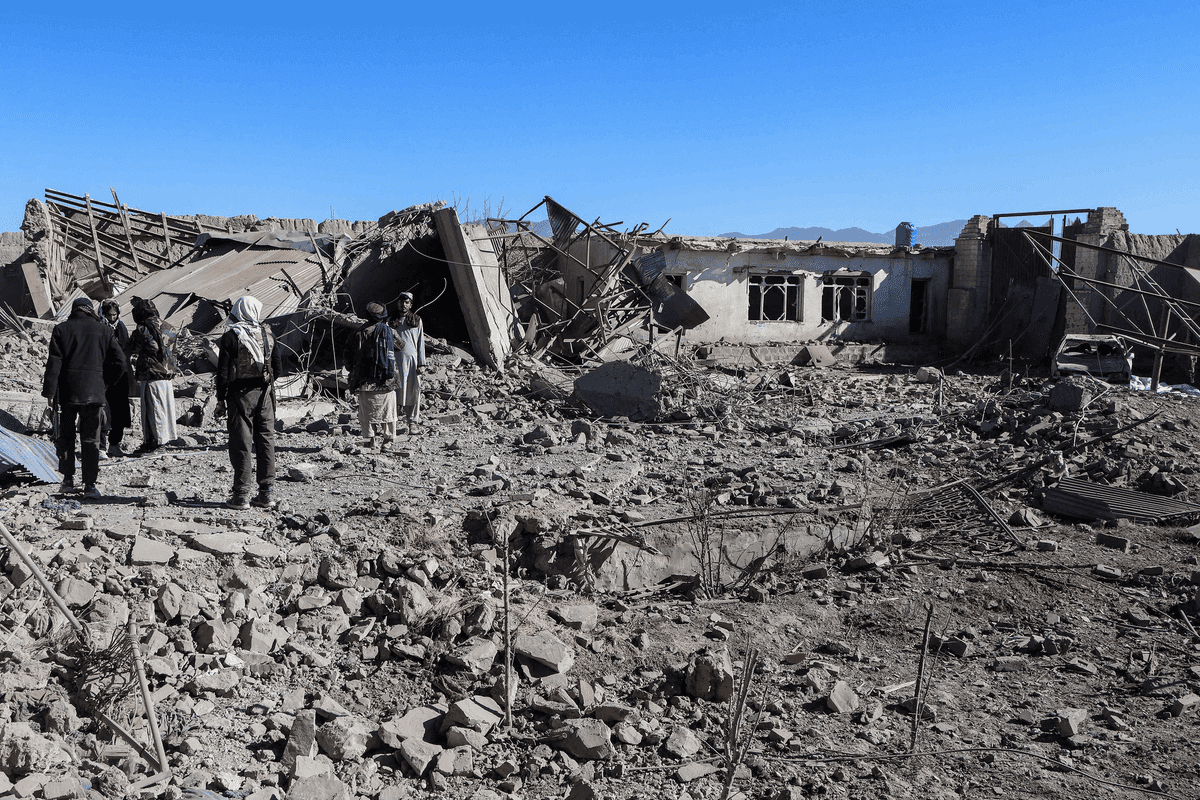
Aftermath of Pakistani airstrike in Balish village, Urgun district, Paktika Province, February 22, 2026.
AFP
Pakistani airstrikes along the Afghanistan border have killed more than 80 militants, security sources said, following a series of suicide bombings inside Pakistan that targeted civilians and security forces.
The strikes hit seven suspected militant camps in the border provinces of Nangarhar, Paktika, and Khost, targeting hideouts linked to the Tehreek-i-Taliban Pakistan (TTP), locally referred to by authorities as Fitna al Khwarij and the Islamic State-Khorasan Province (ISKP).
“Intelligence-driven airstrikes destroyed multiple terrorist centers with precision, killing over eighty militants, with additional casualties expected,” a Pakistani security source said.
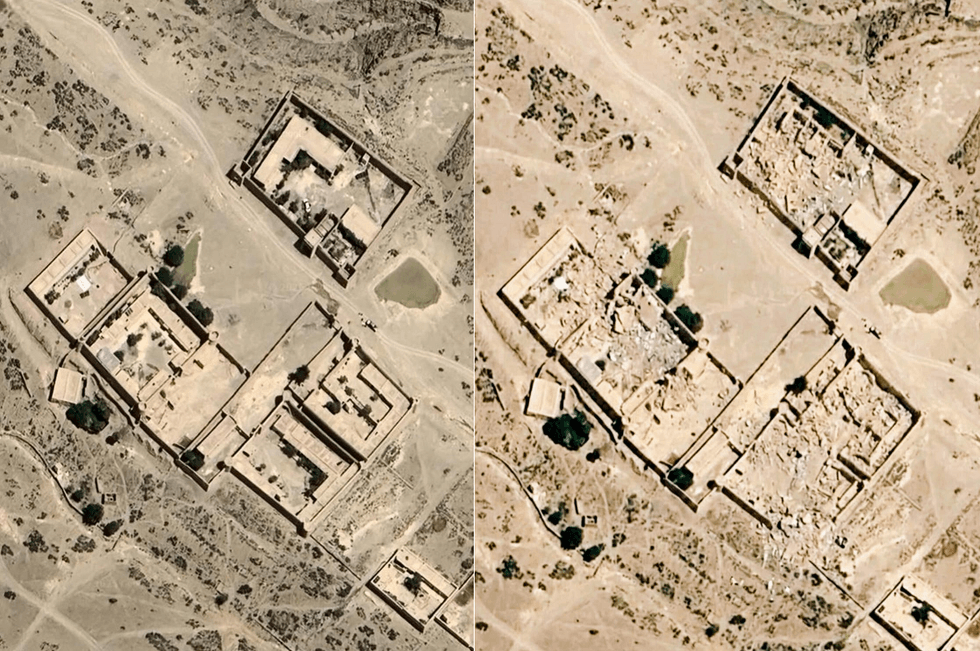 Margha Bazar Camp in Barmal, Paktika, Afghanistan, shown before and after the airstrikes.Pakistan security sources
The operation comes in the wake of recent attacks, including a bombing at an Imam Bargah in Islamabad and assaults in Bajaur and Bannu districts of northwestern Khyber Pakhtunkhwa province. Pakistan said the assaults were directed by Afghan-based TTP leadership and their affiliates, noting that the militants had openly claimed responsibility.
Afghan authorities vow ‘appropriate response’
However, Afghan officials quoted by AFP disputed Pakistan’s claim. A Taliban government security source described the reported death toll of 80 as “false and imaginary,” while other Afghan sources said at least 18 people, including children, were killed in the strikes.
Separately, Afghanistan’s Ministry of Defense warned that Pakistan’s military actions in Paktika and Nangarhar would be met with a “timely, appropriate and calculated response.”
In a statement, the ministry condemned the strikes as a violation of Afghanistan’s sovereignty, international law, principles of good neighborliness, and Islamic values.
It said the attacks targeted civilian and religious sites, describing them as “clear evidence” of intelligence and security failures within Pakistan, and reaffirmed Afghanistan’s right to defend its territorial integrity.
Islamabad has repeatedly urged Afghanistan’s Taliban authorities to prevent militant groups from operating from Afghan soil, but said no effective measures had been taken.
Pakistan’s Ministry of Information, in a post on Sunday, emphasized that the airstrikes were a measured retaliatory response, aimed at neutralizing key militant infrastructure.
The military reiterated its call for Afghanistan’s interim government to deny safe haven to militants targeting Pakistan and urged the international community to encourage compliance with the Doha Agreement, which obliges the Taliban to prevent cross-border attacks.
Hours before the airstrikes, a suicide bomber struck a security convoy in Bannu district, killing two soldiers, including a lieutenant colonel. Pakistani officials warned that military operations would continue against militants regardless of their location.
Militant violence in Pakistan has surged in recent years, largely attributed to the TTP and outlawed Baloch separatist groups. Islamabad accuses the TTP of operating from Afghan territory, a claim denied by both Kabul and the insurgents.
Border tensions have escalated since October, when clashes killed dozens of soldiers, civilians, and suspected militants. While a Qatar-mediated ceasefire has largely held, formal peace talks in Istanbul failed to yield an agreement, keeping relations between the neighbors strained.





Comments
See what people are discussing