

Top Pakistan leadership reviews energy stability, regional risks
Islamabad stresses need for coordinated national response, emphasizing that policy decisions must prioritize stability
Aamir Abbasi
Editor, Islamabad
Aamir; a journalist with 15 years of experience, working in Newspaper, TV and Digital Media. Worked in Field, covered Big Legal Constitutional and Political Events in Pakistan since 2009 with Pakistan’s Top Media Organizations. Graduate of Quaid I Azam University Islamabad.
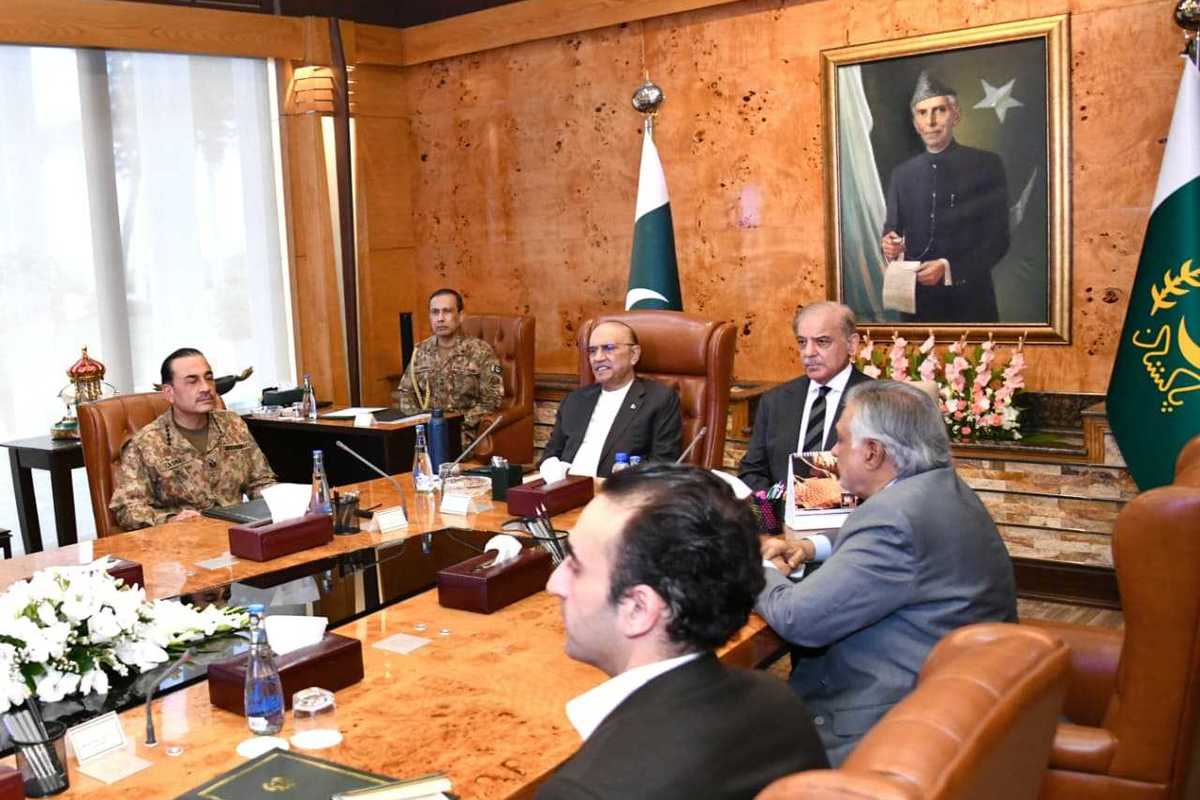
Pakistan’s top leadership met on Thursday to review economic stability and security amid an ongoing oil crisis and regional tensions.
President Asif Ali Zardari chaired a high-level consultative meeting at Aiwan-e-Sadr in Islamabad, attended by Prime Minister Shehbaz Sharif and Army Chief Gen. Syed Asim Munir, along with senior cabinet members and officials.
Participants included Deputy Prime Minister Ishaq Dar, Pakistan Peoples Party Chairman Bilawal Bhutto Zardari, Interior Minister Mohsin Naqvi, Finance Minister Muhammad Aurangzeb, Petroleum Minister Ali Pervaiz Malik, and Economic Affairs Minister Ahad Khan Cheema.
Officials reviewed the impact of global oil and gas supply fluctuations on Pakistan’s economy, focusing on inflationary pressures and energy security.
Briefings outlined steps to stabilize petroleum prices, limit the effects of rising fuel costs across sectors, and enforce fiscal discipline through austerity measures.
Participants also discussed the broader regional situation and its implications for Pakistan’s security, economic outlook, and food security.
They stressed the need for a coordinated national response, emphasizing that policy decisions must prioritize stability while protecting public interests.
The leadership highlighted the importance of national consensus and stronger institutional coordination amid emerging challenges.
They agreed that economic management, energy planning, food security, and security considerations must remain closely aligned.
The meeting also called for greater public awareness to reduce fuel consumption, promote public transportation, and encourage shared mobility solutions to manage energy demand during the crisis.

Comments
See what people are discussing