

Trump envoy, Iranian minister head to Switzerland for Iran nuclear talks
Steve Witkoff and Iran's Araqchi head to Switzerland for talks as a Lebanon ceasefire revives hopes for a broader US-Iran deal

News Desk
The News Desk provides timely and factual coverage of national and international events, with an emphasis on accuracy and clarity.
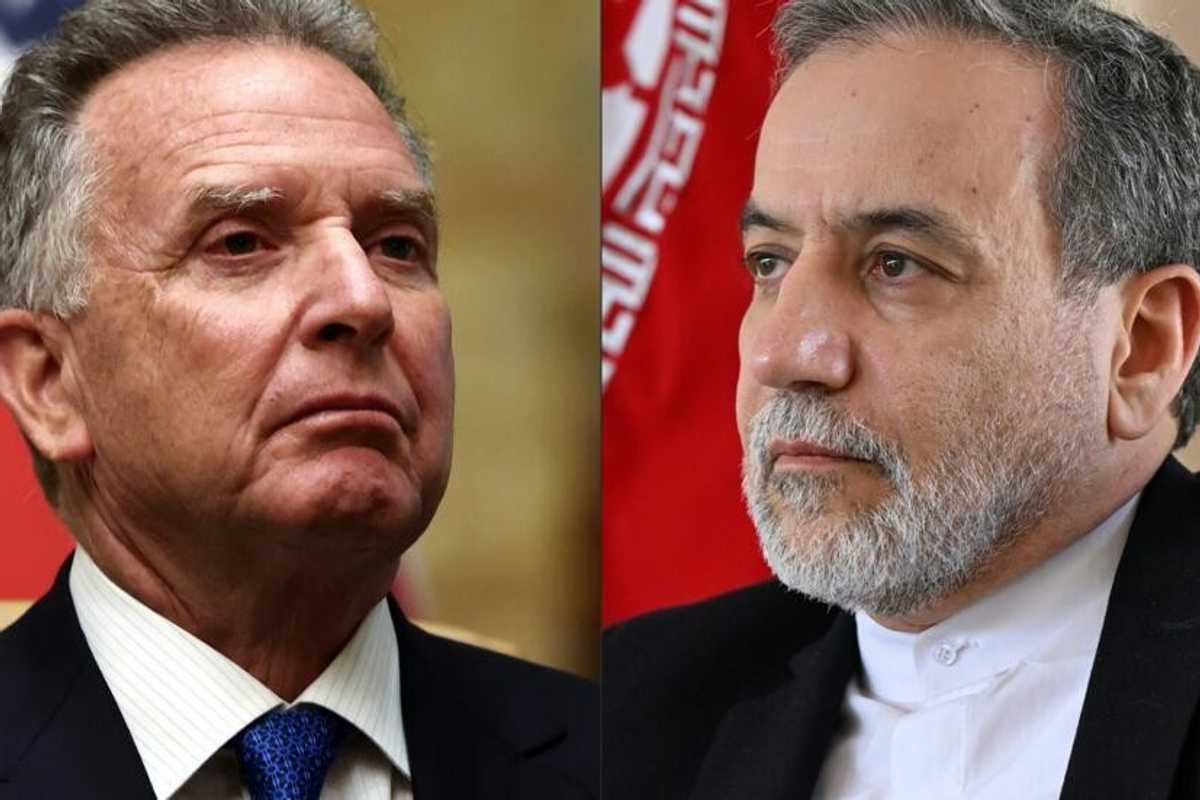
A combination of pictures shows US Middle East envoy Steve Witkoff (L) and Iran's Foreign Minister Abbas Araghchi (R).
U.S. special envoy Steve Witkoff and Iranian Foreign Minister Abbas Araqchi are heading to Switzerland for talks, Axios reported on Friday. The meeting follows a ceasefire between Israel and Hezbollah in Lebanon, which revived hopes of expanding an interim Iran war agreement into a broader regional deal.
Why are the US and Iran meeting in Switzerland?
The two sides are meeting to discuss a 14-point memorandum signed earlier this week, aimed at halting hostilities and opening a 60-day window to negotiate unresolved issues. Those issues include Iran's nuclear program and wider regional security concerns. The talks had appeared uncertain a day earlier after renewed fighting in Lebanon threatened to derail the process.
According to Axios, Witkoff is travelling to Switzerland to join Jared Kushner, President Donald Trump's son-in-law, who is already there. Araqchi is expected to arrive Saturday. Neither Washington nor Tehran has officially confirmed the talks, but the travel plans suggest both sides intend to move ahead with diplomacy despite ongoing regional tensions.
What happened with the Israel-Hezbollah ceasefire?
U.S. Vice President JD Vance had cancelled plans to travel to Switzerland on Thursday as fighting escalated between Israel and Hezbollah, raising fears the Lebanon conflict could undermine the US-Iran negotiations. Those concerns eased after Israel and Hezbollah agreed to a ceasefire on Friday, which a senior U.S. official said took effect around 4 p.m. local time following an exchange of fire. The official said U.S. and Qatari mediators helped secure the truce with assistance from Iran.
Two Hezbollah sources and a senior Israeli official separately confirmed the ceasefire. The Israeli official said military operations would stay suspended as long as Hezbollah avoids further attacks, though Israeli forces will keep their presence in parts of southern Lebanon near the border. Lebanese security sources said Israel carried out around a dozen airstrikes in the first hour after the ceasefire began, though no further strikes followed later that evening.
Lebanon's health ministry said Israeli attacks before the truce killed 47 people and wounded 97 others, while the Israeli military reported four of its soldiers killed in Lebanon. The ceasefire's durability is seen as a key test for the wider US-Iran memorandum, which calls for an end to military operations across multiple fronts, including Lebanon.
What issues remain unresolved in the US-Iran memorandum?
Switzerland's foreign ministry said earlier talks at the Bürgenstock resort had been postponed, though it remained ready to facilitate discussions and that preparatory work was continuing. The memorandum lays out a framework for de-escalation, but several major issues are still unresolved, including Iran's nuclear program and broader security arrangements meant to underpin a longer-term settlement.
Israel, which was not involved in the US-Iran negotiations, has said it does not consider itself bound by the agreement. Iran has signalled it expects Washington to ensure compliance with the memorandum. During a call with Pakistan's foreign minister on Friday, Araqchi said the United States would be responsible for any breach of commitments under the deal, including efforts to end the fighting in Lebanon, according to Iran's foreign ministry.
What is happening with the Lebanon ceasefire talks?
Lebanese President Joseph Aoun condemned the latest Israeli strikes but said they would not derail efforts to secure a comprehensive ceasefire. The U.S. State Department said Secretary of State Marco Rubio spoke with Aoun and reiterated Washington's support for a fully sovereign Lebanese state, while also stressing the need for Hezbollah to be disarmed.
The two sides also discussed holding a new round of Israel-Lebanon talks in Washington between June 23 and June 25. The Lebanese presidency said a comprehensive ceasefire would be a fundamental prerequisite for those discussions.


Comments
See what people are discussing