

Trump says US is 'low-keying it' with Iran, stresses economic pain
Trump says the United States is low-keying it with Iran, citing Tehran's inflation and cash shortage as the Strait of Hormuz blockade continues into a new week

News Desk
The News Desk provides timely and factual coverage of national and international events, with an emphasis on accuracy and clarity.
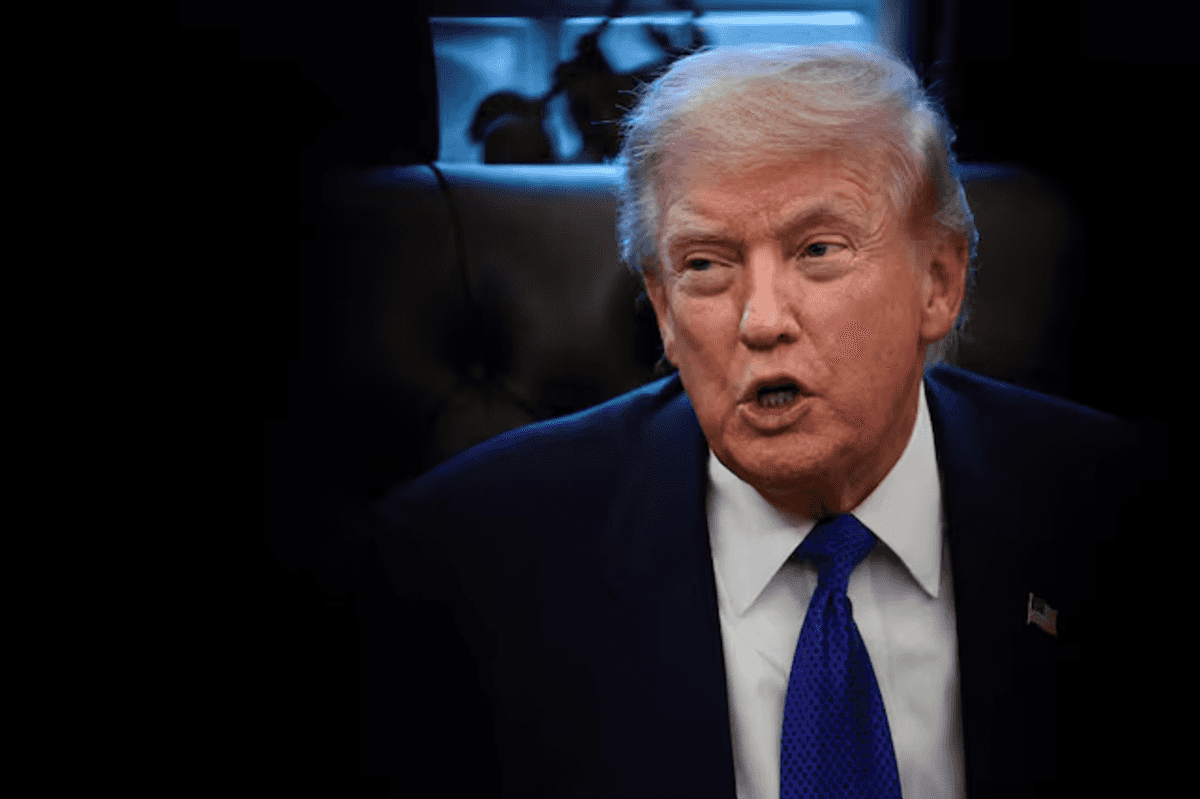
U.S. President Donald Trump speaks in the Oval Office at the White House, February 2, 2026.
Reuters
President Donald Trump said Sunday the United States is taking a low-key approach with Iran, watching economic pressure build on Tehran as the Strait of Hormuz blockade continues, according to an interview with Axios.
Why is Trump low-keying it with Iran?
Trump described a strategy of limited engagement rather than open confrontation. "We are low-keying it," he told Axios in a brief phone call. "We are only semi-negotiating with them. We are just watching Iran with its huge inflation and the fact they have no money." He compared the standoff to a chess game.
Iran's Revolutionary Guards said the Strait of Hormuz would remain closed until the United States met a list of demands, including compensation for war damage. Traffic through the strait, a crucial global energy route, has dropped sharply amid attacks, including one tanker strike Saturday, according to the United Arab Emirates.
What are Iran's conditions for reopening the Strait of Hormuz?
Iran's Supreme National Security Council said Saturday that reopening the waterway would require an end to fighting on all fronts, the lifting of a US counterblockade on Iranian ports and the removal of sanctions. It also demanded the release of frozen assets and compensation for wartime damage, according to the Tasnim news agency. The conditions matched terms in a June memorandum that included a provision to create a $300 billion reconstruction fund for Iran.
The Revolutionary Guards said Sunday their strategy was to maintain the blockade until the United States accepted all of Iran's conditions, describing the strait as a "theater of war" rather than simply a waterway. Iranian Foreign Minister Abbas Araghchi said earlier Sunday that Tehran was only "exchanging messages" with the United States through intermediaries.
What role is Oman playing in the Strait of Hormuz talks?
Oman's Foreign Ministry condemned the repeated attacks in the waterway without naming Iran directly. It said negotiations over navigation arrangements in the strait were continuing and warned against actions that could jeopardize progress. The June memorandum said Iran and Oman would discuss future arrangements for administering the strait with other Gulf countries, in line with international law.
Araghchi said talks with Oman on managing the strait were approaching their final stages. The closure has driven up prices for US consumers and created a political challenge for Trump ahead of November's midterm elections. It has also raised concern among regional countries.
How is the Houthi blockade of Saudi ports connected to the standoff?
As Hormuz traffic has been disrupted, the Houthis in Yemen declared a parallel maritime blockade on Saudi ports in the Red Sea last month. The Houthis said Sunday they had struck a Saudi oil facility on the Red Sea coast, after Saudi Arabia said it had extinguished a fire at the site. Saudi Arabia has backed Yemen's internationally recognized government in its conflict with the Houthis, a conflict paused by a UN-backed 2022 accord that has appeared to break down since the blockade was declared.
A medical source in government-held Mokha said three civilians and eight military personnel were killed and 32 people were wounded Sunday. The source said all civilian casualties resulted from Houthi strikes on the city's port. Houthi military spokesman Yahya Saree said the group had targeted Saudi troops and equipment in the area with missiles and drones.
What is the new Saudi-Turkey-Pakistan defense pact?
The wider conflict has also challenged Saudi Arabia's plans to diversify its economy away from oil. On Friday, Saudi Arabia signed a joint defense agreement with Turkey and Pakistan that includes a NATO-style clause treating an attack on one country as an attack on all.
Turkish Foreign Minister Hakan Fidan said Saturday he expected Egypt to join the pact, calling Egypt a "natural partner on all issues." He said the agreement was not directed at any specific country. Pakistan's Foreign Ministry said Friday the pact was intended to strengthen collective deterrence.


Comments
See what people are discussing