

How to get a Trump pardon: Forget the DOJ, call 'Bobby' and other influencers
Reuters reveals how Trump's pardon process now runs on personal networks and influence

News Desk
The News Desk provides timely and factual coverage of national and international events, with an emphasis on accuracy and clarity.
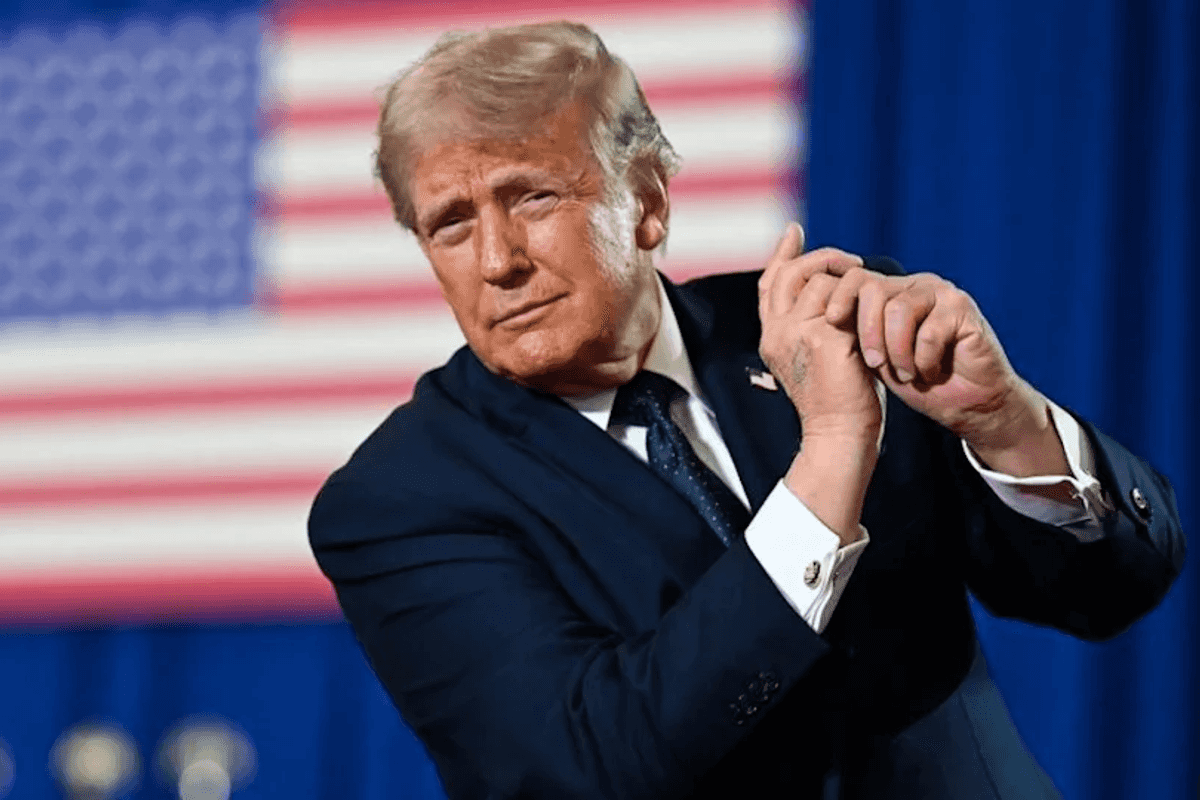
Under Trump’s second term, pardons bypass Justice Dept rules, relying instead on informal influencer access to reach him.
Reuters/File
Days before granting him a pardon in March 2025, President Donald Trump phoned Trevor Milton, an electric-vehicle entrepreneur convicted of defrauding investors of more than $660 million, according to Reuters.
Trump told Milton that high-profile advisors, including Health Secretary Robert F. Kennedy Jr., had convinced him that Milton was unfairly prosecuted. "You had a lot of support," Trump said. "Bobby Kennedy. You have to call Bobby and thank him."
How does the Trump pardon process actually work?
Under Trump's second term, winning a pardon no longer follows the Justice Department's traditional guidelines. Success now depends on access to an informal network of influencers who appeal directly to Trump. A Reuters analysis of pardon, lobbying and electoral records, along with interviews with over 80 people, found that personal relationships, political donations and narratives of victimisation have replaced formal process as the primary route to clemency.
Reuters identified 290 advocates who helped secure clemency for 197 recipients, representing 624 separate acts of influence. Among them, 73 helped secure more than one pardon or commutation. Brett Tolman, a former US attorney now in private practice in Utah, was involved in at least 12 pardons or commutations. Roger Stone, a longtime Trump confidant, had a hand in at least five.
What share of Trump pardons bypassed DOJ guidelines?
Reuters found that 96 percent of Trump's second-term clemency grants went to recipients who did not meet the Justice Department's longstanding requirements, such as a five-year waiting period after conviction or demonstrated remorse. By comparison, fewer than one percent of Biden-era clemency recipients failed to meet those standards, and 14 percent of first-term Trump recipients fell short.
Six people familiar with recent clemency decisions told Reuters that intermediaries with proven access to Trump's inner circle can charge as much as $2 million for their services. Reuters could not confirm the precise fees charged in individual cases. Only two successful pardon recipients were found to have hired registered lobbyists, a conventional influence route, paying a combined $2.7 million. Another 26 people spent nearly $1.9 million on lobbyists and received nothing.
The White House said in a statement that "anyone spending money to lobby for pardons is foolishly wasting their money," and described the pardon review process as rigorous, involving the White House counsel and the DOJ. The DOJ said it continues to make "consistent, unbiased" recommendations to the president.
Who are the key influencers in Trump's pardon network?
Among the most active advocates are Trump allies who themselves received clemency. Alice Marie Johnson, pardoned during Trump's first term after more than two decades in prison, was appointed by Trump as his "pardon czar." Stone, pardoned in 2021 after a conviction for obstructing a Congressional investigation, uses his conservative radio show to champion recipients' causes and has acknowledged advocating for several.
Angela Stanton King, a conservative author and former campaign advisor to Kennedy, received a Trump pardon in 2020 and has since become a repeat advocate. "I have access, I have relationships," she told Reuters. "Because of that, I'm in the perfect position to be able to advocate and make sure that someone's name or application isn't just sitting over somewhere in a pile getting dusty."
One anonymous influencer described the process as resembling a political game of access and proximity. "We'll say to a client, 'tell us anybody you know in the political world. It could be your best friend's cousin from elementary school.'"
What role do political donations play in Trump pardons?
Reuters found that 10 recipients, influencers and the companies they ran, including Milton, donated a combined total of more than $10 million to Trump-related political committees before and after their clemency decisions. Milton alone contributed at least $1.84 million to campaigns supporting both Trump and Kennedy ahead of the 2024 presidential election.
Clemency consultant Sam Mangel, who said he has worked on 10 successful cases during Trump's current term, described the approach plainly. "Can you create a story that is similar to what members of this administration, including the president, have gone through? Then, can you somehow get it into the hands of the White House counsel?" Mangel charges tens of thousands of dollars per case and is currently advocating for around 20 additional clients, including, he said, himself.
How does Trump's pardon process compare to previous presidents?
The DOJ began overseeing pardon recommendations in the late 19th century, and most presidents have followed its guidelines, with notable exceptions. Bill Clinton pardoned billionaire commodities trader Marc Rich in 2001 after associates donated and advocated on his behalf. Joe Biden pardoned his son Hunter just before leaving office, breaking a public pledge.
Trump has gone further than either. On his first day back in office, he granted clemency to an estimated 1,500 people who stormed the US Capitol in January 2021, none of whom would have qualified under DOJ guidelines. More than 200 further pardons and commutations followed, including at least two cases where the White House initiated a pardon before the recipient had even applied.
What do legal experts say about Trump's approach to pardons?
Legal experts and former DOJ officials have raised serious concerns about the shift. Ty Cobb, who served as White House counsel during Trump's first term, told Reuters: "There's nothing other than money, praise, partisanship and relationships that dictates who gets pardons." Liz Oyer, a former DOJ pardon attorney, estimates the current backlog of pardon applications at around 20,000.
Even within the White House, unease has surfaced. Three people familiar with internal discussions said Chief of Staff Susie Wiles has pushed for a slowdown in clemency grants ahead of November's midterm elections, concerned that further controversial pardons could damage Republican prospects. A White House official disputed that account.
Reuters acknowledged that its count of influencers and advocacy acts is incomplete. Because most of the advocacy takes place through private channels rather than regulated filings, a full accounting is not possible. The analysis is, however, the first attempt to measure the scale and structure of the network reshaping the Trump pardon process.



Comments
See what people are discussing