

Trump-Pope feud escalates amid Iran conflict
Kamran Khan says Iran conflict triggers rare and sharp Trump-Pope confrontation

News Desk
The News Desk provides timely and factual coverage of national and international events, with an emphasis on accuracy and clarity.
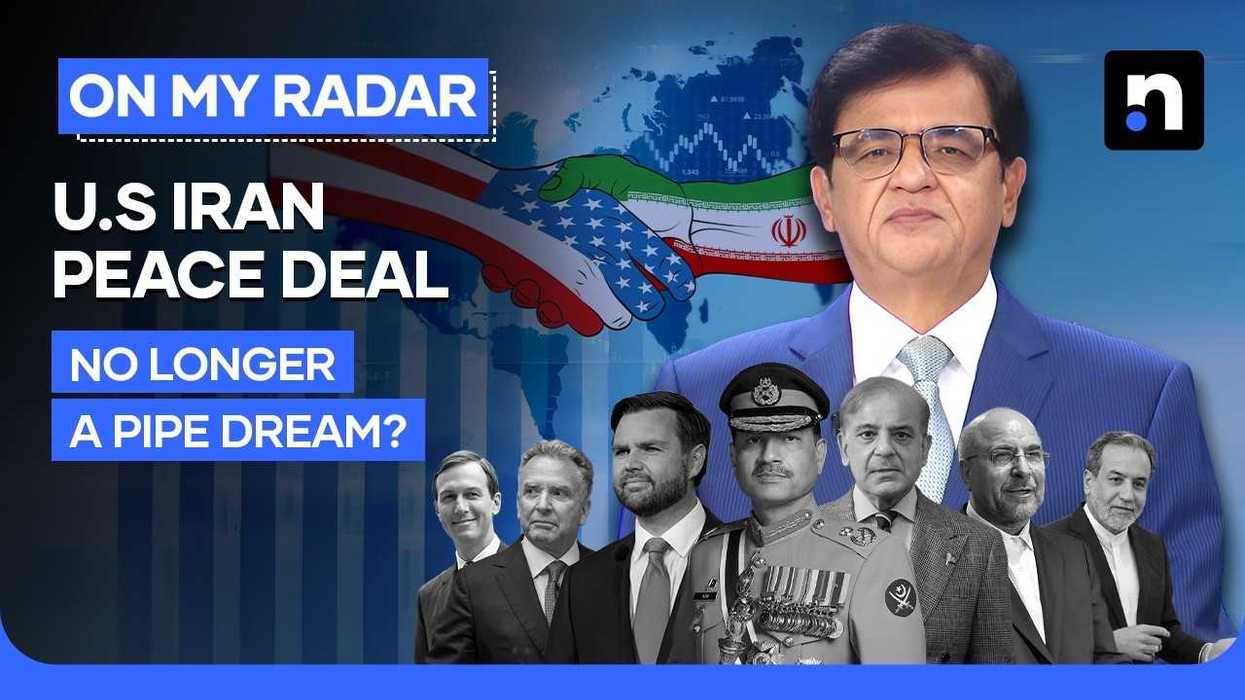
Kamran Khan says a sharp and unusual confrontation has emerged between U.S. President Donald Trump and Pope Leo XIV, as tensions over the Iran conflict spill into religion and global politics.
Speaking on his program “On My Radar,” Kamran Khan says it is a “bitter global reality” that Trump, the leader of the world’s most powerful country, has also become a global figure known for controversial and blunt rhetoric.
Khan says Trump has drawn the United States into Israel’s war against Iran, with combined U.S. and Israeli costs reaching at least $50 billion.
Despite the scale of the conflict, Khan notes Trump has continued his public appearances and personal interests, including attending UFC events.
The dispute escalated after Pope Leo delivered strong remarks last week on the ongoing war involving the United States, Israel and Iran.
The pope said some global leaders are intoxicated with power, adding that God does not support war. He said those who justify bloodshed in the name of religion or power are enemies of humanity.
Although the pope did not name any individual, Khan says it was widely understood whom the criticism targeted, as Trump had been issuing repeated threats to Iran and signaling severe consequences if U.S. demands were not met.
Trump responded forcefully.
In a post on Truth Social on Sunday, he said he does not like a pope who believes Iran should have nuclear weapons. He also criticized the pope’s stance on U.S. foreign policy, including Venezuela, and said he does not want a pope who criticizes the American president.
Trump further described Pope Leo as weak on crime and ineffective in foreign policy, accusing him of ignoring how churches were treated during the COVID-19 pandemic. He also advised the pope to “correct himself.”
Khan says the tensions intensified after Trump shared an AI-generated image portraying himself as Jesus Christ, with light emanating from his hands as he healed a sick person.
The image triggered outrage among Christian communities in the United States and globally, with many calling it blasphemous. Some critics labeled Trump mentally unstable, while one social media user wrote that the public may have mistakenly elected the Antichrist.
The backlash extended internationally.
Italian Prime Minister Giorgia Meloni, considered one of Trump’s key supporters in Europe, said his remarks about the Holy Father were unacceptable.
Iranian President Masoud Pezeshkian said disrespect toward Prophet Jesus is unacceptable to any human being.
Former U.S. Secretary of State Hillary Clinton also strongly criticized Trump.
Following Trump’s direct response, Pope Leo again challenged him, saying he does not fear the Trump administration.
Khan says amid mounting pressure and declining public approval, Trump later deleted the controversial AI image from his social media account and expressed innocence over the post. However, he did not apologize to the pope.
He notes that while the Vatican has historically commented on wars, it is rare for a pope to so directly challenge U.S. leadership—and even rarer for a U.S. president to respond in such personal terms.
Khan adds that Pope Leo, the first U.S.-born pope, holds influence not only globally but also within American politics, including among Catholic voters who form part of Trump’s support base.
He says this confrontation has created a moral divide within Trump’s broader support base, reflecting deeper fractures.
Khan concludes that the Iran issue is no longer dividing only the Middle East, but is now exposing divisions within the West itself.



Comments
See what people are discussing