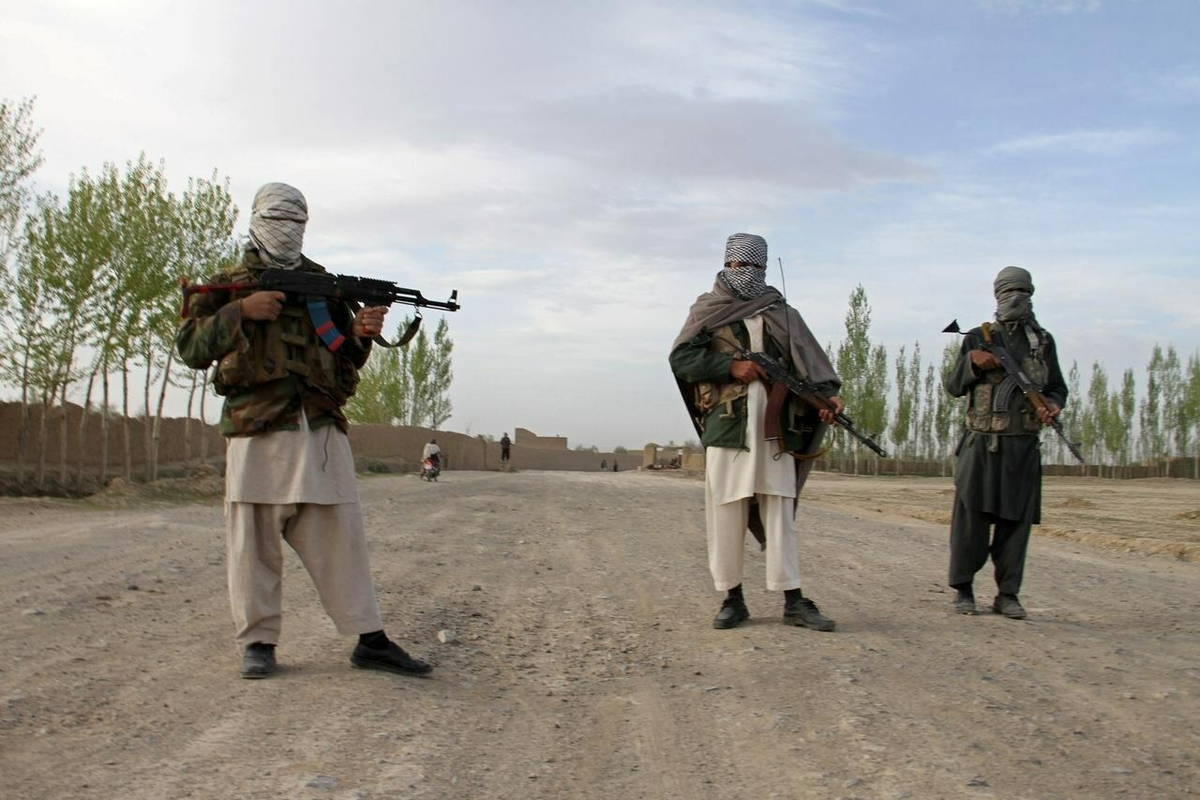
Banned Tehreek-e-Taliban Pakistan (TTP) has begun publishing content in Russian, marking an expansion of its media outreach that analysts say reflects a broader effort to widen its international reach and shape external perceptions of its conflict with the Pakistani state.
With the addition of Russian, the TTP is now disseminating content in multiple languages — including Urdu, Pashto, English, Arabic, Punjabi, Bangla, Persian and, at times, Sindhi — highlighting a further expansion of its multilingual strategy.
Global narrative building
Riccardo Valle, a research analyst and security consultant and director of research at The Khorasan Diary, told Nukta that over the past five years the TTP has built an increasingly diversified communications campaign, using a wide array of publications and platforms to project its messaging to both domestic and international audiences.
“The TTP’s move represents a natural extension of its well-developed media strategy and fits into a broader international outreach that began with the addition of Arabic and English,” he said.
Valle emphasized a key distinction between international militant groups and the messages they convey.
“For example, the Islamic State Khorasan Province (ISKP) employs multiple languages to recruit foreign fighters or inspire attacks abroad, whereas the TTP seeks to present itself as a legitimate actor within its local conflict rather than expanding it internationally,” Valle said, referencing the TTP’s 2023 message endorsing Russian President Vladimir Putin’s comments on freedom of speech and Russia’s diplomatic recognition of the Afghan Taliban’s de facto government.
Appeal to ISKP militants
Abdul Basit, senior associate fellow at Singapore’s Rajaratnam School of International Studies, which focuses on extremism and violence, described the move as an effort to reach Russian-speaking populations in Central Asia as well as audiences in Russia.
“It also reflects the use of advanced technology and artificial intelligence, alongside a diversification of linguistic capabilities, by translating and presenting content in multiple languages,” he said.
Basit noted that one of the TTP’s objectives is to portray itself as a group as capable as ISKP, which has expertise in multiple languages.
Riffat Orakzai, a senior Pakistani journalist covering militancy, described the move as a pressure tactic aimed at projecting the TTP as an international threat, despite the group’s stated focus on its conflict within Pakistan.
Orakzai added that, with the Afghan Taliban taking action against ISKP — forcing its militants to either flee or go underground — the move could also be an attempt to attract those fighters.
However, he said it is unlikely to succeed, as the TTP follows the Afghan Taliban as its religious leaders, who would not tolerate ISKP militants joining the group. Still, he cautioned that anything is possible, given that many ISKP fighters were previously affiliated with the TTP or the Afghan Taliban.
TTP 2.0
Jawad Yousafzai, a journalist and researcher on militancy, cautioned against viewing the TTP as confined solely to Pakistan.
He said the group’s evolving propaganda ecosystem — reflecting enhanced technical capabilities, planning and ambition under what he terms “TTP 2.0” — has already facilitated recruitment from Bangladesh, suggesting that opportunities for recruitment remain open globally.
According to the Armed Conflict Survey, 2015 estimates put the overall number of Russian ISIS fighters active in Iraq and Syria at between 4,000 and 5,000.
Ihsanullah Tipu Mehsud, a senior journalist and militancy analyst, told Nukta that the TTP has undergone a significant transformation since its early years.
He said the group, from its formation in 2007 until 2018, was largely traditional, loosely structured and lacked organizational discipline.
“The TTP has evolved since Mufti Noor Wali Mehsud assumed leadership,” he said, adding that the group is now more organized and disciplined, with enhanced capabilities in terms of manpower, resources, propaganda and safe havens.
Mehsud said the earlier incarnation of the TTP was marked by extreme brutality, including indiscriminate attacks on civilians, minorities and educational institutions, which resulted in the loss of public support.
In contrast, he said, the current leadership has recalibrated its strategy after Noor Wali publicly acknowledged that targeting civilians was among the group’s major mistakes.
“This relative neutrality has helped the group regain a degree of local support, particularly in areas affected by military operations against militants,” he said, calling it a key factor complicating security forces’ efforts on the ground.





Comments
See what people are discussing