

UAE announces closure of its embassy in Tehran, withdrawal of ambassador
Decision comes after Gulf state reports intercepting waves of Iranian ballistic missiles and drones targeting multiple locations across country since Saturday

Dubai Desk
The Dubai Desk reports on major developments across the UAE, covering news, culture, business, and social trends shaping the region.
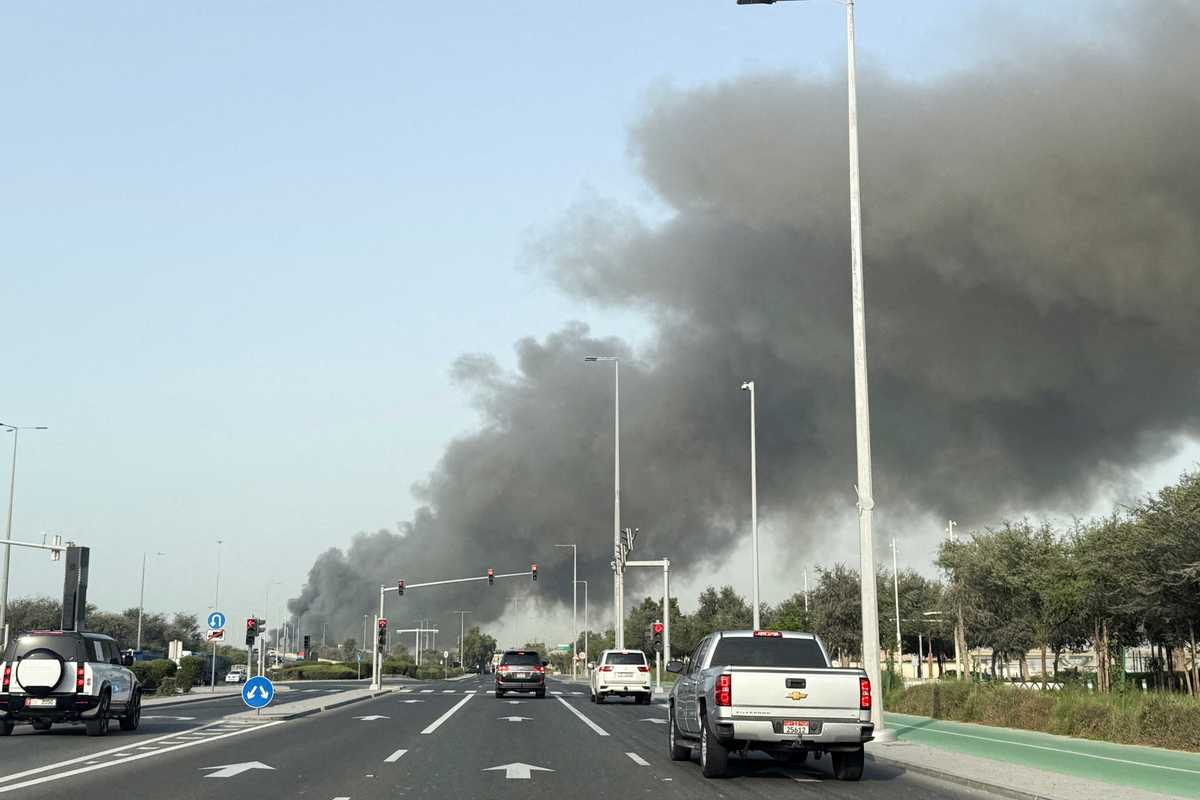
Smoke billows from Zayed port after an Iranian attack, following United States and Israel strikes on Iran, in Abu Dhabi, United Arab Emirates, March 1, 2026.
Reuters
The UAE announced the closure of its embassy in Tehran and the withdrawal of its ambassador from Iran, the foreign ministry said on Sunday, in the wake of Iranian attacks on the Gulf country.
The development came after the Gulf state reported intercepting waves of Iranian ballistic missiles and drones targeting multiple locations across the country since Saturday. Air defence systems have been activated in Abu Dhabi and Dubai.
Iran’s assault came in the wake of U.S. and Israeli strikes on the country, resulting in over 200 deaths, including the assassination of its Supreme Leader Ali Khamenei and other top military and civilian commanders. Iran’s military infrastructure is also reported to have suffered massive damage.
The country has since resorted to waves of attacks on all U.S. military infrastructure in Middle Eastern countries, including UAE, Bahrain, Qatar and Oman.
UAE authorities said hundreds of projectiles had been intercepted, though some debris and a limited number of drones caused casualties and property damage. Officials maintained that the security situation remained under control, with the country on high alert and emergency response teams deployed nationwide.
The Ministry of Defence said the UAE has so far intercepted 165 ballistic missiles, two cruise missiles and 541 Iranian drones. Of the ballistic missiles launched toward the country, 152 were destroyed while 13 fell into the sea. Both cruise missiles were detected and shot down.
Of the 541 drones identified, 506 were intercepted, while 35 fell within UAE territory, resulting in three fatalities — nationals of Pakistan, Nepal and Bangladesh — and 58 injuries among residents and expatriates of various nationalities.
On Sunday alone, 20 ballistic missiles were destroyed, eight were downed over the sea, and two cruise missiles and 311 drones were intercepted, although 21 drones struck civilian areas.
In the capital, two Iranian drones struck Al Salam naval base, igniting a fire in two containers, the Ministry of Defence said, describing the attack as a “blatant act of aggression”. The UAE affirmed that it reserved its full and legitimate right to respond. No casualties were reported at the base.
Earlier, a woman and her child sustained minor injuries after debris from an intercepted drone fell near Etihad Towers. One of the buildings suffered damage. Authorities said air defence systems had successfully neutralized the drone before debris landed in the area.
In Dubai, two people were injured after debris from intercepted drones fell near residential properties, according to state news agency Wam. Both received prompt medical treatment. Authorities also confirmed that falling debris sparked a fire at one of the berths at Jebel Ali Port, which was quickly contained by Civil Defence teams without injuries.
Late on Saturday, firefighters extinguished a small blaze on the facade of the Burj Al Arab. No injuries were reported.
The National Emergency Crisis and Disaster Management Authority said the situation is being monitored around the clock and urged residents to avoid areas where debris or suspicious objects have fallen. The Ministry of Interior said it remains at “the highest level of readiness” and is closely coordinating with relevant authorities.
The Ministry of Foreign Affairs condemned “in the strongest terms” the waves of Iranian missiles launched towards the country. These acts represent a flagrant breach of the UAE's sovereignty and are a clear breach of international law, the ministry said.
It added that the UAE fully supports countries in the region affected by attacks. Any infringement on sovereignty constitutes a direct threat to the security and stability of the entire region, it said.




Comments
See what people are discussing