


News Desk
The News Desk provides timely and factual coverage of national and international events, with an emphasis on accuracy and clarity.
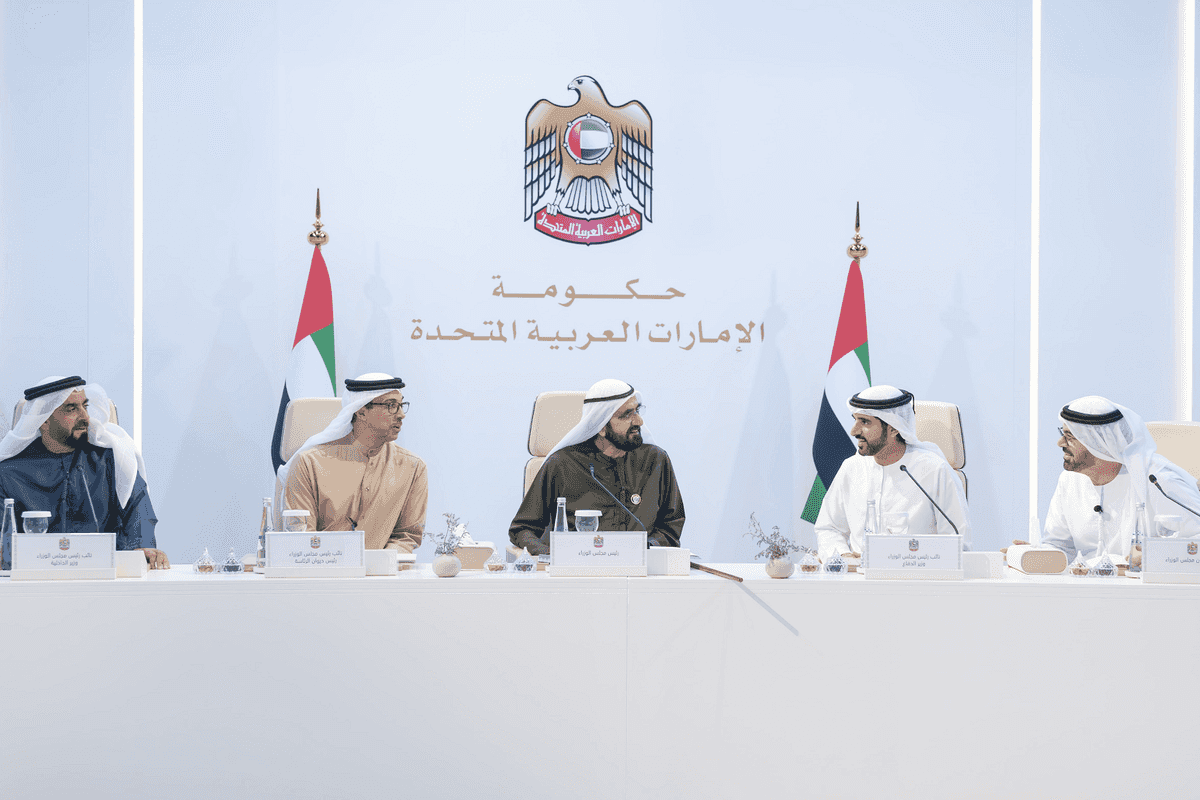
The Cabinet approved 62 international agreements and seven global events.
WAM
The UAE Cabinet has approved its first comprehensive agentic AI strategy, and the Mira AI assistant will be available to federal government service users from March 2027.
The meeting, chaired by Vice President and Prime Minister Sheikh Mohammed bin Rashid Al Maktoum, also approved a national technology platform as the UAE moves to integrate artificial intelligence into public administration, WAM reported.
What is the Mira AI assistant?
Mira is an AI-powered government assistant that lets users interact with federal services in their preferred languages and make requests in natural language. It is designed to cut the time needed to complete official transactions. Sheikh Mohammed said federal entities have been instructed to connect their services to Mira within approved timelines.
He said executive teams are being formed to accelerate the rollout.
What does the UAE's agentic AI strategy aim to achieve?
The Cabinet also approved the Agentic AI Strategy, which aims to restructure government operations around autonomous AI systems, strengthen national expertise and establish secure infrastructure for their deployment. Under the plan, the government aims to integrate agentic AI into 50% of its operations, services and procedures, while training 80,000 federal employees.
It also targets the use of secure government infrastructure for at least 90% of AI models and systems. The strategy aims to cut the time required for government operations and strategy development by at least half and to improve the quality and accuracy of government outputs by 90%.
What is FedAI?
To support the initiative, the Cabinet approved FedAI, a unified national platform that will allow federal entities to develop and operate AI applications within a secure government-controlled environment. Its National AI Gateway will provide a central access point and enable government bodies to share solutions, reduce development costs and accelerate implementation.
The Cabinet also approved new cybersecurity measures, including a National Cybersecurity Index, a National Cyber Crisis Management Framework and a National Zero Trust Security Policy. It further endorsed dedicated provisions on AI procurement in federal government financial policies.
How much foreign investment did the UAE attract in 2025?
The Cabinet reviewed progress under the National Investment Strategy 2031. Foreign direct investment inflows reached AED 177 billion ($48.2 billion) in 2025, equivalent to about 7.9% of gross domestic product.
The UAE ranked ninth globally for FDI inflows, while its cumulative foreign investment stock reached AED 1.174 trillion, according to figures presented at the meeting. A 2025 survey of investors, also reviewed by the government, found that about nine in 10 respondents intended to invest in the UAE over the following three years.
The Cabinet approved a new framework for joint economic committees with partner countries to strengthen trade, investment and economic cooperation. The Ministry of Foreign Trade will lead a coordinating committee to align the work of these bodies with other bilateral and economic partnership initiatives.
How much clean energy capacity does the UAE have?
The Cabinet reviewed progress under the UAE Energy Strategy 2050, with installed clean energy capacity reaching 13.8 gigawatts in 2025. The total included 8.2 GW of renewable energy and 5.6 GW of nuclear power, accounting for around 32% of the country's electricity generation.
The UAE has set a target of raising clean energy's share to 35% by 2031. Officials also reviewed the National Hydrogen Strategy 2050 and the National Sustainable Aviation Fuel Policy, with around AED 41 billion allocated for projects being monitored in hydrogen, its derivatives and sustainable aviation fuel.
The Cabinet approved a pricing mechanism for biodiesel and the formation of a federal committee to regulate the electricity and water sectors.
What housing, youth and environmental policies did the Cabinet approve?
The Cabinet reviewed the Sheikh Zayed Housing Program, which has issued more than 75,000 housing support decisions worth over AED 54 billion since its establishment in 1999. It also examined measures to expand access to housing finance, including arrangements with national banks, an insurance pool covering death and total disability risks for senior citizens, and a Housing Bundle designed to simplify services for citizens.
On environmental policy, the Cabinet approved an updated UAE Environment Policy 2031, alongside the 2025 State of the Environment Report and the national report on ozone-depleting substances. Other approvals included a National Youth Policy under the National Youth Agenda 2031 and a National Charter for Children's Culture, setting out principles for protecting children's cultural rights, supporting their development and encouraging participation in cultural activities.
The Cabinet also endorsed a national framework for classifying and monitoring higher education institutions, including branches operating in free zones, with oversight based on institutional performance, compliance and risk.
What did the Cabinet decide on genomic data and international agreements?
The Cabinet designated the Emirates Genome Council as the authority responsible for establishing and overseeing the National Genomic Database, which will serve as a national reference for genetic and genomic information. The framework will govern the storage, use and sharing of genomic data, including links with health and research databases, while setting safeguards for privacy and supporting medical research and personalized healthcare.
The meeting also approved guidelines for gender balance in government communications and preparations for federal legislation covering fertilizers, soil conditioners and pesticides, as well as integrated environmental protection and development.
On international cooperation, the Cabinet approved agreements with Togo on visa exemptions for diplomatic passport holders, Ecuador on air services and El Salvador on eliminating double taxation and preventing tax evasion. It also approved the UAE's accession to the OECD Nuclear Energy Agency's Committee on Nuclear Regulatory Activities and the launch of an international alliance focused on rain enhancement during the 2026 United Nations Water Conference in Abu Dhabi.
The Cabinet further authorized negotiations and the signing of 62 international agreements and memoranda of understanding and approved the UAE's hosting of seven regional and international events.




Comments
See what people are discussing