

UAE’s exit from OPEC sparks global oil shock
Kamran Khan says UAE’s exit, amid Strait of Hormuz tensions disrupting Gulf oil exports, challenges the bloc’s cohesion and leadership

News Desk
The News Desk provides timely and factual coverage of national and international events, with an emphasis on accuracy and clarity.
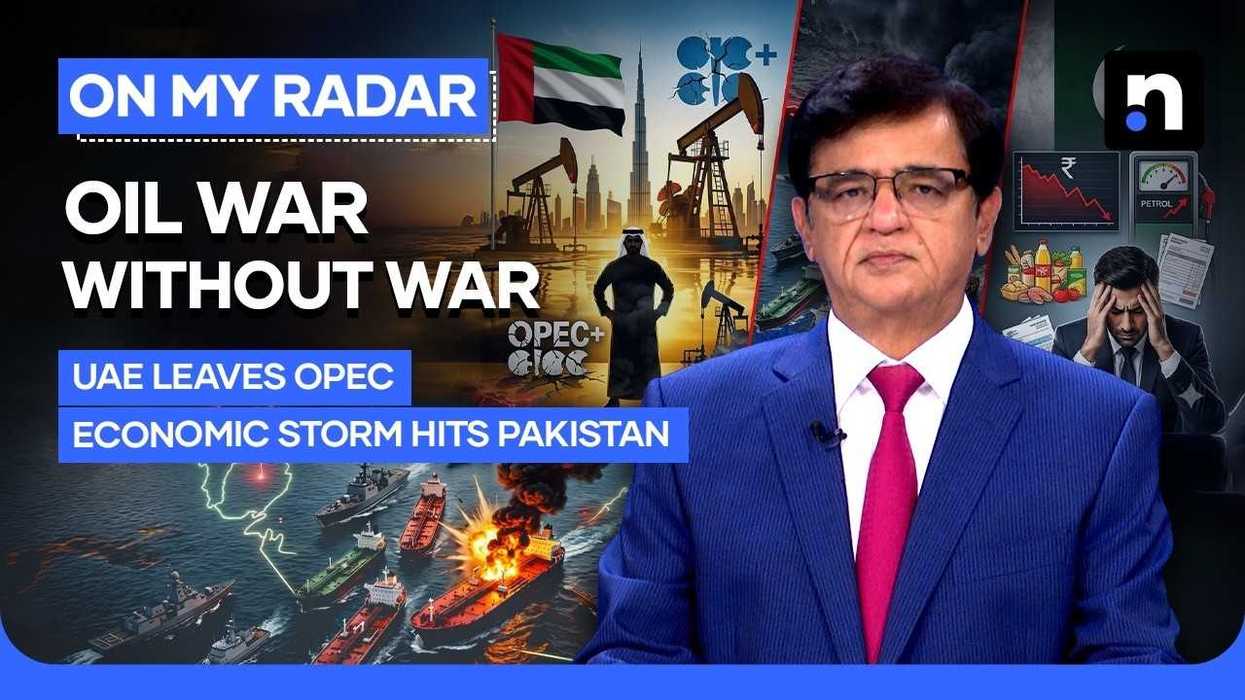
A major shift is unfolding in the global oil landscape, as cracks appear in the alliance of the world’s most powerful oil-producing nations - OPEC and OPEC+.
The development was triggered by the United Arab Emirates’ decision to unilaterally withdraw from both groupings, a move that could reshape energy markets and regional power dynamics. In the latest episode of “On My Radar,” Kamran Khan said the UAE’s move signals a major turning point for the alliance.
The timing is critical. With tensions in the Strait of Hormuz already disrupting Gulf oil exports, the UAE’s exit is being seen as a direct challenge to the bloc’s cohesion and leadership.
According to the UAE’s state news agency, the decision is part of a long-term economic strategy aimed at boosting domestic energy investment and strengthening the country’s independent position in global markets.
In simple terms, after investing billions of dollars in its energy sector, the UAE now wants greater flexibility to increase production and is no longer willing to remain bound by OPEC’s quota system.
The impact was immediate. Global oil markets reacted sharply, with Brent crude rising 3.2% to $111 per barrel, while U.S. West Texas Intermediate (WTI) gained 3.6% to trade near $100 per barrel.
At the same time, investors expect the UAE to ramp up production, a move that could eventually put downward pressure on oil prices.
However, analysts say the consequences extend far beyond prices. The decision could influence Gulf geopolitics, test Saudi Arabia’s leadership, and shape the future of OPEC itself.
Saudi Arabia, long considered the informal leader of OPEC and OPEC+, is expected to face the biggest challenge. Pressure on Riyadh to manage supply and keep prices stable is likely to intensify.
Meanwhile, the UAE is reportedly unhappy with what it views as a lack of strong support from Arab countries in response to recent Iranian actions. Its exit from OPEC is also being interpreted as a continuation of this dissatisfaction.
At an emergency GCC meeting in Jeddah, a senior UAE presidential advisor echoed these concerns, criticizing what was described as the weakest-ever GCC response to the Iranian threat.
The Organization of the Petroleum Exporting Countries (OPEC), founded in 1960, is a group of major oil-producing nations including Saudi Arabia, Iran, Iraq, and others.
The group controls roughly 75–80% of the world’s proven oil reserves and contributes about one-third of global oil production. Its primary role is to regulate output through quotas to prevent extreme price volatility.
In 2016, the broader OPEC+ alliance was formed, bringing in major non-member producers such as Russia. Together, this bloc can influence nearly half of global oil production.
Experts note that when OPEC and OPEC+ cut production, prices tend to rise, while increased output typically leads to lower prices — a dynamic that underscores the alliance’s critical role in the global economy.



Comments
See what people are discussing